Danbury hearing lays out competing views on four‑year mayoral term, council size, ethics and borrowing limits
April 30, 2026 | Danbury City, Fairfield, Connecticut
This article was created by AI summarizing key points discussed. AI makes mistakes, so for full details and context, please refer to the video of the full meeting. Please report any errors so we can fix them. Report an error »
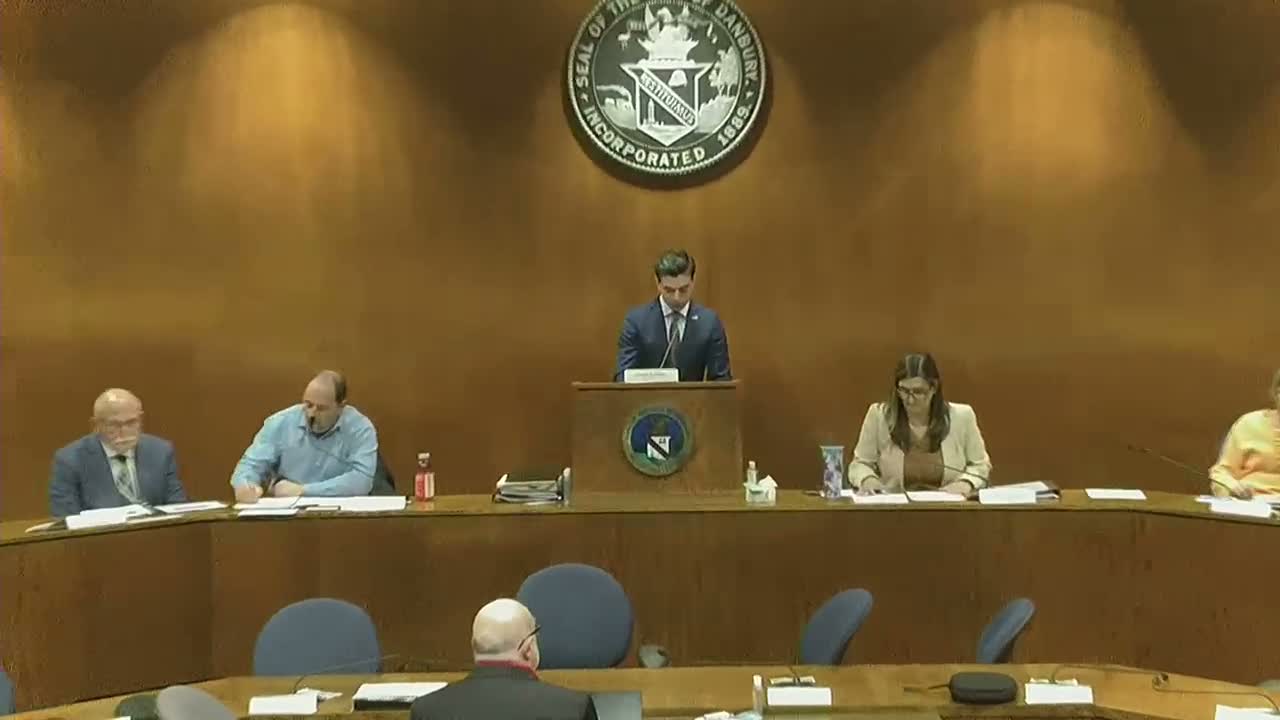
The City of Danbury’s Charter Revision Commission held a public hearing on April 30 to gather resident input on a range of proposed changes to the municipal charter, including whether to extend elected terms from two years to four, adjust the city council’s composition, raise the mayor’s borrowing threshold and add ethics provisions.
Chairman Britton opened the meeting at 7:00 p.m., read the published public notice and cited Connecticut General Statutes Section 7-191 as the procedural basis for the hearing. He told attendees the commission would listen and would not engage in back-and‑forth during the public comment period.
Residents and local officials offered a mix of support and caution. Several speakers, including Holly Robinson (2nd Ward), Ryan Hawley (speaking as a private citizen and city council member), Andrea Gardner (5th Ward) and others, asked the commission to consider modernizing the charter: adding an ethics and conflict‑of‑interest process, updating job‑description language for departmental officers, allowing digital publication of public notices, and creating administrative clarity for positions such as deputy corporation counsel and a proposed Department of Technology Services.
Supporters of longer terms said four‑year terms would give elected officials more continuity to pursue long‑term projects. "A 4 year term could provide greater continuity and allow an administration to more effectively implement its agenda on behalf of the residents that elected them," Ryan Hawley said. Multiple council members and residents echoed that view, saying the short two‑year cycle frequently forces officeholders back into campaign mode before they can complete substantive initiatives.
Opponents and skeptics urged caution. Several commenters, including Paul Rotello and Al Robinson, warned against fast-tracking broad changes and said charter revisions can become politicized. Lynn Waller and others raised particular concerns about increasing the mayor’s borrowing authority, saying higher limits could allow significant expenditures without voter approval; Waller noted that altering term lengths could change how much a mayor could borrow without a referendum and urged preserving the public’s right to weigh in on large bonds.
Technical and administrative requests were raised by staff and council members. Speakers urged updating dollar thresholds set decades ago: the charter’s $1,000 donation limit and the $3,000,000 borrowing cap were repeatedly cited as outdated. A city official asked the commission to align public‑notice language with Connecticut statute so the city can use digital publication rather than relying only on newspapers; the official also recommended adding flexibility for emergency appropriations and clarifying confirmation processes for hires when council timing would otherwise delay critical staffing.
Public safety and residency requirements drew specific support for keeping or clarifying existing language: several speakers representing volunteer fire companies and council members recommended retaining residency requirements for the police and fire chiefs and preserving charter language that protects volunteer fire operations.
On process, several speakers urged the commission to take more time rather than fast‑tracking changes ahead of the next elections. "If you really want a big turnout, the goal should be 2028," Paul Rotello said, advising a longer public deliberation period. Others urged the commission to present clear options to voters and to avoid embedding politically charged changes without broad public buy‑in.
The hearing closed after the last public comment. The commission voted to close the public hearing and then adjourned; both motions passed by voice vote. The commission’s next steps will be to deliberate internally, draft recommended charter language, and — if the commission and city council approve — put proposed changes before Danbury voters as required by state law.
The hearing record includes repeated calls for (1) ethics and conflict‑of‑interest language in the charter, (2) modernization of notice and administrative language, (3) a careful review of any proposal to extend terms to four years, and (4) a re‑examination of outdated dollar thresholds for donations and borrowing. The commission did not vote on substantive charter changes at the April 30 hearing; it collected public testimony to inform later deliberations and any potential ballot proposals.
Chairman Britton opened the meeting at 7:00 p.m., read the published public notice and cited Connecticut General Statutes Section 7-191 as the procedural basis for the hearing. He told attendees the commission would listen and would not engage in back-and‑forth during the public comment period.
Residents and local officials offered a mix of support and caution. Several speakers, including Holly Robinson (2nd Ward), Ryan Hawley (speaking as a private citizen and city council member), Andrea Gardner (5th Ward) and others, asked the commission to consider modernizing the charter: adding an ethics and conflict‑of‑interest process, updating job‑description language for departmental officers, allowing digital publication of public notices, and creating administrative clarity for positions such as deputy corporation counsel and a proposed Department of Technology Services.
Supporters of longer terms said four‑year terms would give elected officials more continuity to pursue long‑term projects. "A 4 year term could provide greater continuity and allow an administration to more effectively implement its agenda on behalf of the residents that elected them," Ryan Hawley said. Multiple council members and residents echoed that view, saying the short two‑year cycle frequently forces officeholders back into campaign mode before they can complete substantive initiatives.
Opponents and skeptics urged caution. Several commenters, including Paul Rotello and Al Robinson, warned against fast-tracking broad changes and said charter revisions can become politicized. Lynn Waller and others raised particular concerns about increasing the mayor’s borrowing authority, saying higher limits could allow significant expenditures without voter approval; Waller noted that altering term lengths could change how much a mayor could borrow without a referendum and urged preserving the public’s right to weigh in on large bonds.
Technical and administrative requests were raised by staff and council members. Speakers urged updating dollar thresholds set decades ago: the charter’s $1,000 donation limit and the $3,000,000 borrowing cap were repeatedly cited as outdated. A city official asked the commission to align public‑notice language with Connecticut statute so the city can use digital publication rather than relying only on newspapers; the official also recommended adding flexibility for emergency appropriations and clarifying confirmation processes for hires when council timing would otherwise delay critical staffing.
Public safety and residency requirements drew specific support for keeping or clarifying existing language: several speakers representing volunteer fire companies and council members recommended retaining residency requirements for the police and fire chiefs and preserving charter language that protects volunteer fire operations.
On process, several speakers urged the commission to take more time rather than fast‑tracking changes ahead of the next elections. "If you really want a big turnout, the goal should be 2028," Paul Rotello said, advising a longer public deliberation period. Others urged the commission to present clear options to voters and to avoid embedding politically charged changes without broad public buy‑in.
The hearing closed after the last public comment. The commission voted to close the public hearing and then adjourned; both motions passed by voice vote. The commission’s next steps will be to deliberate internally, draft recommended charter language, and — if the commission and city council approve — put proposed changes before Danbury voters as required by state law.
The hearing record includes repeated calls for (1) ethics and conflict‑of‑interest language in the charter, (2) modernization of notice and administrative language, (3) a careful review of any proposal to extend terms to four years, and (4) a re‑examination of outdated dollar thresholds for donations and borrowing. The commission did not vote on substantive charter changes at the April 30 hearing; it collected public testimony to inform later deliberations and any potential ballot proposals.
Don't Miss a Word: See the Full Meeting!
Go beyond summaries. Unlock every video, transcript, and key insight with a Founder Membership.
✓
Get instant access to full meeting videos
✓
Search and clip any phrase from complete transcripts
✓
Receive AI-powered summaries & custom alerts
✓
Enjoy lifetime, unrestricted access to government data
30-day money-back guarantee
