PFM adviser warns Tennessee property-tax cap could squeeze Clarksville budget, affect credit rating
April 30, 2026 | Clarksville, Montgomery County, Tennessee
This article was created by AI summarizing key points discussed. AI makes mistakes, so for full details and context, please refer to the video of the full meeting. Please report any errors so we can fix them. Report an error »
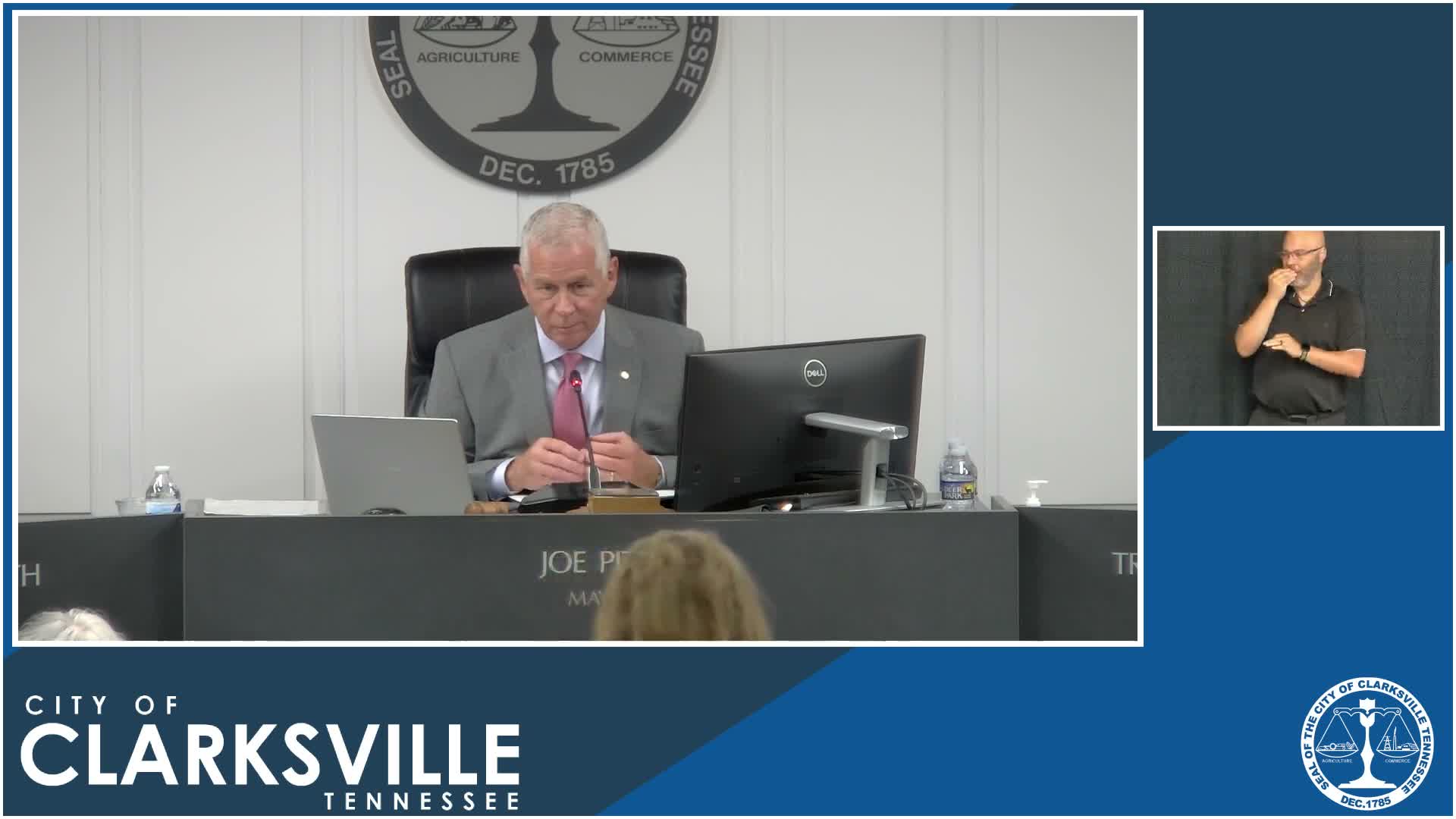
Lauren Lowe, an independent financial adviser with PFM, told the Clarksville City Council on April 30 that a recurring Tennessee bill would cap property-tax revenue growth at 2% over the previous fiscal year plus an inflation adjustment and that the measure — though removed this session — could return.
"It capped the property tax revenue growth at 2% over the previous fiscal years, plus inflation," Lowe said, noting the bill as filed would apply to total property-tax receipts rather than assessed value and would exclude new construction and debt-service receipts. She added rating agencies were "watching it" but had not signaled how they would react.
Lowe presented modeled impacts on Clarksville's recent budgets. Using a scenario that assumed 4% organic growth in the tax base plus a 2% rate cap, she said the city's 2026 budget would have been limited to about $59,100,000 — a roughly $1,500,000 shortfall from the adopted figure. She said the gap would have been larger in earlier years, citing a hypothetical shortfall of $5.8 million for fiscal 2025 when revenues were about $55.7 million, and a $6.4 million shortfall if a 25% revenue jump in 2022 had been capped under the same assumptions.
Lowe warned of two practical implications: limits on financial flexibility and the potential for rating agencies to reassess municipal outlooks. She said Moody's and the other major raters were monitoring the concept and that Tennessee's state-level institutional-framework score has an outsized effect on local ratings. "A limitation of revenue raising can restrict financial flexibility," she said, quoting Moody's commentary summarized for the council.
Council members asked technical questions about how an inflation adjustment would be measured, how the bill's referendum requirement would interact with Clarksville's September tax billing, and whether the bill's sponsors had articulated policy goals. Lowe said the bill as proposed lacked detail on the inflation measure and that sponsors had removed it this session; she recommended keeping an eye on future drafts and preparing options should a version pass.
The presentation concluded with Lowe offering to answer follow-up questions and with the council moving on to the planning commission report. The council did not take action on the matter at the meeting; Lowe said the legislation was not active at this time.
"It capped the property tax revenue growth at 2% over the previous fiscal years, plus inflation," Lowe said, noting the bill as filed would apply to total property-tax receipts rather than assessed value and would exclude new construction and debt-service receipts. She added rating agencies were "watching it" but had not signaled how they would react.
Lowe presented modeled impacts on Clarksville's recent budgets. Using a scenario that assumed 4% organic growth in the tax base plus a 2% rate cap, she said the city's 2026 budget would have been limited to about $59,100,000 — a roughly $1,500,000 shortfall from the adopted figure. She said the gap would have been larger in earlier years, citing a hypothetical shortfall of $5.8 million for fiscal 2025 when revenues were about $55.7 million, and a $6.4 million shortfall if a 25% revenue jump in 2022 had been capped under the same assumptions.
Lowe warned of two practical implications: limits on financial flexibility and the potential for rating agencies to reassess municipal outlooks. She said Moody's and the other major raters were monitoring the concept and that Tennessee's state-level institutional-framework score has an outsized effect on local ratings. "A limitation of revenue raising can restrict financial flexibility," she said, quoting Moody's commentary summarized for the council.
Council members asked technical questions about how an inflation adjustment would be measured, how the bill's referendum requirement would interact with Clarksville's September tax billing, and whether the bill's sponsors had articulated policy goals. Lowe said the bill as proposed lacked detail on the inflation measure and that sponsors had removed it this session; she recommended keeping an eye on future drafts and preparing options should a version pass.
The presentation concluded with Lowe offering to answer follow-up questions and with the council moving on to the planning commission report. The council did not take action on the matter at the meeting; Lowe said the legislation was not active at this time.
View the Full Meeting & All Its Details
This article offers just a summary. Unlock complete video, transcripts, and insights as a Founder Member.
✓
Watch full, unedited meeting videos
✓
Search every word spoken in unlimited transcripts
✓
AI summaries & real-time alerts (all government levels)
✓
Permanent access to expanding government content
30-day money-back guarantee
