Committee sends bill backing native plants for pollinators to appropriations
April 30, 2026 | 2026 Legislature CO, Colorado
This article was created by AI summarizing key points discussed. AI makes mistakes, so for full details and context, please refer to the video of the full meeting. Please report any errors so we can fix them. Report an error »
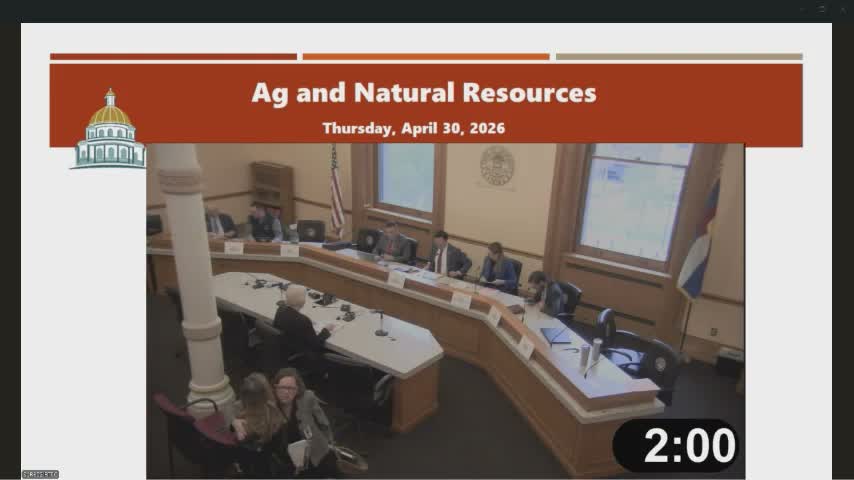
Senator Kipp presented House Bill 11-32, which directs the State Forest Service, Department of Natural Resources, Department of Personnel and Department of Transportation to prioritize Colorado-sourced, ecoregionally appropriate native plant materials when practicable for vegetation projects on state-managed lands. The bill also calls for coordinated purchasing, training programs for land managers, integration of mowing and grazing practices consistent with a 2022 DNR pollinator study, and a CSU Extension study of native plant availability contingent on gifts, grants and donations.
Supporters said the bill formalizes work already underway and improves outcomes for pollinators while saving water. Joyce Kennedy of People and Pollinators Action Network said the bill advances recommendations from the Colorado Native Pollinating Insects Health Study and balances native-plant goals with wildfire mitigation and noxious-weed control. Tim Brass of DNR described ongoing CPW reseeding work and urged a technical amendment to clarify covered agencies; CPW staff said Colorado's native-seed industry is currently limited and some seed has been purchased out-of-state, which is why the CSU availability study was included.
Witnesses cited water-conservation co-benefits and economic importance of pollinators. Amanda Martinez of Audubon Rockies described Habitat Hero gardening successes and reported examples of substantial water savings after conversions to native plants. Committee members asked about grazing, implementation details and seed supply; CPW replied that grazing can, in some contexts, benefit pollinators and that a study on seed suppliers would clarify in-state capacity.
Senator Kipp moved HB 11-32 as amended to the Committee on Appropriations; the motion passed on a recorded vote, 4 to 3. The bill will next be considered by the appropriations committee where funding and technical implementation details may be addressed.
Supporters said the bill formalizes work already underway and improves outcomes for pollinators while saving water. Joyce Kennedy of People and Pollinators Action Network said the bill advances recommendations from the Colorado Native Pollinating Insects Health Study and balances native-plant goals with wildfire mitigation and noxious-weed control. Tim Brass of DNR described ongoing CPW reseeding work and urged a technical amendment to clarify covered agencies; CPW staff said Colorado's native-seed industry is currently limited and some seed has been purchased out-of-state, which is why the CSU availability study was included.
Witnesses cited water-conservation co-benefits and economic importance of pollinators. Amanda Martinez of Audubon Rockies described Habitat Hero gardening successes and reported examples of substantial water savings after conversions to native plants. Committee members asked about grazing, implementation details and seed supply; CPW replied that grazing can, in some contexts, benefit pollinators and that a study on seed suppliers would clarify in-state capacity.
Senator Kipp moved HB 11-32 as amended to the Committee on Appropriations; the motion passed on a recorded vote, 4 to 3. The bill will next be considered by the appropriations committee where funding and technical implementation details may be addressed.
View the Full Meeting & All Its Details
This article offers just a summary. Unlock complete video, transcripts, and insights as a Founder Member.
✓
Watch full, unedited meeting videos
✓
Search every word spoken in unlimited transcripts
✓
AI summaries & real-time alerts (all government levels)
✓
Permanent access to expanding government content
30-day money-back guarantee
