Sponsors ask to indefinitely postpone bill on scholarship-granting organizations after questioning federal guidance
April 30, 2026 | 2026 Legislature CO, Colorado
This article was created by AI summarizing key points discussed. AI makes mistakes, so for full details and context, please refer to the video of the full meeting. Please report any errors so we can fix them. Report an error »
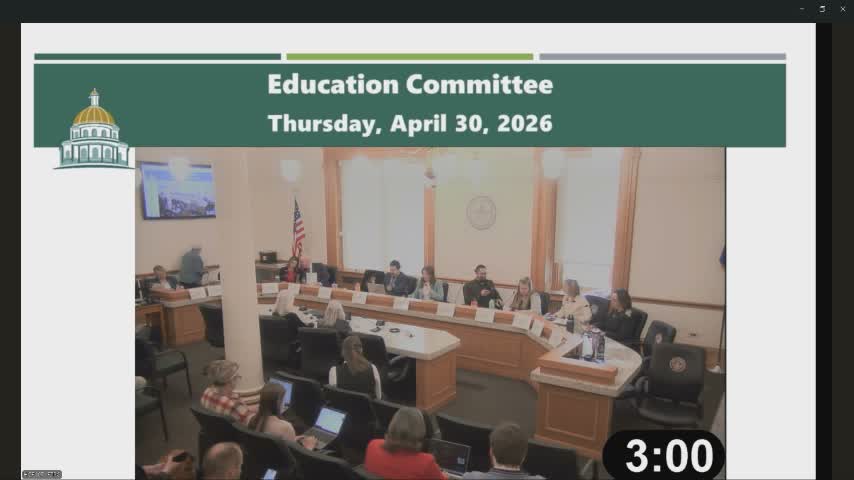
Rep. Rip Goldstein opened the committee hearing on House Bill 12‑92 by saying the federal tax-credit created by HR1 resembled “nothing more than a school voucher program in disguise,” and stressing the need for strong anti‑fraud protections and audit authority.
The bill, introduced by Goldstein and Rep. Hammock, would have created a pathway for public school foundations to participate in scholarship‑granting organizations (SGOs) that can receive redirected federal tax credits and grant funds for K–12 education expenses. Sponsors described federal guidance as incomplete and said Colorado lacks a clear state oversight regime that would ensure money reaches classrooms and is not diverted to unaccountable private actors.
"Taxpayer dollars ... demand transparency," Goldstein told the committee, arguing the legislation’s purpose was to maximize the impact of federal dollars for Colorado families while adding state guardrails such as reporting, financial transparency and revocation authority for bad actors.
Rep. Hammock explained the bill’s two core aims: enabling public school districts and foundations to participate in the program and imposing standards on SGOs and entities that receive grants—background checks, accreditation or public‑accommodation requirements and student outcome reporting. She said federal Treasury guidance had been delayed and that the program is scheduled to take effect in January 2027, which left limited time to finalize state rules.
After the sponsors’ presentations and committee questions, Rep. Hammock moved to postpone House Bill 12‑92 indefinitely. The clerk called the roll and the motion passed; the chair announced, “House Bill 12‑92 has been postponed indefinitely.”
What happens next: Sponsors said they plan to continue discussions in the interim to refine accountability language once federal rules are clear. The committee took no final action on the policy principles while the bill is shelved.
The bill, introduced by Goldstein and Rep. Hammock, would have created a pathway for public school foundations to participate in scholarship‑granting organizations (SGOs) that can receive redirected federal tax credits and grant funds for K–12 education expenses. Sponsors described federal guidance as incomplete and said Colorado lacks a clear state oversight regime that would ensure money reaches classrooms and is not diverted to unaccountable private actors.
"Taxpayer dollars ... demand transparency," Goldstein told the committee, arguing the legislation’s purpose was to maximize the impact of federal dollars for Colorado families while adding state guardrails such as reporting, financial transparency and revocation authority for bad actors.
Rep. Hammock explained the bill’s two core aims: enabling public school districts and foundations to participate in the program and imposing standards on SGOs and entities that receive grants—background checks, accreditation or public‑accommodation requirements and student outcome reporting. She said federal Treasury guidance had been delayed and that the program is scheduled to take effect in January 2027, which left limited time to finalize state rules.
After the sponsors’ presentations and committee questions, Rep. Hammock moved to postpone House Bill 12‑92 indefinitely. The clerk called the roll and the motion passed; the chair announced, “House Bill 12‑92 has been postponed indefinitely.”
What happens next: Sponsors said they plan to continue discussions in the interim to refine accountability language once federal rules are clear. The committee took no final action on the policy principles while the bill is shelved.
View the Full Meeting & All Its Details
This article offers just a summary. Unlock complete video, transcripts, and insights as a Founder Member.
✓
Watch full, unedited meeting videos
✓
Search every word spoken in unlimited transcripts
✓
AI summaries & real-time alerts (all government levels)
✓
Permanent access to expanding government content
30-day money-back guarantee
