Colorado senators advance plan to invest enterprise reserves for childcare fund amid legal concerns
April 30, 2026 | 2026 Legislature CO, Colorado
This article was created by AI summarizing key points discussed. AI makes mistakes, so for full details and context, please refer to the video of the full meeting. Please report any errors so we can fix them. Report an error »
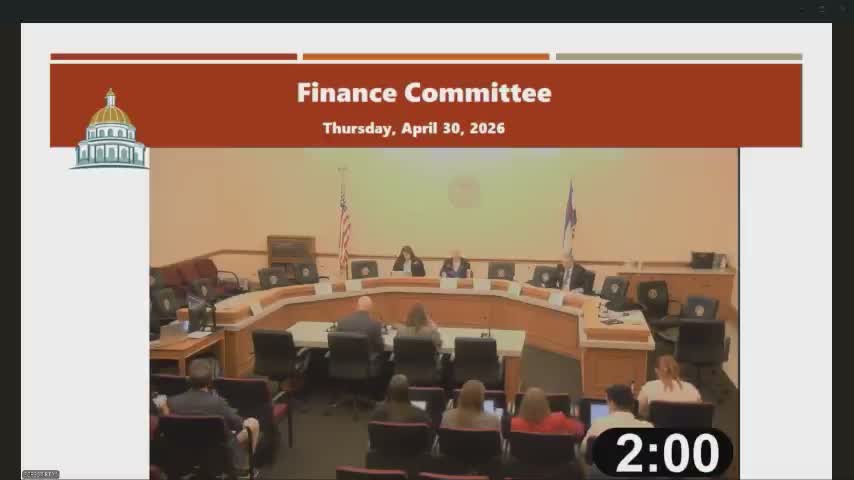
Senators debated for hours before the Senate Finance Committee voted 5–4 to send Senate Bill 180, as amended, to the Appropriations Committee. The bill would create an Investment Performance Authority (a special purpose authority) to allow eligible state enterprises to voluntarily invest portions of their idle reserves in a diversified portfolio; any returns above a defined TPOOL‑equivalent threshold would be directed to a new, permanent state fund for childcare assistance.
Senator Bryant (Senator Bright in the transcript) and co‑prime Senator Marchman presented the bill as a way to generate recurring money for the Colorado Child Care Assistance Program (CCAP) without touching the general fund or changing existing tax structures. “Access to affordable childcare is foundational,” the sponsor told the committee, saying the proposal would not move dollars under the state’s TABOR cap and would protect participating enterprises’ principal while using only “over and above” earnings to fund counties’ childcare assistance.
Supporters, including early‑childhood advocates and several provider groups, said the bill offers a long‑term revenue source for CCAP at a moment when federal funding is flat and counties report freezes and waits: sponsors cited roughly 13,000 children on wait lists and, later in testimony, the Department of Early Childhood said nearly 9,500 families were unable to enroll under current conditions. Proponents asked the committee to approve statutory guardrails, including a 5% reserve and reporting requirements to ensure dollars reaching counties are traceable to families served.
Opponents — notably the Colorado AFL‑CIO, the Bell Policy Center, the Colorado Fiscal Institute and the state treasurer’s office — raised constitutional and programmatic concerns. “This bill bets public funds on a legal theory without precedent,” Colorado State Treasurer Dave Young said, referencing an Attorney General opinion that warned against direct state ownership or subscription in companies under Article XI §2 of the state constitution. Labor and fiscal‑policy witnesses warned that diverting earnings from the purposes for which enterprise fees were collected could jeopardize an enterprise’s statutory status and expose the state to litigation and fiscal risk. Several witnesses urged more time for review and stronger safeguards for social‑insurance‑style enterprises such as the voter‑created paid family and medical leave program (referred to in testimony as “Family”).
Sponsors offered and the committee adopted a package of amendments that expanded board membership, tightened the definition and reporting of “earnings,” and included a carve‑out intended to protect voter‑created enterprises (sponsors said that language will be revised). The bill’s proponents said participation would be voluntary and that enterprises would receive their TPOOL equivalent plus a set incentive; only returns above that would flow to the childcare fund, and enterprises would get their principal back. The amendments also codified a reserve target and required county reporting on disbursements.
The committee adopted the final amendments and voted to advance SB 180 to appropriations by a 5–4 margin. Supporters said the vote allows more time to address remaining legal questions and governance details; critics said the bill still raises unresolved constitutional and accountability issues and urged the legislature not to rush the policy with weeks left in session.
What’s next: SB 180 goes to the Appropriations Committee; sponsors and opponents alike said they plan more technical work on legal risk, governance, and precise enterprise eligibility before the bill proceeds to the full Senate.
Senator Bryant (Senator Bright in the transcript) and co‑prime Senator Marchman presented the bill as a way to generate recurring money for the Colorado Child Care Assistance Program (CCAP) without touching the general fund or changing existing tax structures. “Access to affordable childcare is foundational,” the sponsor told the committee, saying the proposal would not move dollars under the state’s TABOR cap and would protect participating enterprises’ principal while using only “over and above” earnings to fund counties’ childcare assistance.
Supporters, including early‑childhood advocates and several provider groups, said the bill offers a long‑term revenue source for CCAP at a moment when federal funding is flat and counties report freezes and waits: sponsors cited roughly 13,000 children on wait lists and, later in testimony, the Department of Early Childhood said nearly 9,500 families were unable to enroll under current conditions. Proponents asked the committee to approve statutory guardrails, including a 5% reserve and reporting requirements to ensure dollars reaching counties are traceable to families served.
Opponents — notably the Colorado AFL‑CIO, the Bell Policy Center, the Colorado Fiscal Institute and the state treasurer’s office — raised constitutional and programmatic concerns. “This bill bets public funds on a legal theory without precedent,” Colorado State Treasurer Dave Young said, referencing an Attorney General opinion that warned against direct state ownership or subscription in companies under Article XI §2 of the state constitution. Labor and fiscal‑policy witnesses warned that diverting earnings from the purposes for which enterprise fees were collected could jeopardize an enterprise’s statutory status and expose the state to litigation and fiscal risk. Several witnesses urged more time for review and stronger safeguards for social‑insurance‑style enterprises such as the voter‑created paid family and medical leave program (referred to in testimony as “Family”).
Sponsors offered and the committee adopted a package of amendments that expanded board membership, tightened the definition and reporting of “earnings,” and included a carve‑out intended to protect voter‑created enterprises (sponsors said that language will be revised). The bill’s proponents said participation would be voluntary and that enterprises would receive their TPOOL equivalent plus a set incentive; only returns above that would flow to the childcare fund, and enterprises would get their principal back. The amendments also codified a reserve target and required county reporting on disbursements.
The committee adopted the final amendments and voted to advance SB 180 to appropriations by a 5–4 margin. Supporters said the vote allows more time to address remaining legal questions and governance details; critics said the bill still raises unresolved constitutional and accountability issues and urged the legislature not to rush the policy with weeks left in session.
What’s next: SB 180 goes to the Appropriations Committee; sponsors and opponents alike said they plan more technical work on legal risk, governance, and precise enterprise eligibility before the bill proceeds to the full Senate.
Don't Miss a Word: See the Full Meeting!
Go beyond summaries. Unlock every video, transcript, and key insight with a Founder Membership.
✓
Get instant access to full meeting videos
✓
Search and clip any phrase from complete transcripts
✓
Receive AI-powered summaries & custom alerts
✓
Enjoy lifetime, unrestricted access to government data
30-day money-back guarantee
