City Council advances package to combat vaccine misinformation, expand education and access
April 30, 2026 | New York City Council, New York City, New York County, New York
This article was created by AI summarizing key points discussed. AI makes mistakes, so for full details and context, please refer to the video of the full meeting. Please report any errors so we can fix them. Report an error »
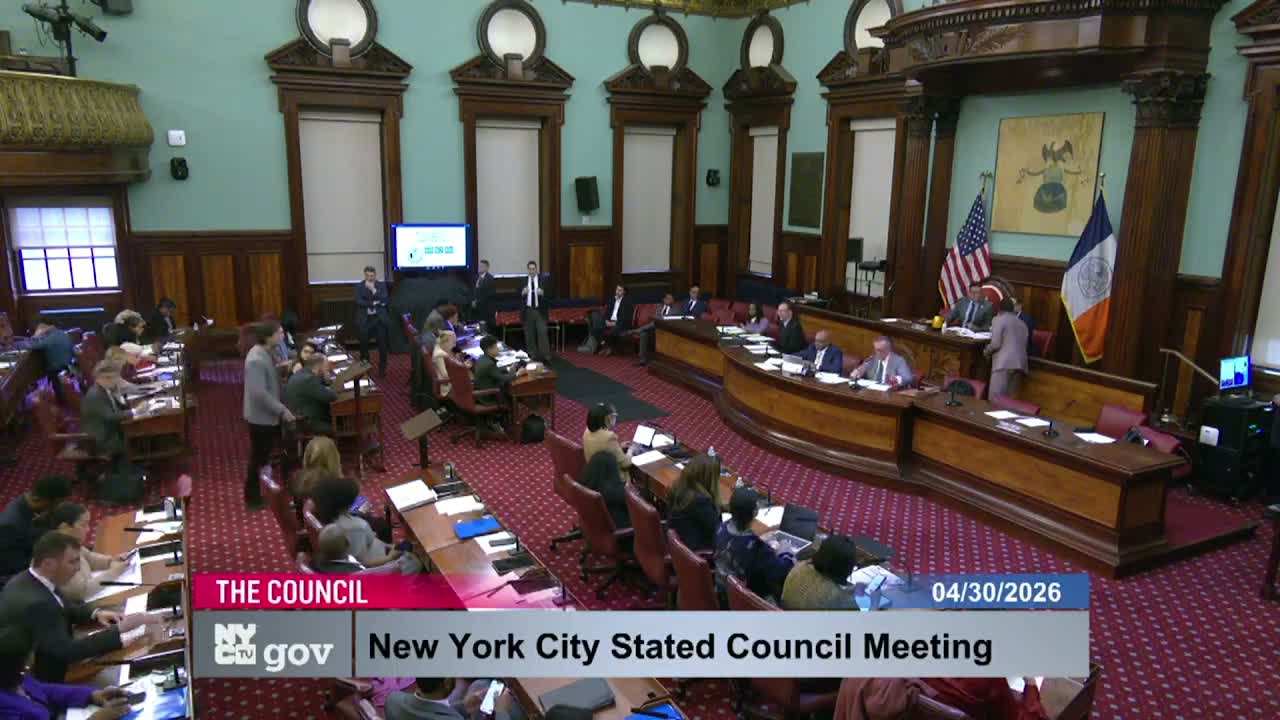
The New York City Council on April 30 approved a package of measures aimed at combating vaccine misinformation and increasing vaccine access and education across the city.
Council member Dinowitz introduced Intro 6-93, which would require the Department of Health and Mental Hygiene to develop and implement a public-education plan on childhood and adolescent vaccines informed by recommendations from major medical organizations. "New Yorkers should be properly informed through the advice of medical professionals when making decisions about their health and not by sensational podcasters," Dinowitz said, arguing the bill is intended to restore public trust in medical consensus.
The council also approved resolutions calling on New York State to authorize dentists to administer influenza, COVID-19 and certain other vaccines, to require that vaccine policy be grounded in the recommendations of national and international health organizations, and to urge insurers to reimburse pediatric practices for the total direct and indirect expenses associated with vaccinations. Council member Schulman, a sponsor of parts of the package, said, "Every additional access point means more New Yorkers are protected." The package passed on the floor as part of the day's general orders; the chair recorded separate tallies for two introductions (see "Votes at a glance").
Public Advocate Jumaane Williams, who supported the measures, described the public-health rationale and cited a Centers for Disease Control estimate on the prevalence of Tourette syndrome in the context of the day's broader health agenda, emphasizing the need for clear health communications and supports for vulnerable populations.
What happens next: the introductions and resolutions will require administrative work by city agencies — DOHMH, DOE and other partners — to create materials and reporting systems. Several measures call on the state legislature to change state law before some provisions could be implemented locally.
Funding and scope: the legislation directs agencies to develop plans and materials; specific funding amounts and implementation timelines were not specified during the floor discussion.
Council member Dinowitz introduced Intro 6-93, which would require the Department of Health and Mental Hygiene to develop and implement a public-education plan on childhood and adolescent vaccines informed by recommendations from major medical organizations. "New Yorkers should be properly informed through the advice of medical professionals when making decisions about their health and not by sensational podcasters," Dinowitz said, arguing the bill is intended to restore public trust in medical consensus.
The council also approved resolutions calling on New York State to authorize dentists to administer influenza, COVID-19 and certain other vaccines, to require that vaccine policy be grounded in the recommendations of national and international health organizations, and to urge insurers to reimburse pediatric practices for the total direct and indirect expenses associated with vaccinations. Council member Schulman, a sponsor of parts of the package, said, "Every additional access point means more New Yorkers are protected." The package passed on the floor as part of the day's general orders; the chair recorded separate tallies for two introductions (see "Votes at a glance").
Public Advocate Jumaane Williams, who supported the measures, described the public-health rationale and cited a Centers for Disease Control estimate on the prevalence of Tourette syndrome in the context of the day's broader health agenda, emphasizing the need for clear health communications and supports for vulnerable populations.
What happens next: the introductions and resolutions will require administrative work by city agencies — DOHMH, DOE and other partners — to create materials and reporting systems. Several measures call on the state legislature to change state law before some provisions could be implemented locally.
Funding and scope: the legislation directs agencies to develop plans and materials; specific funding amounts and implementation timelines were not specified during the floor discussion.
Don't Miss a Word: See the Full Meeting!
Go beyond summaries. Unlock every video, transcript, and key insight with a Founder Membership.
✓
Get instant access to full meeting videos
✓
Search and clip any phrase from complete transcripts
✓
Receive AI-powered summaries & custom alerts
✓
Enjoy lifetime, unrestricted access to government data
30-day money-back guarantee
