North Clackamas budget committee hears plan to scale literacy, mental-health supports; district announces $950,000 summer-school grant
May 01, 2026 | North Clackamas SD 12, School Districts, Oregon
This article was created by AI summarizing key points discussed. AI makes mistakes, so for full details and context, please refer to the video of the full meeting. Please report any errors so we can fix them. Report an error »
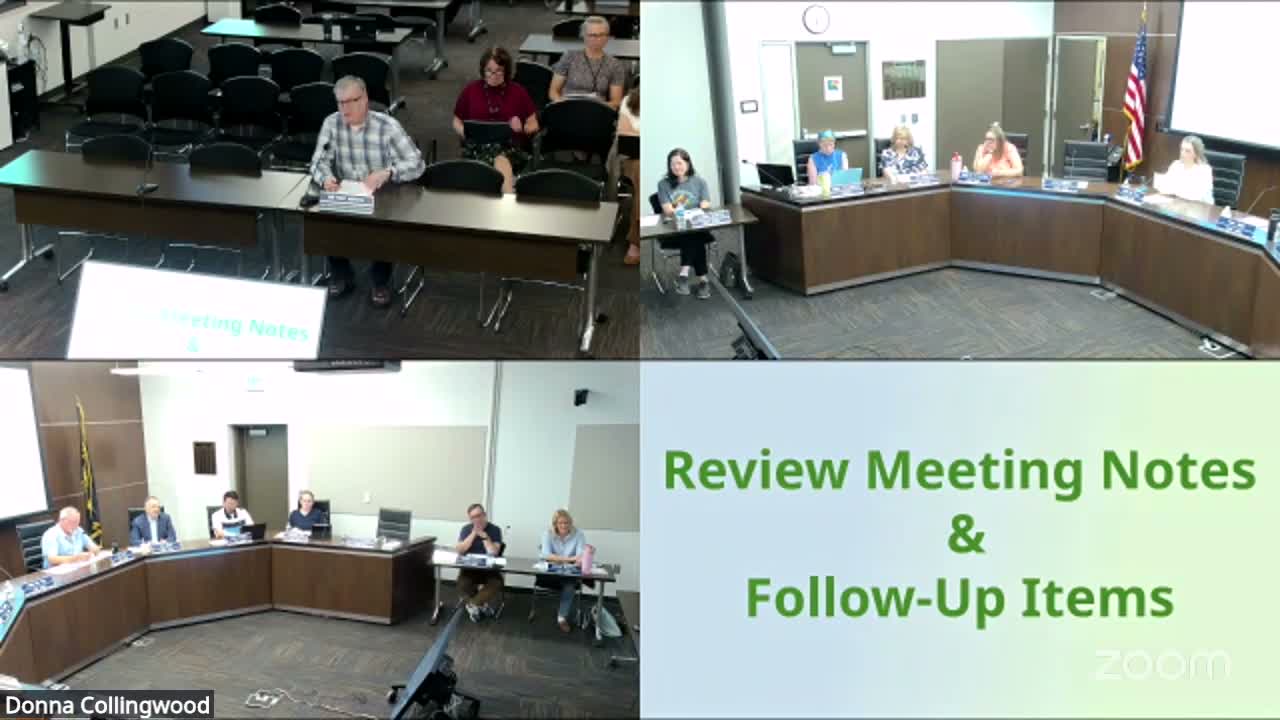
Assistant Superintendent Yvonne Dibley told the North Clackamas School District budget committee that the district allocates a small, targeted portion of its budget to programs intended to drive student outcomes and equity, and announced the district had been awarded a $950,000 state grant for summer school.
"This is the opportunity'one of many'that [educators] have to show the really excellent and exciting things that are going on in the district," Dibley said, introducing the district's instructional leadership team.
The presentation framed spending around three questions—what funds exist, what we use them for, and how that work changes outcomes. District leaders said targeted streams such as the Student Investment Account (SIA) and Measure 98 (High School Success) make up about 5% of the district's total budget but are held to a rigorous return-on-investment review.
Dr. Patricia Ahrens, executive director of elementary programs, said elementary priorities are literacy and school-improvement funds used to sharpen school plans and focus on reading, math and belonging. "When students feel like they belong to their school and their community, that's when they feel welcome and they thrive," Ahrens said.
Jennifer Dove Kiltow, executive director of student and family services, described how SIA and Measure 98 dollars fund mental-health services and supports in schools: counselors at every site, social workers in feeder systems, family advocates tied to McKinney-Vento supports, on-site therapists through partnerships and substance-abuse counseling provided by local agencies. Kiltow said the mental-health partnerships and staffing reach the district's roughly 16,500 students.
"We've maintained school counselors at every site, as well as social workers in our high-school feeder systems," Kiltow said, describing the layered supports and noting year-over-year growth in students receiving services.
Petra Callan, executive director of secondary programs, outlined Measure 98 investments in college-and-career readiness (CCR) classes for ninth and eleventh graders, dual-credit and AP/IB expansion and career-technical pathways. Callan cited numeric gains the district reported: 711 more AP/IB students this year compared with last year and 2,452 students enrolled in AP/IB or dual-credit courses when those enrollments are combined.
Callan also highlighted a roughly 10% reduction in suspensions and said investments in restorative practices, consistency in discipline and positive-behavior supports contributed to that decline. "When people understand what's expected of them and they can count on a structure, we all do better," she said.
Tammy O'Neil, executive director of teaching, learning and professional development, summarized curriculum work and compliance: Oregon requires curriculum adoption on a seven-year cycle; the district uses adoption committees, instructional coaches and supplemental tools (DreamBox and Lexia) as part of implementation and professional learning. O'Neil said the district has trained teacher-coaches and purchased decodable texts and other supplemental materials aligned with the science-of-reading.
On outcomes, leaders pointed to several measures the district uses to judge impact: an 86% graduation rate for English-language learners last year (one point shy of the overall graduation rate), greater-than-80% inclusion for many students with disabilities in general-education settings, improved ELA growth in grades 3'5 and a 90% on-track rate for current ninth graders.
In response to committee questions, presenters said disaggregated enrollment and achievement data are available and that some coaching and professional-development resources are already shared with neighboring districts by invitation. When asked whether DreamBox and Lexia are available districtwide, officials confirmed they are in all elementary schools. On whether suspension reductions also correspond with fewer tier-3 referrals, presenters said the pattern varies by school and the district is tracking referrals and documentation to identify trends.
Dibley closed the session by reminding the committee the next formal budget meeting had been moved to May 12 at 6:30 p.m. and that staff would continue to return data and clarifications requested during the Q&A.
"This is the opportunity'one of many'that [educators] have to show the really excellent and exciting things that are going on in the district," Dibley said, introducing the district's instructional leadership team.
The presentation framed spending around three questions—what funds exist, what we use them for, and how that work changes outcomes. District leaders said targeted streams such as the Student Investment Account (SIA) and Measure 98 (High School Success) make up about 5% of the district's total budget but are held to a rigorous return-on-investment review.
Dr. Patricia Ahrens, executive director of elementary programs, said elementary priorities are literacy and school-improvement funds used to sharpen school plans and focus on reading, math and belonging. "When students feel like they belong to their school and their community, that's when they feel welcome and they thrive," Ahrens said.
Jennifer Dove Kiltow, executive director of student and family services, described how SIA and Measure 98 dollars fund mental-health services and supports in schools: counselors at every site, social workers in feeder systems, family advocates tied to McKinney-Vento supports, on-site therapists through partnerships and substance-abuse counseling provided by local agencies. Kiltow said the mental-health partnerships and staffing reach the district's roughly 16,500 students.
"We've maintained school counselors at every site, as well as social workers in our high-school feeder systems," Kiltow said, describing the layered supports and noting year-over-year growth in students receiving services.
Petra Callan, executive director of secondary programs, outlined Measure 98 investments in college-and-career readiness (CCR) classes for ninth and eleventh graders, dual-credit and AP/IB expansion and career-technical pathways. Callan cited numeric gains the district reported: 711 more AP/IB students this year compared with last year and 2,452 students enrolled in AP/IB or dual-credit courses when those enrollments are combined.
Callan also highlighted a roughly 10% reduction in suspensions and said investments in restorative practices, consistency in discipline and positive-behavior supports contributed to that decline. "When people understand what's expected of them and they can count on a structure, we all do better," she said.
Tammy O'Neil, executive director of teaching, learning and professional development, summarized curriculum work and compliance: Oregon requires curriculum adoption on a seven-year cycle; the district uses adoption committees, instructional coaches and supplemental tools (DreamBox and Lexia) as part of implementation and professional learning. O'Neil said the district has trained teacher-coaches and purchased decodable texts and other supplemental materials aligned with the science-of-reading.
On outcomes, leaders pointed to several measures the district uses to judge impact: an 86% graduation rate for English-language learners last year (one point shy of the overall graduation rate), greater-than-80% inclusion for many students with disabilities in general-education settings, improved ELA growth in grades 3'5 and a 90% on-track rate for current ninth graders.
In response to committee questions, presenters said disaggregated enrollment and achievement data are available and that some coaching and professional-development resources are already shared with neighboring districts by invitation. When asked whether DreamBox and Lexia are available districtwide, officials confirmed they are in all elementary schools. On whether suspension reductions also correspond with fewer tier-3 referrals, presenters said the pattern varies by school and the district is tracking referrals and documentation to identify trends.
Dibley closed the session by reminding the committee the next formal budget meeting had been moved to May 12 at 6:30 p.m. and that staff would continue to return data and clarifications requested during the Q&A.
Don't Miss a Word: See the Full Meeting!
Go beyond summaries. Unlock every video, transcript, and key insight with a Founder Membership.
✓
Get instant access to full meeting videos
✓
Search and clip any phrase from complete transcripts
✓
Receive AI-powered summaries & custom alerts
✓
Enjoy lifetime, unrestricted access to government data
30-day money-back guarantee
