Downtown Loop fully funded and at 90% design; right‑of‑way remains key hurdle
April 28, 2026 | Richland , Benton County, Washington
This article was created by AI summarizing key points discussed. AI makes mistakes, so for full details and context, please refer to the video of the full meeting. Please report any errors so we can fix them. Report an error »
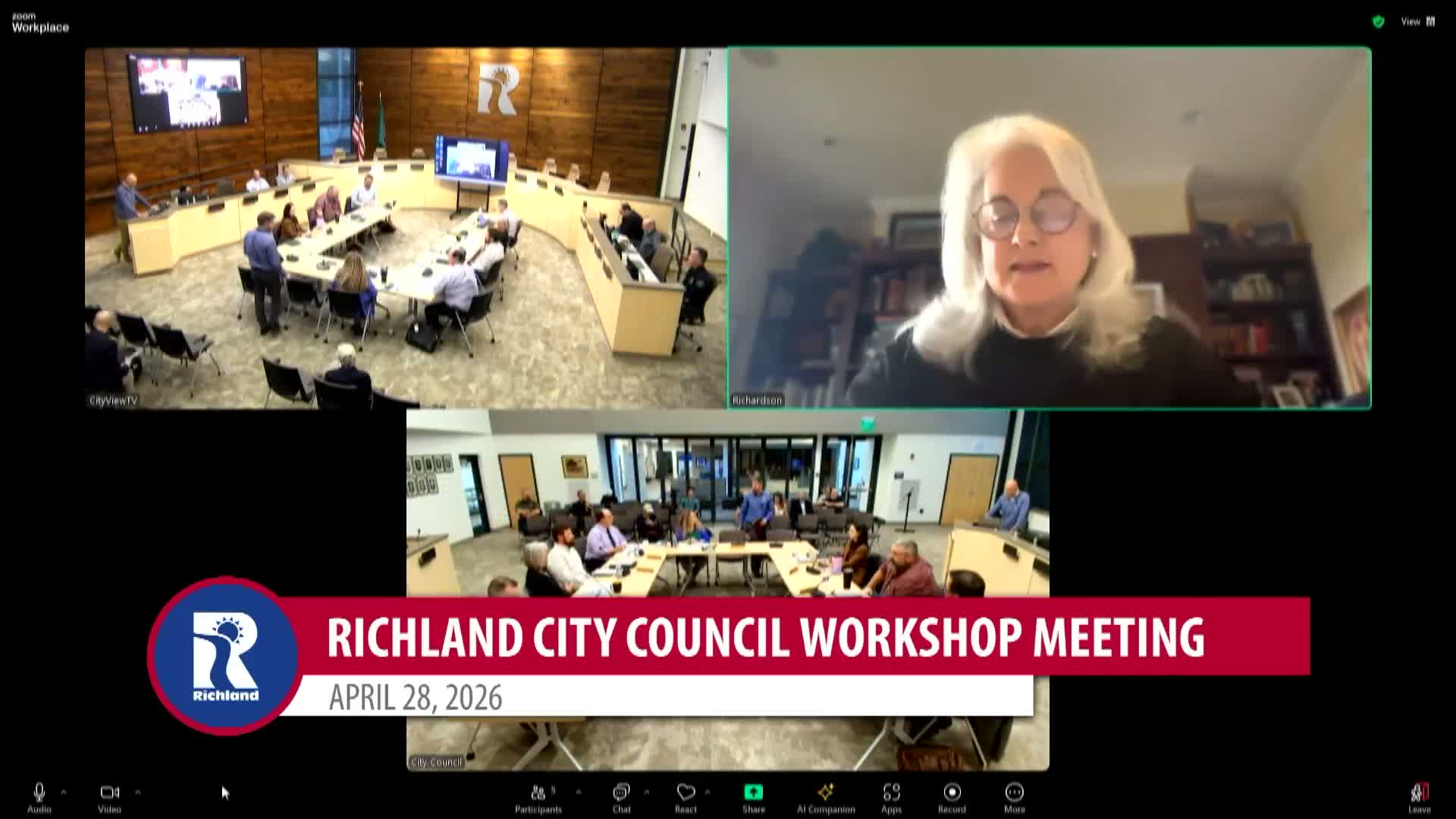
City staff gave a construction and communications update on the Downtown Loop at the Oct. 28 workshop, saying the project is funded and nearing final design but delayed by right‑of‑way negotiations.
Carlo, who presented the construction update, said the project has received all federal funding and completed a NEPA review in June. ‘‘From a funding standpoint, we are a fully funded project ready from a funding standpoint to go to construction,’’ he said.
Project design is at a 90% milestone, Carlo said, but the final plans (100% plans/specs/estimates) depend on ongoing right‑of‑way acquisitions. The team has completed appraisals and drafted purchase and sale agreements; about 30% of property settlement agreements (PSAs) have been executed. He estimated roughly 30–31 property interests will require temporary construction easements and that three small fee‑simple acquisitions could be necessary for larger impacts at specific sites such as the Circle K at Simons and George Washington Way.
Carlo said the team is ‘‘planning for bid add by the 2026’’ and clarified that the target fall bid date means September 2026; if right‑of‑way is secured and bids come in as planned, construction could start in 2026. He told the council the schedule has slipped about 11 months compared with the original strategic plan dates, largely because of delays on federal contracting and staff processes.
Staff described a comprehensive communications plan to keep downtown businesses open during construction: the Downtown Loop website and e‑notify list, contract work with Tripepi Smith for project communications, monthly half‑page ads in the Journal of Business, QR codes and yard‑sign messaging, and a downtown passport program to feature local businesses. ‘‘We’re really trying not to shut it down,’’ Amanda Wilmer said, describing business‑focused outreach and event coordination to maintain customer traffic.
Council members asked whether recent federal NEPA rule changes caused the environmental review delay; Carlo said the delay stemmed from Federal Highway Administration staff having to follow a process they were less familiar with, not the rule changes themselves. Members also suggested geofencing and other targeted digital outreach to reach visitors; staff said geofencing could be explored through the Tripepi contract but noted that device location services limit reach.
Carlo emphasized the intent to preserve business access through staged traffic control and phased construction so that lanes remain open while work proceeds on edges and intersections. The council did not take formal action; staff said they will continue right‑of‑way negotiations and return with procurement and schedule updates.
Carlo, who presented the construction update, said the project has received all federal funding and completed a NEPA review in June. ‘‘From a funding standpoint, we are a fully funded project ready from a funding standpoint to go to construction,’’ he said.
Project design is at a 90% milestone, Carlo said, but the final plans (100% plans/specs/estimates) depend on ongoing right‑of‑way acquisitions. The team has completed appraisals and drafted purchase and sale agreements; about 30% of property settlement agreements (PSAs) have been executed. He estimated roughly 30–31 property interests will require temporary construction easements and that three small fee‑simple acquisitions could be necessary for larger impacts at specific sites such as the Circle K at Simons and George Washington Way.
Carlo said the team is ‘‘planning for bid add by the 2026’’ and clarified that the target fall bid date means September 2026; if right‑of‑way is secured and bids come in as planned, construction could start in 2026. He told the council the schedule has slipped about 11 months compared with the original strategic plan dates, largely because of delays on federal contracting and staff processes.
Staff described a comprehensive communications plan to keep downtown businesses open during construction: the Downtown Loop website and e‑notify list, contract work with Tripepi Smith for project communications, monthly half‑page ads in the Journal of Business, QR codes and yard‑sign messaging, and a downtown passport program to feature local businesses. ‘‘We’re really trying not to shut it down,’’ Amanda Wilmer said, describing business‑focused outreach and event coordination to maintain customer traffic.
Council members asked whether recent federal NEPA rule changes caused the environmental review delay; Carlo said the delay stemmed from Federal Highway Administration staff having to follow a process they were less familiar with, not the rule changes themselves. Members also suggested geofencing and other targeted digital outreach to reach visitors; staff said geofencing could be explored through the Tripepi contract but noted that device location services limit reach.
Carlo emphasized the intent to preserve business access through staged traffic control and phased construction so that lanes remain open while work proceeds on edges and intersections. The council did not take formal action; staff said they will continue right‑of‑way negotiations and return with procurement and schedule updates.
View the Full Meeting & All Its Details
This article offers just a summary. Unlock complete video, transcripts, and insights as a Founder Member.
✓
Watch full, unedited meeting videos
✓
Search every word spoken in unlimited transcripts
✓
AI summaries & real-time alerts (all government levels)
✓
Permanent access to expanding government content
30-day money-back guarantee
