'Take It Back' Act would impose 100% tax on certified public‑fund fraud; committee adopts amendment and lays bill over
April 30, 2026 | 2026 Legislature MN, Minnesota
This article was created by AI summarizing key points discussed. AI makes mistakes, so for full details and context, please refer to the video of the full meeting. Please report any errors so we can fix them. Report an error »
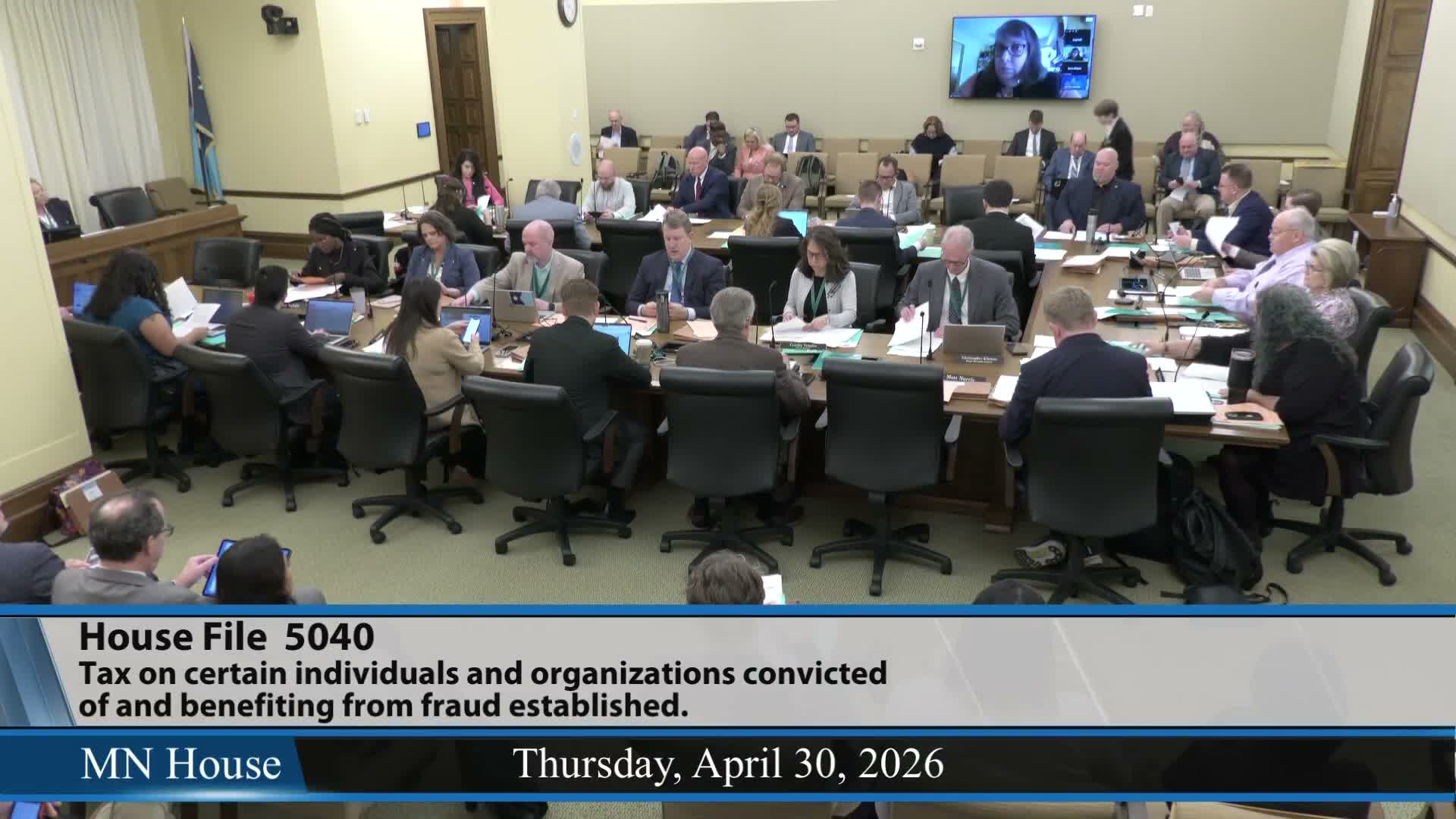
Representative Anderson told the House Tax Committee she and many coauthors introduced the "Take It Back" Act to recover taxpayer dollars stolen by fraud against public programs and to increase the penalties for convicted fraudsters.
"If you are convicted of fraud in a state in a court defrauding our public programs in the state of Minnesota, you will have to pay 100 tax on those dollars that they find that you stole — a 100%." Representative Anderson said, explaining the bill would apply a 100% tax on the amount of fraud certified after conviction, in addition to any restitution ordered by courts.
The committee adopted a DE1 amendment that the sponsor said reflected work with the Department of Revenue; Joanna Bares, legislative director for the Department of Revenue, thanked the authors for collaboration and said the department believes it can administer the proposal. "When a conviction comes over, we'll be able to assess that tax right away," Bares told the committee, describing both a tax order process and existing penalty tools the agency uses to address program fraud.
Members asked about practical matters: Representative Hollins raised concerns about lag time between conviction/audit and tax assessment and whether a tax assessment would be more timely or effective than court-ordered restitution. Representative Hollins also asked whether recovered dollars would return to the specific program harmed or to the general fund; Bares said priority collections (including restitution) typically govern lien and collection order priorities and suggested restitution often is collected first, with state tax lien priority depending on particular facts.
Representative Anderson and Department staff described the tax as "over and above" restitution orders and said the purpose is to increase the overall cost to fraudsters and to recover funds for taxpayers. The committee laid the amended bill over for possible inclusion in the omnibus tax bill.
What happens next: The committee adopted DE1 and laid House File 50‑40 over for possible inclusion in the omnibus tax bill; authors and Department of Revenue staff said they would continue to work on administrative questions raised by members.
"If you are convicted of fraud in a state in a court defrauding our public programs in the state of Minnesota, you will have to pay 100 tax on those dollars that they find that you stole — a 100%." Representative Anderson said, explaining the bill would apply a 100% tax on the amount of fraud certified after conviction, in addition to any restitution ordered by courts.
The committee adopted a DE1 amendment that the sponsor said reflected work with the Department of Revenue; Joanna Bares, legislative director for the Department of Revenue, thanked the authors for collaboration and said the department believes it can administer the proposal. "When a conviction comes over, we'll be able to assess that tax right away," Bares told the committee, describing both a tax order process and existing penalty tools the agency uses to address program fraud.
Members asked about practical matters: Representative Hollins raised concerns about lag time between conviction/audit and tax assessment and whether a tax assessment would be more timely or effective than court-ordered restitution. Representative Hollins also asked whether recovered dollars would return to the specific program harmed or to the general fund; Bares said priority collections (including restitution) typically govern lien and collection order priorities and suggested restitution often is collected first, with state tax lien priority depending on particular facts.
Representative Anderson and Department staff described the tax as "over and above" restitution orders and said the purpose is to increase the overall cost to fraudsters and to recover funds for taxpayers. The committee laid the amended bill over for possible inclusion in the omnibus tax bill.
What happens next: The committee adopted DE1 and laid House File 50‑40 over for possible inclusion in the omnibus tax bill; authors and Department of Revenue staff said they would continue to work on administrative questions raised by members.
View the Full Meeting & All Its Details
This article offers just a summary. Unlock complete video, transcripts, and insights as a Founder Member.
✓
Watch full, unedited meeting videos
✓
Search every word spoken in unlimited transcripts
✓
AI summaries & real-time alerts (all government levels)
✓
Permanent access to expanding government content
30-day money-back guarantee
