Bill would bar seven synthetic food dyes from school breakfast and lunch; sponsor says districts report no fiscal impact
April 27, 2026 | 2026 Legislature Alaska, Alaska
This article was created by AI summarizing key points discussed. AI makes mistakes, so for full details and context, please refer to the video of the full meeting. Please report any errors so we can fix them. Report an error »
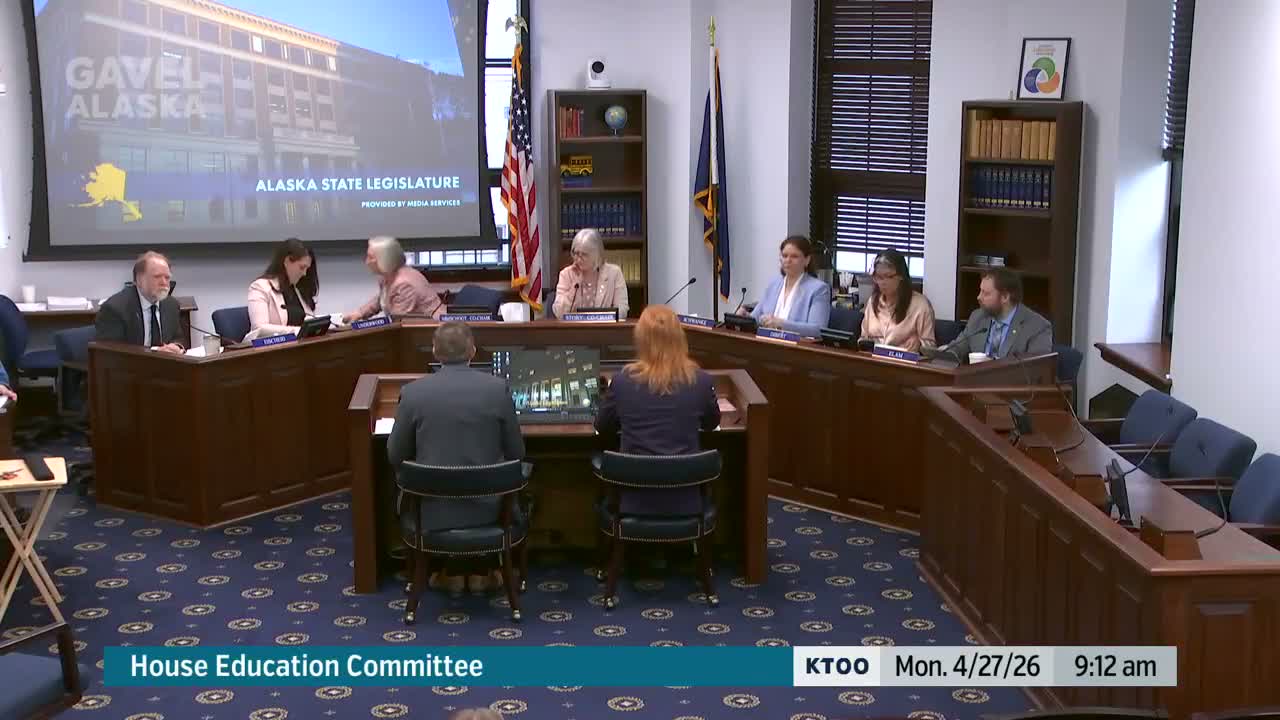
A state senator introduced Senate Bill 187 to prohibit seven synthetic food color additives from school breakfast and lunch programs, and legislative witnesses told the House Education Committee on April 27 that the policy would protect children from possible allergic and neurobehavioral harms while imposing little fiscal burden on districts.
Phoebe Pepper, legislative staff for the sponsor, said the bill targets Red No. 3, Red No. 4, Yellow No. 5, Yellow No. 6, Green No. 3 and Blue Nos. 1 and 2 and narrows coverage to school breakfast and lunch to avoid affecting community meals or summer programs. Pepper said multiple other states have moved to remove these dyes from school meals and that many school districts reported alternative products at similar cost; the Senate committee substitute narrowed the scope to breakfast and lunch to avoid unintended consequences for community feeding programs.
Britney Robbins, civic engagement coordinator at Alaska Community Action on Toxics, testified that the targeted dyes are synthetic, petrochemical‑derived additives used for cosmetic color and linked in cited studies to hypersensitivity, genotoxicity and behavioral effects. "These synthetic food dyes have also been linked to behavioral issues, such as attention deficit disorder," Robbins said, urging lawmakers to pass the measure.
Members asked about enforcement and supply‑chain impacts. Pepper said states that have enacted similar laws worked with distributors and producers to limit disruption and that some large producers have pledged to reduce or eliminate dyes from their product lines. She and the sponsor also noted the bill carries a zero fiscal note in the packet and that school nutrition directors the sponsors contacted said implementation would be manageable.
The committee opened public testimony and received none. The committee held SB 187 over for further consideration and set an amendment deadline of April 30 at noon.
Phoebe Pepper, legislative staff for the sponsor, said the bill targets Red No. 3, Red No. 4, Yellow No. 5, Yellow No. 6, Green No. 3 and Blue Nos. 1 and 2 and narrows coverage to school breakfast and lunch to avoid affecting community meals or summer programs. Pepper said multiple other states have moved to remove these dyes from school meals and that many school districts reported alternative products at similar cost; the Senate committee substitute narrowed the scope to breakfast and lunch to avoid unintended consequences for community feeding programs.
Britney Robbins, civic engagement coordinator at Alaska Community Action on Toxics, testified that the targeted dyes are synthetic, petrochemical‑derived additives used for cosmetic color and linked in cited studies to hypersensitivity, genotoxicity and behavioral effects. "These synthetic food dyes have also been linked to behavioral issues, such as attention deficit disorder," Robbins said, urging lawmakers to pass the measure.
Members asked about enforcement and supply‑chain impacts. Pepper said states that have enacted similar laws worked with distributors and producers to limit disruption and that some large producers have pledged to reduce or eliminate dyes from their product lines. She and the sponsor also noted the bill carries a zero fiscal note in the packet and that school nutrition directors the sponsors contacted said implementation would be manageable.
The committee opened public testimony and received none. The committee held SB 187 over for further consideration and set an amendment deadline of April 30 at noon.
View the Full Meeting & All Its Details
This article offers just a summary. Unlock complete video, transcripts, and insights as a Founder Member.
✓
Watch full, unedited meeting videos
✓
Search every word spoken in unlimited transcripts
✓
AI summaries & real-time alerts (all government levels)
✓
Permanent access to expanding government content
30-day money-back guarantee
