Moscow School District negotiators agree to draft staff‑safety white paper, commit to training and reporting
April 30, 2026 | Moscow School District, School Districts, Idaho
This article was created by AI summarizing key points discussed. AI makes mistakes, so for full details and context, please refer to the video of the full meeting. Please report any errors so we can fix them. Report an error »
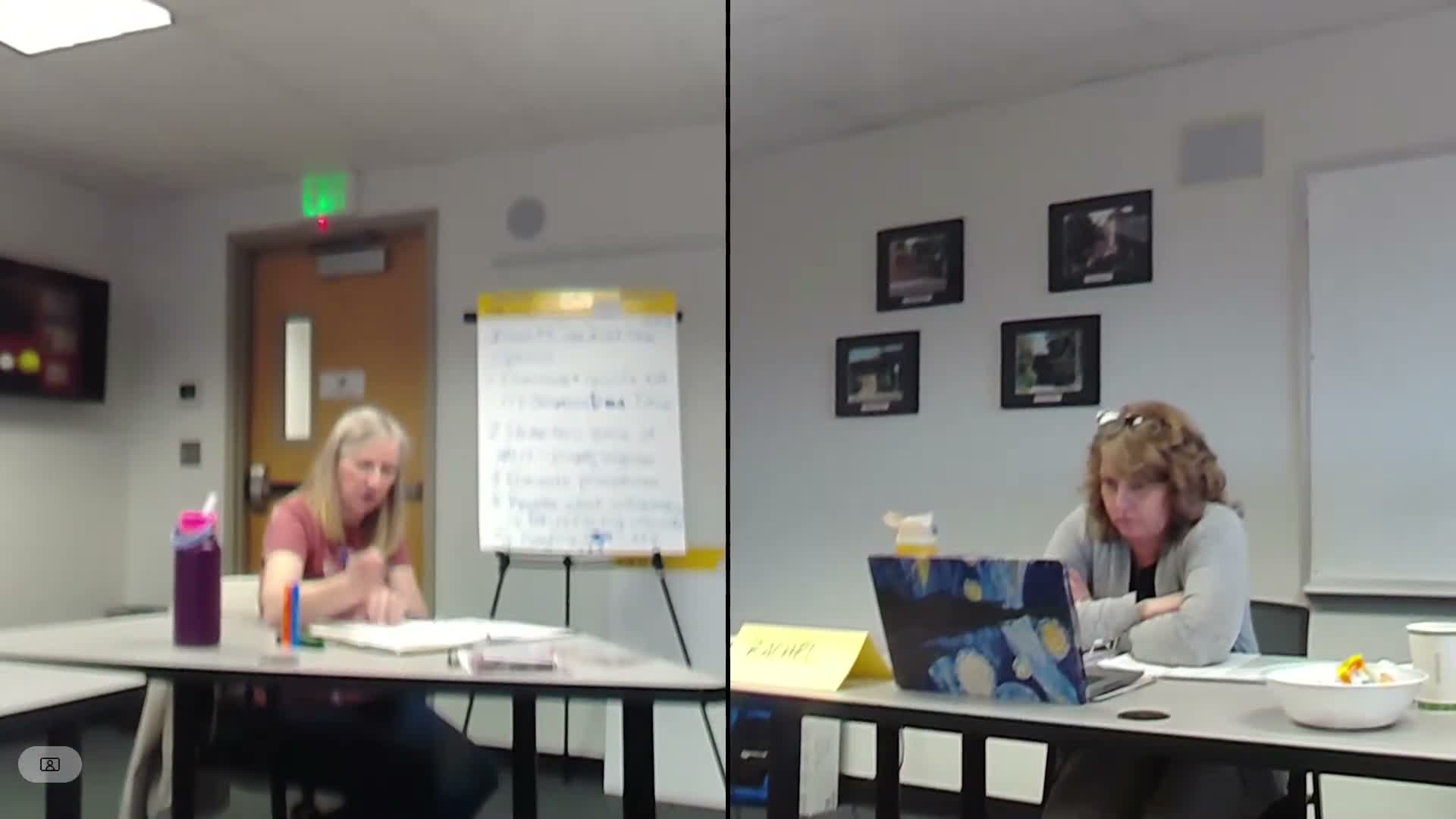
Moscow — Members of a Moscow School District interest‑based bargaining (IBB) group spent a large portion of their meeting debating how best to respond to rising concerns about staff safety and student behavior and agreed to draft a white paper to guide next steps.
The group agreed to commit, in a nonbinding white paper, to providing trauma‑informed professional development with de‑escalation training for all staff and to improving communication about behavior threat assessments. They also agreed to create a documented staff reporting channel for unsafe conditions and to “explore” (not bind the district to) an elementary behavior correction program and school‑level behavior intervention pilots supported by external grants.
Why it matters: district leaders and teachers said they are seeing increasing challenging behavior in classrooms and that staff—especially those without specialized supports—need clearer, system‑level supports. Advocates argued for both preventive work (training and classroom strategies) and better post‑incident support to reduce burnout and safety risks.
Implementation options and concerns were central to the discussion. One recurring theme was legal and privacy risk: several participants urged consulting legal counsel before adding student behavior “flags” to student records; another concern was that binding operational details into the negotiated agreement could limit the district’s ability to respond flexibly if resource availability changes.
The superintendent framed the difference between binding and nonbinding approaches: a negotiated agreement creates enforceable commitments, whereas a white paper is a joint statement of priorities and areas the district will explore.
Several concrete measures were discussed. Supporters called for immediate access to mental‑health support for staff after incidents and a consistent de‑escalation script for use across buildings. Opponents of persistent student flags raised concerns that a visible flag could stigmatize students or influence teacher expectations; alternatives included a TLC notification prompting a teacher to consult counselors or scheduled transition meetings for students with documented violent episodes.
Quotes capturing the discussion included a caution that legal review was needed before adding flags: “I may even want to talk to, like, legal counsel. I do worry like, there's just even little things… I can certainly imagine a situation where a parent is like, ‘what? you flagged my kid’” (S5, Superintendent). On training, a convenor argued for a shared approach: “...it would be beneficial if we're all speaking the same language. We're hearing the exact same thing, not, ‘well, my company is teaching this…’” (S1, committee member).
Next steps: the group asked Suna and Sean to draft the white paper for review; the draft will commit to trauma‑informed PD, consistent BTAM education, and a staff reporting system, while listing exploration of school‑based pilots and an elementary behavior program. The paper is expected to be shared at the next IBB meeting for refinement.
The group agreed to commit, in a nonbinding white paper, to providing trauma‑informed professional development with de‑escalation training for all staff and to improving communication about behavior threat assessments. They also agreed to create a documented staff reporting channel for unsafe conditions and to “explore” (not bind the district to) an elementary behavior correction program and school‑level behavior intervention pilots supported by external grants.
Why it matters: district leaders and teachers said they are seeing increasing challenging behavior in classrooms and that staff—especially those without specialized supports—need clearer, system‑level supports. Advocates argued for both preventive work (training and classroom strategies) and better post‑incident support to reduce burnout and safety risks.
Implementation options and concerns were central to the discussion. One recurring theme was legal and privacy risk: several participants urged consulting legal counsel before adding student behavior “flags” to student records; another concern was that binding operational details into the negotiated agreement could limit the district’s ability to respond flexibly if resource availability changes.
The superintendent framed the difference between binding and nonbinding approaches: a negotiated agreement creates enforceable commitments, whereas a white paper is a joint statement of priorities and areas the district will explore.
Several concrete measures were discussed. Supporters called for immediate access to mental‑health support for staff after incidents and a consistent de‑escalation script for use across buildings. Opponents of persistent student flags raised concerns that a visible flag could stigmatize students or influence teacher expectations; alternatives included a TLC notification prompting a teacher to consult counselors or scheduled transition meetings for students with documented violent episodes.
Quotes capturing the discussion included a caution that legal review was needed before adding flags: “I may even want to talk to, like, legal counsel. I do worry like, there's just even little things… I can certainly imagine a situation where a parent is like, ‘what? you flagged my kid’” (S5, Superintendent). On training, a convenor argued for a shared approach: “...it would be beneficial if we're all speaking the same language. We're hearing the exact same thing, not, ‘well, my company is teaching this…’” (S1, committee member).
Next steps: the group asked Suna and Sean to draft the white paper for review; the draft will commit to trauma‑informed PD, consistent BTAM education, and a staff reporting system, while listing exploration of school‑based pilots and an elementary behavior program. The paper is expected to be shared at the next IBB meeting for refinement.
Don't Miss a Word: See the Full Meeting!
Go beyond summaries. Unlock every video, transcript, and key insight with a Founder Membership.
✓
Get instant access to full meeting videos
✓
Search and clip any phrase from complete transcripts
✓
Receive AI-powered summaries & custom alerts
✓
Enjoy lifetime, unrestricted access to government data
30-day money-back guarantee
