Committee advances broad slate of bills; most set for consent calendar
April 30, 2026 | Commerce and Consumer Affairs, House of Representatives, Committees , Legislative, New Hampshire
This article was created by AI summarizing key points discussed. AI makes mistakes, so for full details and context, please refer to the video of the full meeting. Please report any errors so we can fix them. Report an error »
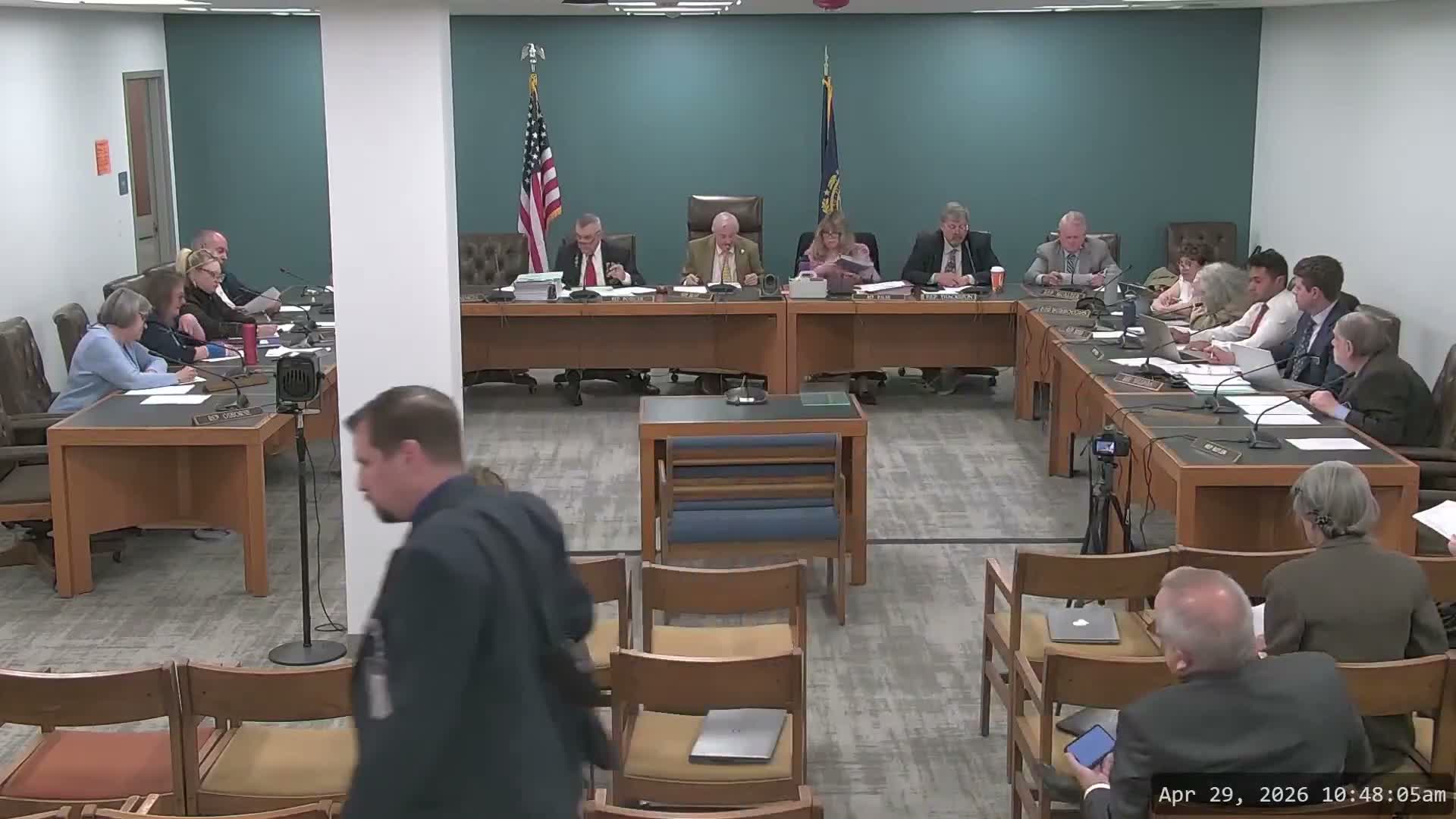
The Senate Commerce and Consumer Affairs committee met in executive session and advanced a large group of bills, placing many on the consent calendar by voice or roll-call votes.
The panel approved interim-study or passage motions for multiple bills, frequently by unanimous margins. Measures that were recorded as passing or moving forward by unanimous—or near‑unanimous—roll calls included bills on clinician‑administered drug safety (SB 256), limits on prior authorization for rehabilitative therapies (SB 480), credit‑union board compensation (SB 487), broker‑dealer associate supervision (SB 496), an increase in the state guarantee cap (SB 525), and a range of housing‑resilience and insurance‑related items (SB 562, SB 565). Several of these were explicitly placed on the committee’s consent calendar during the session.
A handful of bills drew more than routine procedure. Committee members voted 13–2 to send Senate Bill 444 (prohibiting certain animal testing when alternatives exist) to interim study rather than advancing it to the floor with an amendment; the committee nonetheless agreed to put it on consent. Other measures, including an item on managed‑care law changes that went through an amendment process, were ultimately recorded as approved by the committee after members corrected or reconsidered earlier votes.
Most routine or noncontroversial measures were routed to the consent calendar so the full chamber can consider them en bloc. The chair and clerk presided over repeated roll calls; recorded tallies frequently appeared as 15–0 (spoken in the record as “15 to zip”) or similar variants depending on attendance.
The committee also scheduled subcommittee work to handle outstanding amendment drafting before some bills return for final executive‑session action. The session adjourned after leadership outlined the process for filing minority reports and bringing late amendments into the next calendar.
The panel approved interim-study or passage motions for multiple bills, frequently by unanimous margins. Measures that were recorded as passing or moving forward by unanimous—or near‑unanimous—roll calls included bills on clinician‑administered drug safety (SB 256), limits on prior authorization for rehabilitative therapies (SB 480), credit‑union board compensation (SB 487), broker‑dealer associate supervision (SB 496), an increase in the state guarantee cap (SB 525), and a range of housing‑resilience and insurance‑related items (SB 562, SB 565). Several of these were explicitly placed on the committee’s consent calendar during the session.
A handful of bills drew more than routine procedure. Committee members voted 13–2 to send Senate Bill 444 (prohibiting certain animal testing when alternatives exist) to interim study rather than advancing it to the floor with an amendment; the committee nonetheless agreed to put it on consent. Other measures, including an item on managed‑care law changes that went through an amendment process, were ultimately recorded as approved by the committee after members corrected or reconsidered earlier votes.
Most routine or noncontroversial measures were routed to the consent calendar so the full chamber can consider them en bloc. The chair and clerk presided over repeated roll calls; recorded tallies frequently appeared as 15–0 (spoken in the record as “15 to zip”) or similar variants depending on attendance.
The committee also scheduled subcommittee work to handle outstanding amendment drafting before some bills return for final executive‑session action. The session adjourned after leadership outlined the process for filing minority reports and bringing late amendments into the next calendar.
Don't Miss a Word: See the Full Meeting!
Go beyond summaries. Unlock every video, transcript, and key insight with a Founder Membership.
✓
Get instant access to full meeting videos
✓
Search and clip any phrase from complete transcripts
✓
Receive AI-powered summaries & custom alerts
✓
Enjoy lifetime, unrestricted access to government data
30-day money-back guarantee
