Council approves CF-1 compliance filings after debate over job shortfalls; one form remains outstanding
April 27, 2026 | Valparaiso City, Porter County, Indiana
This article was created by AI summarizing key points discussed. AI makes mistakes, so for full details and context, please refer to the video of the full meeting. Please report any errors so we can fix them. Report an error »
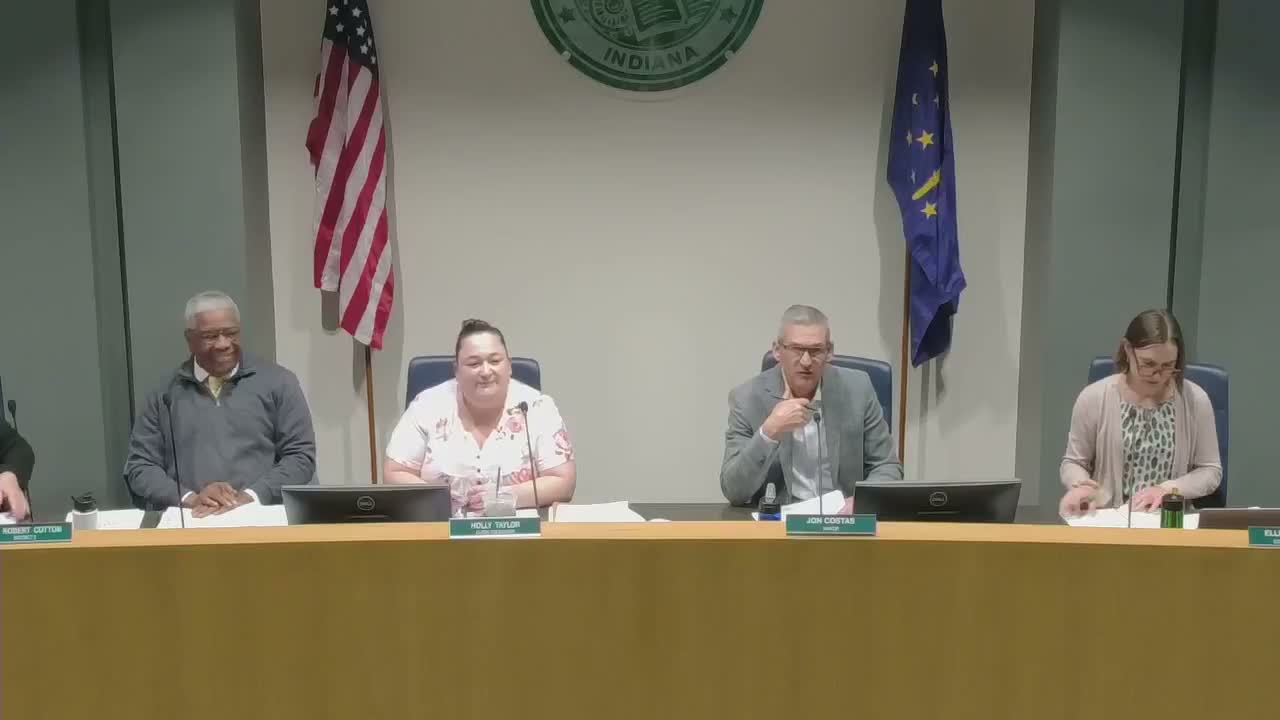
George Douglas, the city's director of development, presented the annual CF-1 compliance review required under Indiana code and recommended the council find that the companies that filed had substantially complied or made reasonable efforts to comply.
Douglas said the city received six CF-1s for business personal property and ten CF-1s for real property; only InTouch Pharmaceuticals had not yet submitted its CF-1. He told the council the companies generally continued to invest in the community, with assessed valuations and wages in some cases exceeding original expectations, although several firms reported employment shortfalls compared with earlier SB-1 projections.
Council members pressed for clarity about what constitutes a "good faith" effort and asked for company-specific explanations for employment declines. Members cited examples in the packet: Computer Sciences (CSI) reported a drop from 121 employees to 74 while average wages rose; Union Electric's beginning employment figure of 81 was reported now as 66. One council member moved to approve the CF-1s for those in substantial compliance but exclude Union Electric, CSI and Artdell pending additional information; that motion failed in the roll call (the chair recorded the result as five in favor, two opposed). A subsequent motion to approve all submitted CF-1s as substantially compliant passed on roll call 6–1 (Council member Cotton recorded as the lone 'No').
Douglas said the outstanding InTouch CF-1 is expected next week and will be brought to the council at the first May meeting. He and council members asked staff to reach back to company representatives for explanations about job counts, remote work practices and other factors so the council can better understand discrepancies between the SB-1 projections and current reported numbers.
The council's action authorizes the council president to sign the CF-1 forms for the companies found in substantial compliance; members stressed the decision was subject to additional follow-up and that formal clawback or revocation would require a separate legal process under state law.
Douglas said the city received six CF-1s for business personal property and ten CF-1s for real property; only InTouch Pharmaceuticals had not yet submitted its CF-1. He told the council the companies generally continued to invest in the community, with assessed valuations and wages in some cases exceeding original expectations, although several firms reported employment shortfalls compared with earlier SB-1 projections.
Council members pressed for clarity about what constitutes a "good faith" effort and asked for company-specific explanations for employment declines. Members cited examples in the packet: Computer Sciences (CSI) reported a drop from 121 employees to 74 while average wages rose; Union Electric's beginning employment figure of 81 was reported now as 66. One council member moved to approve the CF-1s for those in substantial compliance but exclude Union Electric, CSI and Artdell pending additional information; that motion failed in the roll call (the chair recorded the result as five in favor, two opposed). A subsequent motion to approve all submitted CF-1s as substantially compliant passed on roll call 6–1 (Council member Cotton recorded as the lone 'No').
Douglas said the outstanding InTouch CF-1 is expected next week and will be brought to the council at the first May meeting. He and council members asked staff to reach back to company representatives for explanations about job counts, remote work practices and other factors so the council can better understand discrepancies between the SB-1 projections and current reported numbers.
The council's action authorizes the council president to sign the CF-1 forms for the companies found in substantial compliance; members stressed the decision was subject to additional follow-up and that formal clawback or revocation would require a separate legal process under state law.
View the Full Meeting & All Its Details
This article offers just a summary. Unlock complete video, transcripts, and insights as a Founder Member.
✓
Watch full, unedited meeting videos
✓
Search every word spoken in unlimited transcripts
✓
AI summaries & real-time alerts (all government levels)
✓
Permanent access to expanding government content
30-day money-back guarantee
