Consultants brief council on transportation plan update; propose traffic‑stress metric and long‑range project list
April 28, 2026 | Kennewick City, Benton County, Washington
This article was created by AI summarizing key points discussed. AI makes mistakes, so for full details and context, please refer to the video of the full meeting. Please report any errors so we can fix them. Report an error »
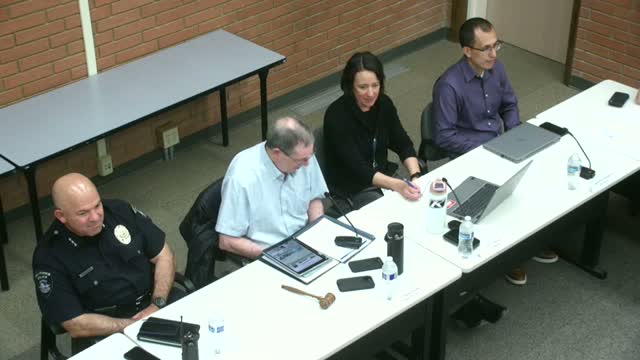
Kennewick'9s council received a briefing Wednesday from Transpo Group on the city'9s transportation systems plan, an update to the transportation element of the comprehensive plan that will guide multimodal projects, level‑of‑service targets and a long‑range project list through 2046.
John Pasquale, managing principal with Transpo Group, told the council the update builds on the city'9s 2018 plan and refines functional street classifications, pedestrian and bicycle network maps, freight and transit corridors, and project priorities. He said the plan relies on the Benton‑Franklin Council of Governments regional demand model and state planning guidance to convert anticipated growth into network trips and test project scenarios.
Pasquale said updated pedestrian and bicycle performance measures are being incorporated to comply with the Growth Management Act, proposing a level‑of‑traffic‑stress (LTS) framework for pedestrians and cyclists. "We're proposing that the city set their level of traffic stress at level traffic stress 3," he said, adding that most priority facilities would be planned to meet LTS 2 while some lower‑priority segments would be LTS 3 or 4 and would be targeted for future projects.
On growth assumptions, Pasquale said the plan uses forecasts from the comprehensive plan process (about 1.5% annual household growth and roughly 3% job growth) and noted those figures feed the transportation model to estimate future demand. He emphasized policy tradeoffs: higher performance targets require more projects and more revenue, and the plan will include project cost estimates and potential funding strategies.
Council members asked about local congestion hotspots and functional classification choices. Council Member Trumbo flagged recurring backups on 27th Avenue and at the Edison/27th roundabout and urged staff to examine bottlenecks; another council member asked for clarification on whether functional classification maps were city or consultant‑sourced. Pasquale said classifications are updated by staff and consultants together and that the draft plan will include intersection level‑of‑service maps and a project list paired with suggested improvements (e.g., signals, roundabouts, turn lanes, or other intersection fixes).
Pasquale outlined the schedule: a draft transportation systems plan release in May, a public open house and subsequent planning commission and council briefings in July–September with adoption expected later in the year. He said remaining work includes project cost estimates and a financing strategy that will accompany the draft and asked for council feedback ahead of the public release.
No formal council action was taken at the workshop; the briefing will be followed by public outreach and the release of the draft plan.
John Pasquale, managing principal with Transpo Group, told the council the update builds on the city'9s 2018 plan and refines functional street classifications, pedestrian and bicycle network maps, freight and transit corridors, and project priorities. He said the plan relies on the Benton‑Franklin Council of Governments regional demand model and state planning guidance to convert anticipated growth into network trips and test project scenarios.
Pasquale said updated pedestrian and bicycle performance measures are being incorporated to comply with the Growth Management Act, proposing a level‑of‑traffic‑stress (LTS) framework for pedestrians and cyclists. "We're proposing that the city set their level of traffic stress at level traffic stress 3," he said, adding that most priority facilities would be planned to meet LTS 2 while some lower‑priority segments would be LTS 3 or 4 and would be targeted for future projects.
On growth assumptions, Pasquale said the plan uses forecasts from the comprehensive plan process (about 1.5% annual household growth and roughly 3% job growth) and noted those figures feed the transportation model to estimate future demand. He emphasized policy tradeoffs: higher performance targets require more projects and more revenue, and the plan will include project cost estimates and potential funding strategies.
Council members asked about local congestion hotspots and functional classification choices. Council Member Trumbo flagged recurring backups on 27th Avenue and at the Edison/27th roundabout and urged staff to examine bottlenecks; another council member asked for clarification on whether functional classification maps were city or consultant‑sourced. Pasquale said classifications are updated by staff and consultants together and that the draft plan will include intersection level‑of‑service maps and a project list paired with suggested improvements (e.g., signals, roundabouts, turn lanes, or other intersection fixes).
Pasquale outlined the schedule: a draft transportation systems plan release in May, a public open house and subsequent planning commission and council briefings in July–September with adoption expected later in the year. He said remaining work includes project cost estimates and a financing strategy that will accompany the draft and asked for council feedback ahead of the public release.
No formal council action was taken at the workshop; the briefing will be followed by public outreach and the release of the draft plan.
View the Full Meeting & All Its Details
This article offers just a summary. Unlock complete video, transcripts, and insights as a Founder Member.
✓
Watch full, unedited meeting videos
✓
Search every word spoken in unlimited transcripts
✓
AI summaries & real-time alerts (all government levels)
✓
Permanent access to expanding government content
30-day money-back guarantee
