Agency official says converted-jail evidence room restricts access and preserves chain of custody
April 29, 2026 | Rock Springs City Council, Rock Springs, Sweetwater County, Wyoming
This article was created by AI summarizing key points discussed. AI makes mistakes, so for full details and context, please refer to the video of the full meeting. Please report any errors so we can fix them. Report an error »
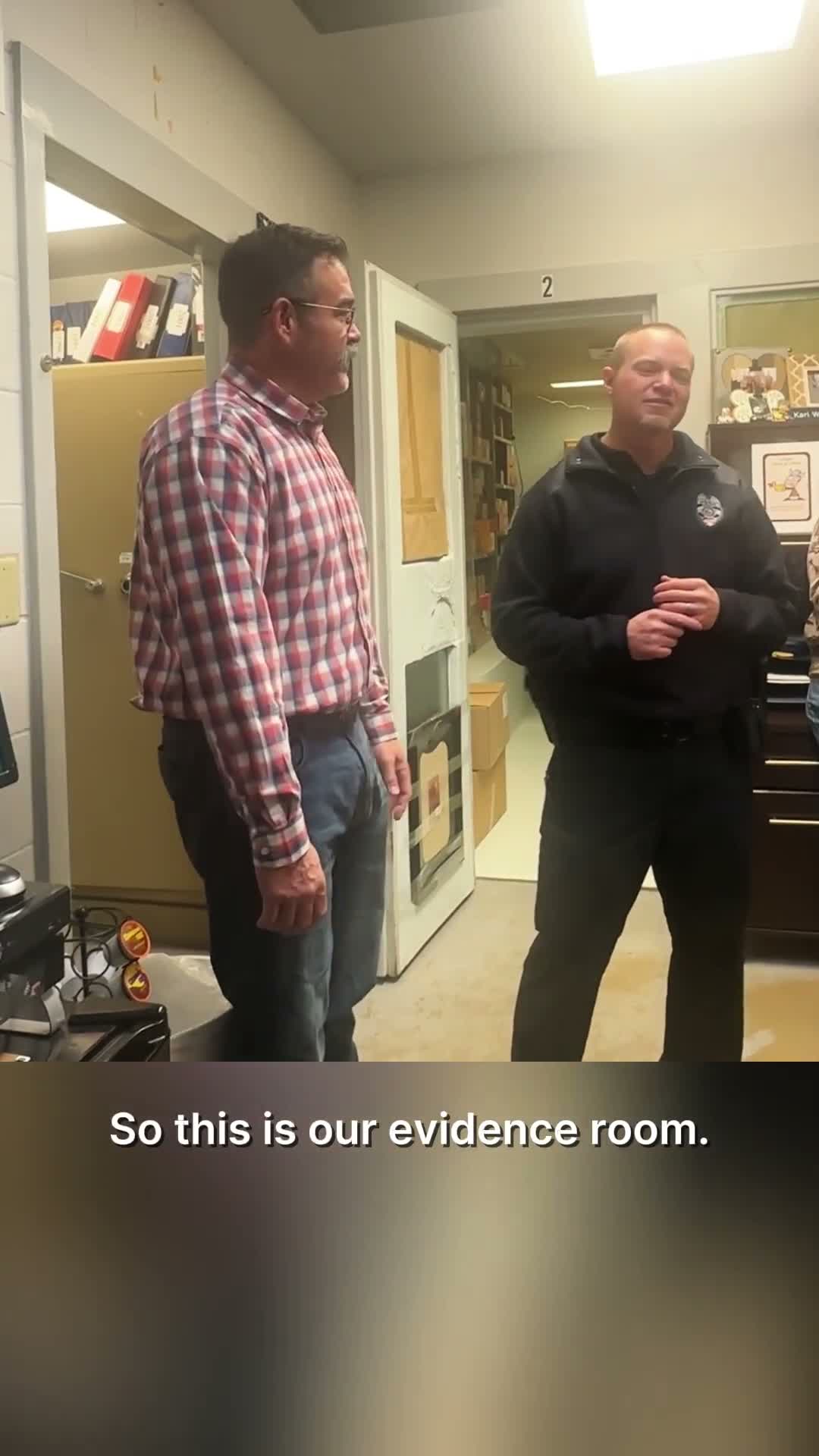
An agency official led a walkthrough of the department’s evidence room — a former jail converted into an evidence-holding facility — and emphasized the unit’s role in preserving chain of custody and securing items used in criminal prosecutions. "So this is our evidence room," the official said.
The official said officers bring all case evidence to this location for processing, where two designated staff check that items were processed and stored correctly. "These two make sure that that was all done correctly and is stored correctly," the official said, adding that there are "high standards for how that is all done." The speaker identified one of those staff members by first name — Carrie — and said only those two routinely have access to the room. "Nobody in the agency except these 2 have access to it," the official said, and noted the chief does not have access.
The official described a formal procedure for emergency access to the facility, saying an authorized process exists to obtain a key if necessary. On the importance of proper handling, the official stated: "The evidence that's in here will make or break your case, and we have victims out there that are counting on us to do these things correctly." The official said evidence technicians document who packaged items, who possessed them, and when they were examined, and that the unit fulfills attorney and public-record requests: "All of our video requests are processed here."
The account in the record was a presentation and tour; no formal motion or vote was recorded in the transcript. The description focused on operational controls — restricted access, documentation practices, and the unit’s workload handling video requests — that the official said are intended to protect prosecutions and serve victims.
No attendee names or formal titles were provided in the transcript beyond the first name "Carrie" and the speaker’s self-references. The speaker is recorded in the transcript only as an agency official; the record does not specify additional identifying details, dates, or formal actions taken during the visit.
The official said officers bring all case evidence to this location for processing, where two designated staff check that items were processed and stored correctly. "These two make sure that that was all done correctly and is stored correctly," the official said, adding that there are "high standards for how that is all done." The speaker identified one of those staff members by first name — Carrie — and said only those two routinely have access to the room. "Nobody in the agency except these 2 have access to it," the official said, and noted the chief does not have access.
The official described a formal procedure for emergency access to the facility, saying an authorized process exists to obtain a key if necessary. On the importance of proper handling, the official stated: "The evidence that's in here will make or break your case, and we have victims out there that are counting on us to do these things correctly." The official said evidence technicians document who packaged items, who possessed them, and when they were examined, and that the unit fulfills attorney and public-record requests: "All of our video requests are processed here."
The account in the record was a presentation and tour; no formal motion or vote was recorded in the transcript. The description focused on operational controls — restricted access, documentation practices, and the unit’s workload handling video requests — that the official said are intended to protect prosecutions and serve victims.
No attendee names or formal titles were provided in the transcript beyond the first name "Carrie" and the speaker’s self-references. The speaker is recorded in the transcript only as an agency official; the record does not specify additional identifying details, dates, or formal actions taken during the visit.
View the Full Meeting & All Its Details
This article offers just a summary. Unlock complete video, transcripts, and insights as a Founder Member.
✓
Watch full, unedited meeting videos
✓
Search every word spoken in unlimited transcripts
✓
AI summaries & real-time alerts (all government levels)
✓
Permanent access to expanding government content
30-day money-back guarantee
