Senate passes 'Blake Burgess Act' to expand blood‑clot screening after extended debate
April 28, 2026 | 2026 Legislature OK, Oklahoma
This article was created by AI summarizing key points discussed. AI makes mistakes, so for full details and context, please refer to the video of the full meeting. Please report any errors so we can fix them. Report an error »
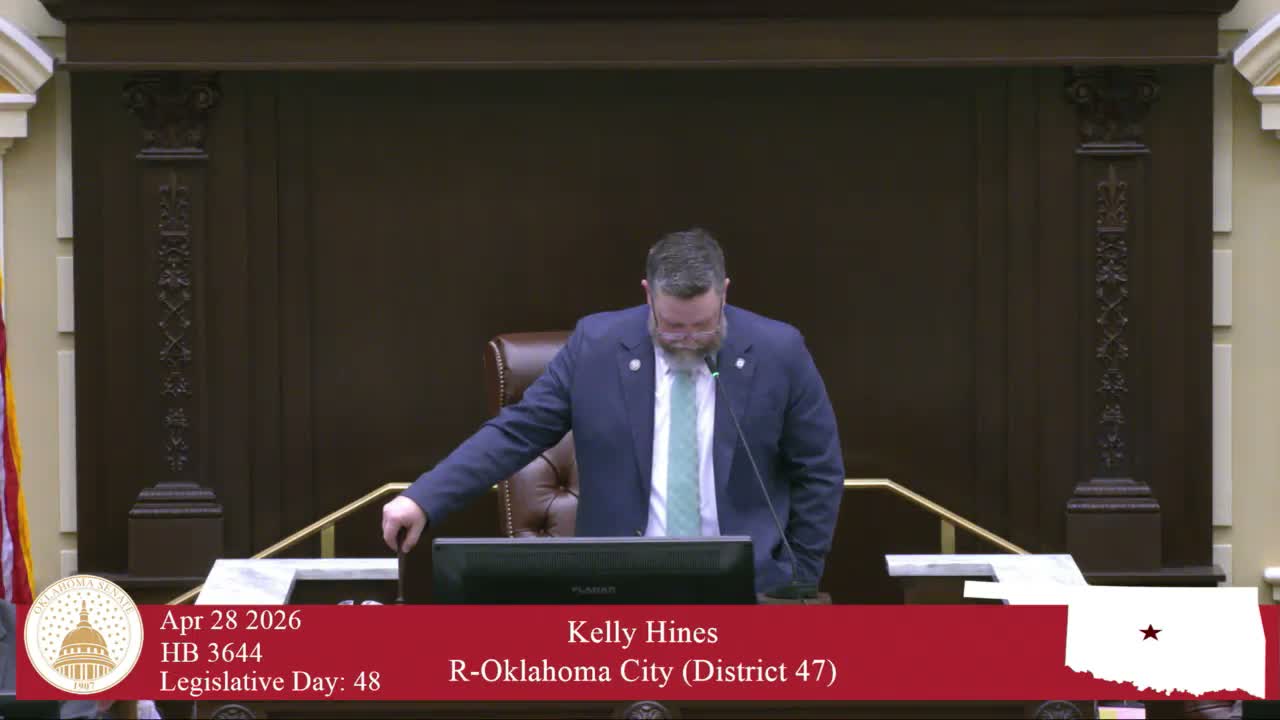
Senator Kelly Hines, sponsor of the floor substitute for House Bill 3644, told the Senate the measure responds to preventable deaths from pulmonary embolism by requiring hospitals and ambulatory surgical centers to develop protocols for screening and care of patients at risk for venous thromboembolism (VTE). "This bill increases education, standardization, research and innovation, spreads awareness, and it prevents unnecessary blood or deaths from blood clots," Hines said.
The bill requires each hospital with an emergency department and each ambulatory surgical center to implement policies and procedures for identifying and treating individuals at risk of VTE. Senator Hines cited the loss of a 21‑year‑old, Blake Burgess, as the bill’s impetus and said the measure includes a one‑time startup fiscal impact of $150,000 to establish a state‑designated health‑information exchange and training; ongoing maintenance costs were described as "nominal" by the sponsor.
Why it matters: Supporters framed the bill as a preventive, life‑saving measure that standardizes screening and promotes data collection and research. Opponents and questioners raised concerns about hidden costs, coding and billing impacts, whether the fiscal note captured the full cost of training and ongoing maintenance, and the potential for defensive medicine and malpractice exposure.
Key points from debate: Senator Jett and others pressed for clarity about who bears ongoing costs and how screening will be coded and billed to patients and insurers. The sponsor said the $150,000 covers startup including database setup and initial training via a state‑designated health information exchange. Medical‑trained senators emphasized both the human toll of missed VTEs and the difficulty of diagnosis; one senator described the complexity of implementation and potential unintended cost shifts to patients or insurers.
Votes and next steps: After extended debate and a mix of medical, fiscal and policy questions, the Senate passed HB 3644 36–11 and declared it an emergency measure. The bill now moves to enrollment and the governor’s desk for signature and implementation planning.
The session also included gallery introductions of the Burgess family and other guests following passage.
The bill requires each hospital with an emergency department and each ambulatory surgical center to implement policies and procedures for identifying and treating individuals at risk of VTE. Senator Hines cited the loss of a 21‑year‑old, Blake Burgess, as the bill’s impetus and said the measure includes a one‑time startup fiscal impact of $150,000 to establish a state‑designated health‑information exchange and training; ongoing maintenance costs were described as "nominal" by the sponsor.
Why it matters: Supporters framed the bill as a preventive, life‑saving measure that standardizes screening and promotes data collection and research. Opponents and questioners raised concerns about hidden costs, coding and billing impacts, whether the fiscal note captured the full cost of training and ongoing maintenance, and the potential for defensive medicine and malpractice exposure.
Key points from debate: Senator Jett and others pressed for clarity about who bears ongoing costs and how screening will be coded and billed to patients and insurers. The sponsor said the $150,000 covers startup including database setup and initial training via a state‑designated health information exchange. Medical‑trained senators emphasized both the human toll of missed VTEs and the difficulty of diagnosis; one senator described the complexity of implementation and potential unintended cost shifts to patients or insurers.
Votes and next steps: After extended debate and a mix of medical, fiscal and policy questions, the Senate passed HB 3644 36–11 and declared it an emergency measure. The bill now moves to enrollment and the governor’s desk for signature and implementation planning.
The session also included gallery introductions of the Burgess family and other guests following passage.
View the Full Meeting & All Its Details
This article offers just a summary. Unlock complete video, transcripts, and insights as a Founder Member.
✓
Watch full, unedited meeting videos
✓
Search every word spoken in unlimited transcripts
✓
AI summaries & real-time alerts (all government levels)
✓
Permanent access to expanding government content
30-day money-back guarantee
