Hunterdon Central board approves 2026–27 budget, lowers levy to 2.27% after debate over reserves and health costs
April 28, 2026 | Hunterdon Central Regional High School District, School Districts, New Jersey
This article was created by AI summarizing key points discussed. AI makes mistakes, so for full details and context, please refer to the video of the full meeting. Please report any errors so we can fix them. Report an error »
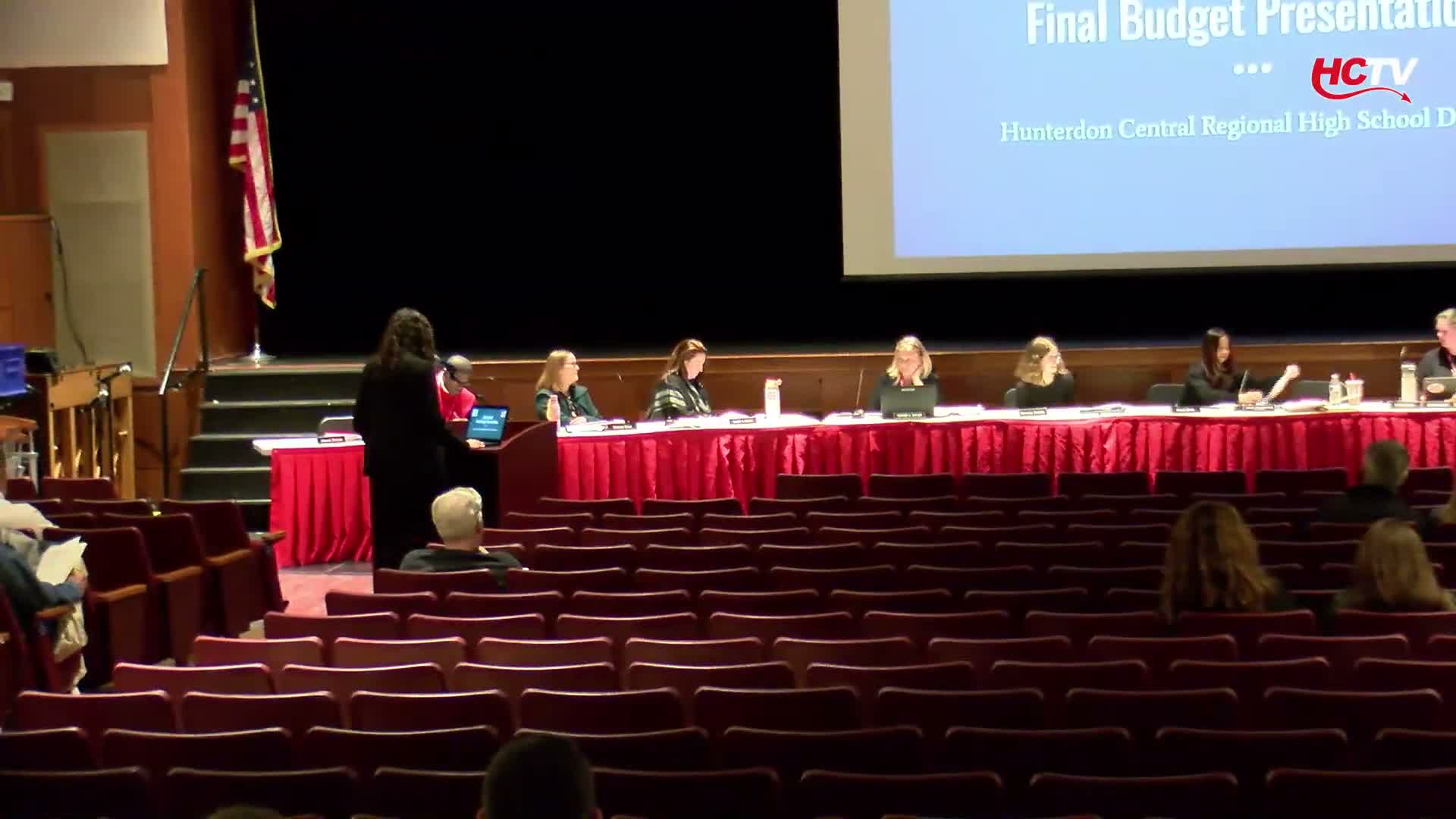
The Hunterdon Central Regional High School Board of Education voted Tuesday to adopt a final 2026–27 budget that trims a previously proposed 3% tax levy increase to 2.27%, following hours of presentation, trustee questioning and heated public comment.
The budget package, moved and seconded by board members during the open meeting, preserves existing curricular and co‑curricular programs while recognizing the district’s “fiscal realities,” Superintendent (title recorded in the meeting) said during a detailed presentation on revenues and expenditures. The administration said two recommended adjustments—changing the prescription‑plan provider and using emergency reserves to absorb some health‑benefit costs—produce savings that helped reduce the levy.
Why it matters: Trustees framed the vote as a balance between protecting programs and guarding long‑term fiscal health. The administration emphasized that rising health‑care costs (the superintendent cited an 18% increase for the current year) and typical salary growth make small levy increases necessary to avoid service cuts or debt financing for capital work.
Board debate and an amendment: Board member Leslie Santangelo moved an amendment that would have cut the levy to 1.5% and directed any funds proposed for deposit into capital reserves by June 30 to instead offset the tax levy. That motion was seconded but, after the board closed further debate, the amendment failed on a roll‑call vote.
Supporters of the original motion said the 2.27% levy continues the district’s long‑term budgeting approach—using capital reserves and interest earnings to fund large projects rather than debt—while minimizing immediate taxpayer impact. Trustee comments cited the district’s strategic plan and the need to replenish reserves after capital spending.
Public comment: During the resident forum dozens of speakers urged both caution and action. Some taxpayers, including Mary Ann Rampulla, praised the administration’s work to lower the levy while maintaining services. Other residents, notably Sandra Devore and Rebecca Peterson, pressed for more transparency about historical surpluses and capital‑reserve policy, arguing the district often budgets conservatively and then transfers surplus to reserves. Several speakers urged an independent audit or clearer public reporting on how surplus figures are generated.
Insurance vendor and reserves: Trustees also debated a recommendation from the administration and its broker—Brown & Brown—to switch the group prescription plan to a carrier accessed through a public employer trust; administration documents estimate roughly $251,000 in savings associated with that change. Board members expressed concern about language in a draft resolution that would have said the broker was authorized to "act on behalf of the board in all matters." The board removed that sentence, asked for legal oversight language to be clarified, and approved the insurance‑related resolution with that sentence struck.
Votes and next steps: The board carried the final budget motion by roll call and approved related L‑items (finance/insurance/capital) with amended language about broker authority. The superintendent said the user‑friendly budget and presentation materials will be available on the district website within 48 hours and that the June audit will determine any final surplus available for capital‑reserve designation.
The board also noted the long‑range facilities plan lists approximately 80 projects over five years at an estimated cost of about $66 million; the administration said projects will be prioritized if capital reserves are insufficient and that referendum or bonding remains an option if necessary.
What’s next: The budget is now adopted for the 2026–27 school year; trustees said the administration and various committees will continue to refine projects, follow up on requests for vendor and actuarial data, and provide additional documentation requested by board members about broker comparisons and the prescription‑plan analysis.
The budget package, moved and seconded by board members during the open meeting, preserves existing curricular and co‑curricular programs while recognizing the district’s “fiscal realities,” Superintendent (title recorded in the meeting) said during a detailed presentation on revenues and expenditures. The administration said two recommended adjustments—changing the prescription‑plan provider and using emergency reserves to absorb some health‑benefit costs—produce savings that helped reduce the levy.
Why it matters: Trustees framed the vote as a balance between protecting programs and guarding long‑term fiscal health. The administration emphasized that rising health‑care costs (the superintendent cited an 18% increase for the current year) and typical salary growth make small levy increases necessary to avoid service cuts or debt financing for capital work.
Board debate and an amendment: Board member Leslie Santangelo moved an amendment that would have cut the levy to 1.5% and directed any funds proposed for deposit into capital reserves by June 30 to instead offset the tax levy. That motion was seconded but, after the board closed further debate, the amendment failed on a roll‑call vote.
Supporters of the original motion said the 2.27% levy continues the district’s long‑term budgeting approach—using capital reserves and interest earnings to fund large projects rather than debt—while minimizing immediate taxpayer impact. Trustee comments cited the district’s strategic plan and the need to replenish reserves after capital spending.
Public comment: During the resident forum dozens of speakers urged both caution and action. Some taxpayers, including Mary Ann Rampulla, praised the administration’s work to lower the levy while maintaining services. Other residents, notably Sandra Devore and Rebecca Peterson, pressed for more transparency about historical surpluses and capital‑reserve policy, arguing the district often budgets conservatively and then transfers surplus to reserves. Several speakers urged an independent audit or clearer public reporting on how surplus figures are generated.
Insurance vendor and reserves: Trustees also debated a recommendation from the administration and its broker—Brown & Brown—to switch the group prescription plan to a carrier accessed through a public employer trust; administration documents estimate roughly $251,000 in savings associated with that change. Board members expressed concern about language in a draft resolution that would have said the broker was authorized to "act on behalf of the board in all matters." The board removed that sentence, asked for legal oversight language to be clarified, and approved the insurance‑related resolution with that sentence struck.
Votes and next steps: The board carried the final budget motion by roll call and approved related L‑items (finance/insurance/capital) with amended language about broker authority. The superintendent said the user‑friendly budget and presentation materials will be available on the district website within 48 hours and that the June audit will determine any final surplus available for capital‑reserve designation.
The board also noted the long‑range facilities plan lists approximately 80 projects over five years at an estimated cost of about $66 million; the administration said projects will be prioritized if capital reserves are insufficient and that referendum or bonding remains an option if necessary.
What’s next: The budget is now adopted for the 2026–27 school year; trustees said the administration and various committees will continue to refine projects, follow up on requests for vendor and actuarial data, and provide additional documentation requested by board members about broker comparisons and the prescription‑plan analysis.
View the Full Meeting & All Its Details
This article offers just a summary. Unlock complete video, transcripts, and insights as a Founder Member.
✓
Watch full, unedited meeting videos
✓
Search every word spoken in unlimited transcripts
✓
AI summaries & real-time alerts (all government levels)
✓
Permanent access to expanding government content
30-day money-back guarantee
