Board reviews updated cellphone, public‑records and police‑interview policies after new state rules
April 28, 2026 | East Porter County School Corp, School Boards, Indiana
This article was created by AI summarizing key points discussed. AI makes mistakes, so for full details and context, please refer to the video of the full meeting. Please report any errors so we can fix them. Report an error »
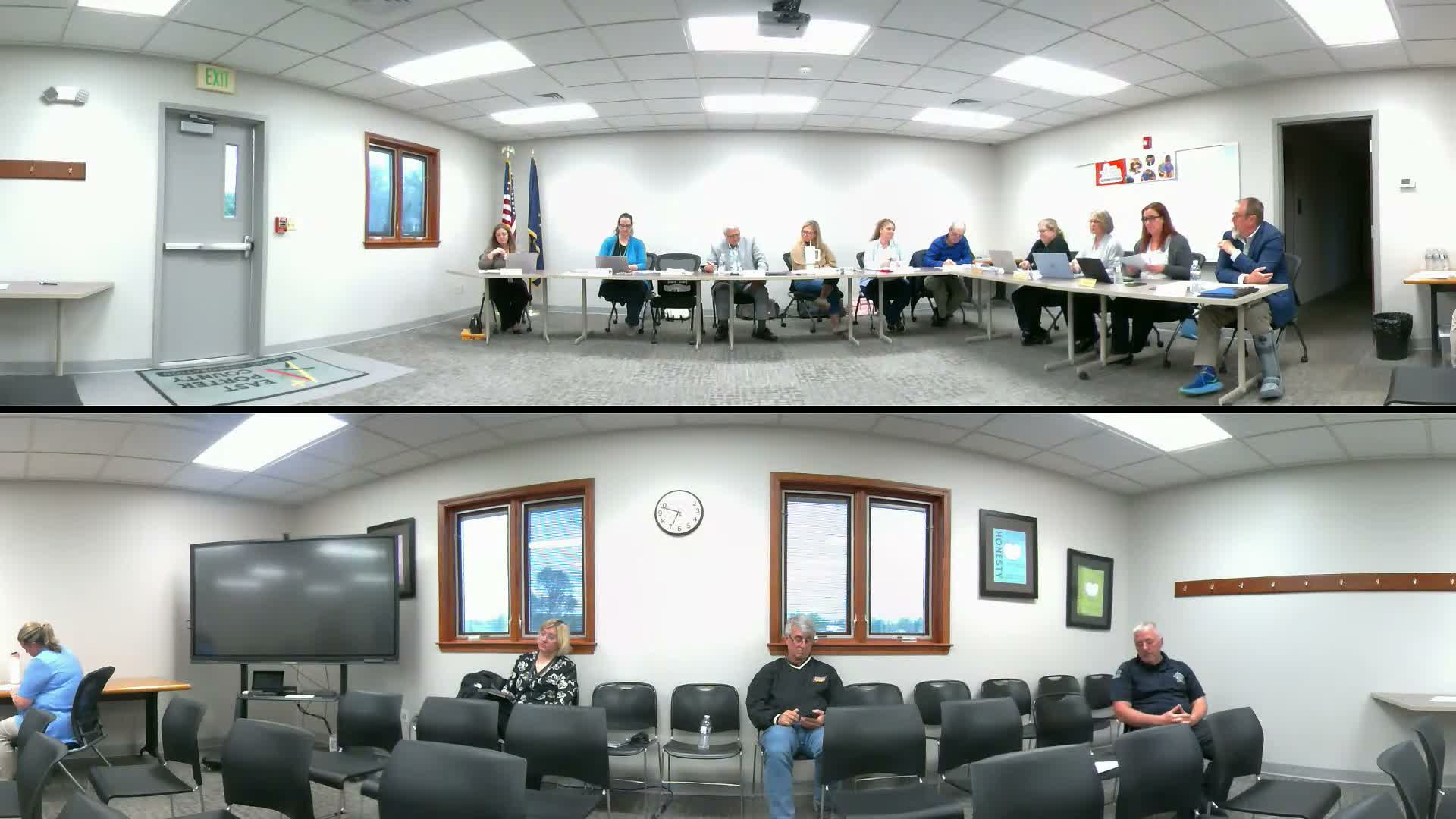
The East Porter County School Corporation board spent a significant portion of its April 27 work session reviewing proposed policy updates to comply with recent statutory changes and ISBA recommendations.
On student cellphones, administration recommended converting the district’s handbook language into a board policy as required by recent statute. The suggested policy would keep the current practice: student phones powered off and stored in lockers during the day. Legal counsel advised that the change in the law makes a published board policy necessary.
Administrators also presented updates to student‑records and public‑records policies to reflect statutory changes and to address a rise in automated or commercial public‑records requests. The recommended public‑records approach includes tools to identify suspected AI or commercial harvesting requests and the ability to charge increased, out‑of‑state fees in some cases. Board members pressed counsel on whether prioritizing requests by residency or purpose is lawful or practical; counsel said the statute’s intent is to allow the district to flag and report suspicious commercial/AI patterns to the Public Access Counselor.
A particularly lengthy debate focused on police relations and interrogation policies (ISBA samples 4420/4425). Trustees weighed whether to merge separate police relations and interrogation policies, how to define required efforts to notify parents before on‑campus police interviews, and distinctions between school resource officers and outside detectives. Several members said they favor an approach that requires reasonable attempts to notify guardians before interviews while preserving the district’s ability to respond in urgent safety situations and to comply with judicial warrants. Board members asked administration to work with ISBA and the district attorney or counsel to refine wording and return an updated draft.
Administration said some proposed reporting duties are new (for example, reporting denials of suspected AI/public‑records requests to the Public Access Counselor within seven days), and trustees sought clarity on enforcement and practice. No final policy votes were taken at the work session; administration and legal counsel will refine drafts and return them for consideration at a later meeting.
What’s next: Administration will consult with ISBA and legal counsel, refine the proposed language (including clarification on parent‑notification efforts and the use of forms for public‑records requests), and present an updated policy draft at a future board meeting.
On student cellphones, administration recommended converting the district’s handbook language into a board policy as required by recent statute. The suggested policy would keep the current practice: student phones powered off and stored in lockers during the day. Legal counsel advised that the change in the law makes a published board policy necessary.
Administrators also presented updates to student‑records and public‑records policies to reflect statutory changes and to address a rise in automated or commercial public‑records requests. The recommended public‑records approach includes tools to identify suspected AI or commercial harvesting requests and the ability to charge increased, out‑of‑state fees in some cases. Board members pressed counsel on whether prioritizing requests by residency or purpose is lawful or practical; counsel said the statute’s intent is to allow the district to flag and report suspicious commercial/AI patterns to the Public Access Counselor.
A particularly lengthy debate focused on police relations and interrogation policies (ISBA samples 4420/4425). Trustees weighed whether to merge separate police relations and interrogation policies, how to define required efforts to notify parents before on‑campus police interviews, and distinctions between school resource officers and outside detectives. Several members said they favor an approach that requires reasonable attempts to notify guardians before interviews while preserving the district’s ability to respond in urgent safety situations and to comply with judicial warrants. Board members asked administration to work with ISBA and the district attorney or counsel to refine wording and return an updated draft.
Administration said some proposed reporting duties are new (for example, reporting denials of suspected AI/public‑records requests to the Public Access Counselor within seven days), and trustees sought clarity on enforcement and practice. No final policy votes were taken at the work session; administration and legal counsel will refine drafts and return them for consideration at a later meeting.
What’s next: Administration will consult with ISBA and legal counsel, refine the proposed language (including clarification on parent‑notification efforts and the use of forms for public‑records requests), and present an updated policy draft at a future board meeting.
Don't Miss a Word: See the Full Meeting!
Go beyond summaries. Unlock every video, transcript, and key insight with a Founder Membership.
✓
Get instant access to full meeting videos
✓
Search and clip any phrase from complete transcripts
✓
Receive AI-powered summaries & custom alerts
✓
Enjoy lifetime, unrestricted access to government data
30-day money-back guarantee
