Assembly approves higher weight limits for certain alternative-fuel vehicles amid infrastructure concerns
April 29, 2026 | 2026 Legislature NY, New York
This article was created by AI summarizing key points discussed. AI makes mistakes, so for full details and context, please refer to the video of the full meeting. Please report any errors so we can fix them. Report an error »
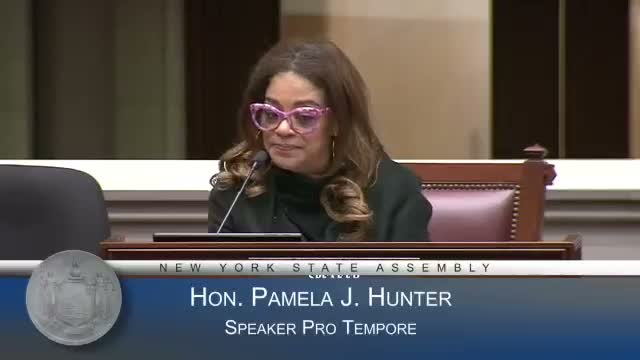
The New York State Assembly voted to approve Assembly number 8017 (calendar 2 57) on April 29, a vehicle-and-traffic law change permitting vehicles primarily fueled by natural propane, hydrogen gas or electric battery to exceed statutory weight limitations by up to 2,000 pounds, with an overall gross limit (as described on the floor) not to exceed 82,000 pounds and subject to posted bridge or highway capacity limits.
Sponsor Mr. Magnarelli explained the bill on the floor: "This bill would authorize vehicles fueled primarily by natural propane or hydrogen gas or by electric battery to exceed statutory weight limitations by up to 2,000 pounds." He and others said the measure was intended to align state law with federal rules governing certain alternative-fuel vehicles.
Several members pressed the sponsor and expressed concerns about the implications for local roads and bridges, which are largely maintained by towns and villages. One member cited national and state condition metrics and said New York "ranks near the bottom" for the percentage of pavements and bridges in good condition. Lawmakers raised the heavier curb weights of battery-electric buses and trucks, questioned whether federal studies are applicable to New York’s climate and materials, and urged increases to CHIPS funding to help local governments absorb added maintenance costs. One member cited an in-state study produced in conjunction with Cornell University and the New York State Town Highway Superintendents estimating substantially higher maintenance and rehabilitation costs for local roads if heavier vehicles become widespread.
Opponents argued the bill creates unequal treatment among vehicle types because the added allowance applies only to certain fuels; others said the state should adopt statewide engineering or zone-based approaches rather than blanket allowances, and suggested using permitting or axle-count approaches where appropriate.
After extended debate and multiple members offering explanations of their votes, the clerk recorded a roll-call result on the floor: Ayes 85, Nays 48, and the bill was declared passed by the Assembly. Supporters and opponents both said the budget process and CHIPS funding negotiations would be the next place to address the infrastructure concerns raised during the floor remarks.
The measure, as passed, instructs agencies and local governments to continue to observe posted bridge and roadway capacity signs; members asked that implementation be tracked for impacts to local pavement life and maintenance costs.
Sponsor Mr. Magnarelli explained the bill on the floor: "This bill would authorize vehicles fueled primarily by natural propane or hydrogen gas or by electric battery to exceed statutory weight limitations by up to 2,000 pounds." He and others said the measure was intended to align state law with federal rules governing certain alternative-fuel vehicles.
Several members pressed the sponsor and expressed concerns about the implications for local roads and bridges, which are largely maintained by towns and villages. One member cited national and state condition metrics and said New York "ranks near the bottom" for the percentage of pavements and bridges in good condition. Lawmakers raised the heavier curb weights of battery-electric buses and trucks, questioned whether federal studies are applicable to New York’s climate and materials, and urged increases to CHIPS funding to help local governments absorb added maintenance costs. One member cited an in-state study produced in conjunction with Cornell University and the New York State Town Highway Superintendents estimating substantially higher maintenance and rehabilitation costs for local roads if heavier vehicles become widespread.
Opponents argued the bill creates unequal treatment among vehicle types because the added allowance applies only to certain fuels; others said the state should adopt statewide engineering or zone-based approaches rather than blanket allowances, and suggested using permitting or axle-count approaches where appropriate.
After extended debate and multiple members offering explanations of their votes, the clerk recorded a roll-call result on the floor: Ayes 85, Nays 48, and the bill was declared passed by the Assembly. Supporters and opponents both said the budget process and CHIPS funding negotiations would be the next place to address the infrastructure concerns raised during the floor remarks.
The measure, as passed, instructs agencies and local governments to continue to observe posted bridge and roadway capacity signs; members asked that implementation be tracked for impacts to local pavement life and maintenance costs.
View the Full Meeting & All Its Details
This article offers just a summary. Unlock complete video, transcripts, and insights as a Founder Member.
✓
Watch full, unedited meeting videos
✓
Search every word spoken in unlimited transcripts
✓
AI summaries & real-time alerts (all government levels)
✓
Permanent access to expanding government content
30-day money-back guarantee
