Historic Preservation Board debates street‑facing low‑e glazing, seeks performance standard and vendor input
April 29, 2026 | West Palm Beach, Palm Beach County, Florida
This article was created by AI summarizing key points discussed. AI makes mistakes, so for full details and context, please refer to the video of the full meeting. Please report any errors so we can fix them. Report an error »
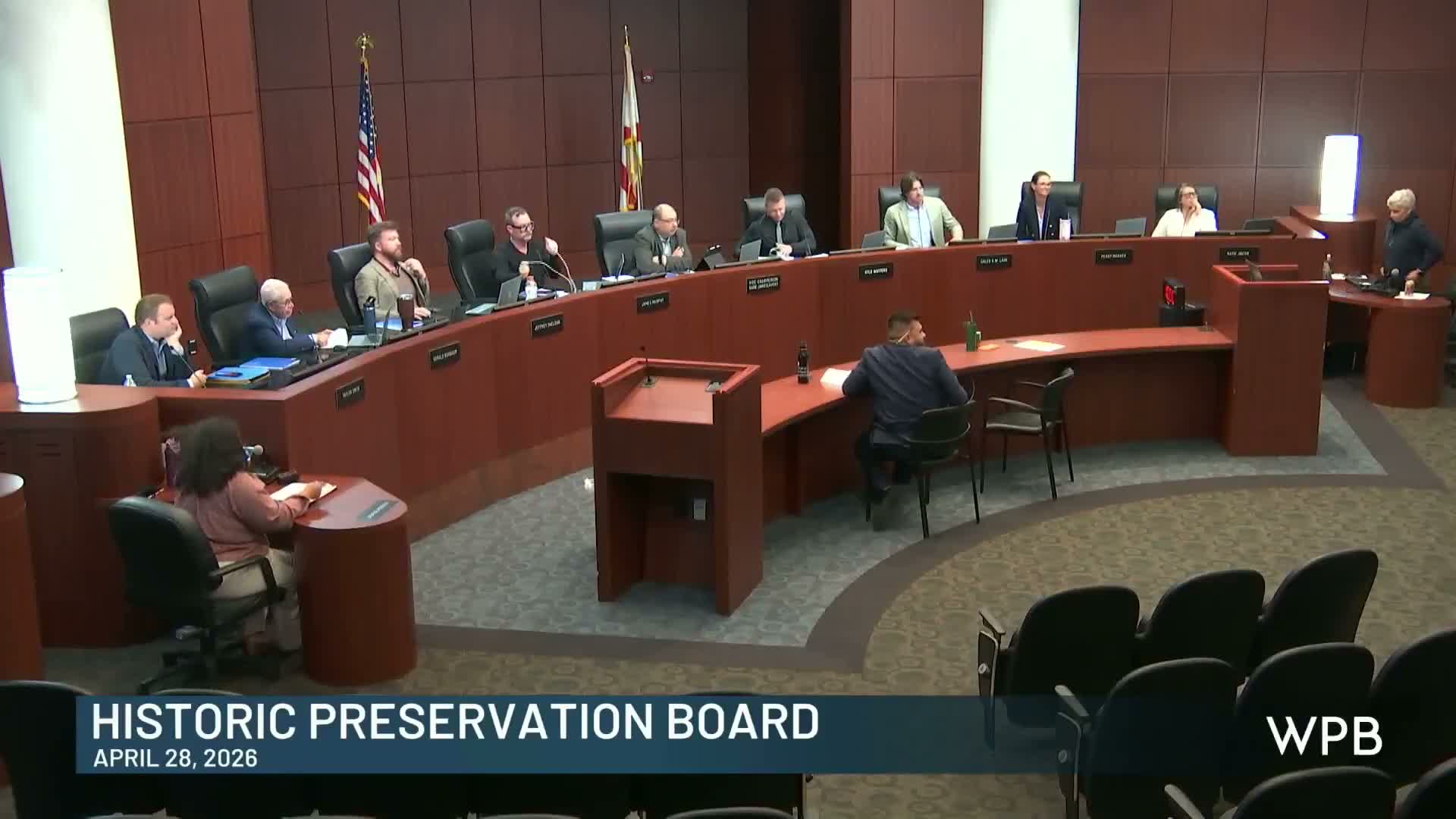
Board members and staff spent an extended portion of the April 28 meeting discussing whether low‑e glazing should be allowed on street‑facing facades in historic districts and how to make a clear, enforceable standard.
Caleb Lauks and other members recounted instances where low‑e or tinted windows installed on front facades produced visible green or bronze hues. "Low‑e makes glass look green because the iron content of the glass," Lauks said, adding that so‑called "clear low‑e" is rare and often expensive. Staff and board members discussed the tension between preservation aesthetic goals (requiring visually clear glass on street‑facing elevations) and building code/energy‑efficiency requirements that push applicants to low‑e glazing for new construction.
Members proposed a pragmatic approach: keep street‑facing facades visually clear as a baseline but develop a performance specification for new construction (for example, a minimum visual light transmittance or other measurable metric) and require manufacturers' data as part of the permit review. Jordan Hodges and other staff agreed to invite a glazing manufacturer representative and a building‑department official to a future meeting so the board could see samples and discuss how to document compliance at the permit stage. The board emphasized the importance of clear permit documentation and vendor brochures to avoid inconsistent installations.
The board did not adopt a formal rule at the meeting but directed staff to prepare a follow‑up session with technical samples and suggested a draft performance threshold (such as VLT) for street‑facing windows in new construction and renovations in historic districts.
Caleb Lauks and other members recounted instances where low‑e or tinted windows installed on front facades produced visible green or bronze hues. "Low‑e makes glass look green because the iron content of the glass," Lauks said, adding that so‑called "clear low‑e" is rare and often expensive. Staff and board members discussed the tension between preservation aesthetic goals (requiring visually clear glass on street‑facing elevations) and building code/energy‑efficiency requirements that push applicants to low‑e glazing for new construction.
Members proposed a pragmatic approach: keep street‑facing facades visually clear as a baseline but develop a performance specification for new construction (for example, a minimum visual light transmittance or other measurable metric) and require manufacturers' data as part of the permit review. Jordan Hodges and other staff agreed to invite a glazing manufacturer representative and a building‑department official to a future meeting so the board could see samples and discuss how to document compliance at the permit stage. The board emphasized the importance of clear permit documentation and vendor brochures to avoid inconsistent installations.
The board did not adopt a formal rule at the meeting but directed staff to prepare a follow‑up session with technical samples and suggested a draft performance threshold (such as VLT) for street‑facing windows in new construction and renovations in historic districts.
View the Full Meeting & All Its Details
This article offers just a summary. Unlock complete video, transcripts, and insights as a Founder Member.
✓
Watch full, unedited meeting videos
✓
Search every word spoken in unlimited transcripts
✓
AI summaries & real-time alerts (all government levels)
✓
Permanent access to expanding government content
30-day money-back guarantee
