Council member Busby raises scooter-on-sidewalk concern; counsel says state law generally bars vehicles on sidewalks
April 29, 2026 | Tuscaloosa City, Tuscaloosa County, Alabama
This article was created by AI summarizing key points discussed. AI makes mistakes, so for full details and context, please refer to the video of the full meeting. Please report any errors so we can fix them. Report an error »
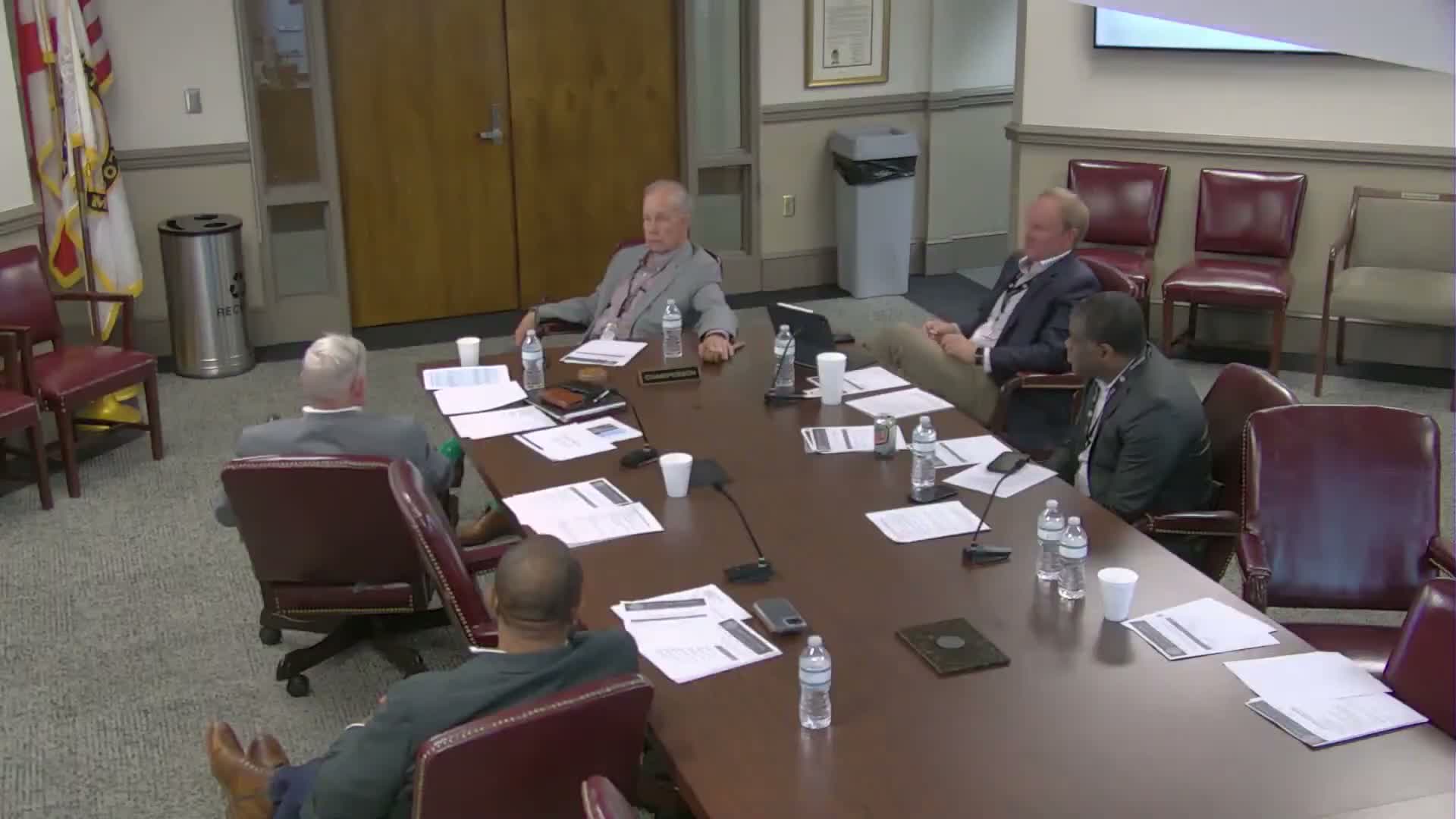
Council Member Busby asked the committee to open a conversation about motorized standing scooters being ridden on sidewalks in his district and whether the city can or should take action.
Busby described frequent sidewalk scooter use near downtown and neighborhood streets and said the devices range from children on small scooters to older teenagers "flying" downtown. He asked whether it is legal to ride those devices on sidewalks and whether police could enforce current law.
Counsel provided a statutory read of state law and local code definitions. He summarized the statutory distinctions between "motor vehicle," "vehicle," "motor driven cycle" and a statutory definition of "scooter," and said that under a plain reading the state prohibition that "no person shall drive any vehicle upon a sidewalk" covers stand-up electric scooters: "It is not legal to ride these on the sidewalk under state law." Counsel also explained the separate statutory category of "shared micro mobility device," which governs rental fleets (such as the scooter companies considered in prior years) but does not cover privately owned devices; that gap, counsel said, limits the city's regulatory tools for non-shared scooters.
"We didn't authorize them and we didn't want them," counsel said of a prior scooter company; he described past enforcement actions and legislative changes that allowed municipalities to regulate shared fleets. The counsel suggested that one solution would be to expand local code language or designate specific sidewalks as pedestrian‑only areas rather than attempting a blanket prohibition across the whole city.
Council members raised enforcement fairness concerns, noting that selective citation across neighborhoods could raise equity and implementation questions. A staff member urged taking time to develop a citywide plan that works uniformly rather than beginning with uneven enforcement: "I'd rather sit back, get an actual plan that works for everybody rather than just start writing citations."
Counsel said he has spoken with a counterpart (Ron Jones) and that university traffic studies and consultant work are expected this summer; Busby asked staff to coordinate briefings with the university and to vet a mapped approach with staff (Bridal, Blankley) before returning to the council with a draft ordinance.
Next steps: Staff and counsel will review options for code language or mapped sidewalk designations, coordinate with university traffic studies, and return to the committee with more-vetted language and a recommended enforcement approach. The item was presented for discussion only; no formal motion or vote was taken.
Busby described frequent sidewalk scooter use near downtown and neighborhood streets and said the devices range from children on small scooters to older teenagers "flying" downtown. He asked whether it is legal to ride those devices on sidewalks and whether police could enforce current law.
Counsel provided a statutory read of state law and local code definitions. He summarized the statutory distinctions between "motor vehicle," "vehicle," "motor driven cycle" and a statutory definition of "scooter," and said that under a plain reading the state prohibition that "no person shall drive any vehicle upon a sidewalk" covers stand-up electric scooters: "It is not legal to ride these on the sidewalk under state law." Counsel also explained the separate statutory category of "shared micro mobility device," which governs rental fleets (such as the scooter companies considered in prior years) but does not cover privately owned devices; that gap, counsel said, limits the city's regulatory tools for non-shared scooters.
"We didn't authorize them and we didn't want them," counsel said of a prior scooter company; he described past enforcement actions and legislative changes that allowed municipalities to regulate shared fleets. The counsel suggested that one solution would be to expand local code language or designate specific sidewalks as pedestrian‑only areas rather than attempting a blanket prohibition across the whole city.
Council members raised enforcement fairness concerns, noting that selective citation across neighborhoods could raise equity and implementation questions. A staff member urged taking time to develop a citywide plan that works uniformly rather than beginning with uneven enforcement: "I'd rather sit back, get an actual plan that works for everybody rather than just start writing citations."
Counsel said he has spoken with a counterpart (Ron Jones) and that university traffic studies and consultant work are expected this summer; Busby asked staff to coordinate briefings with the university and to vet a mapped approach with staff (Bridal, Blankley) before returning to the council with a draft ordinance.
Next steps: Staff and counsel will review options for code language or mapped sidewalk designations, coordinate with university traffic studies, and return to the committee with more-vetted language and a recommended enforcement approach. The item was presented for discussion only; no formal motion or vote was taken.
View the Full Meeting & All Its Details
This article offers just a summary. Unlock complete video, transcripts, and insights as a Founder Member.
✓
Watch full, unedited meeting videos
✓
Search every word spoken in unlimited transcripts
✓
AI summaries & real-time alerts (all government levels)
✓
Permanent access to expanding government content
30-day money-back guarantee
