Committee backs bill allowing certain state grants to help counties meet new landfill methane rules
April 28, 2026 | 2026 Legislature CO, Colorado
This article was created by AI summarizing key points discussed. AI makes mistakes, so for full details and context, please refer to the video of the full meeting. Please report any errors so we can fix them. Report an error »
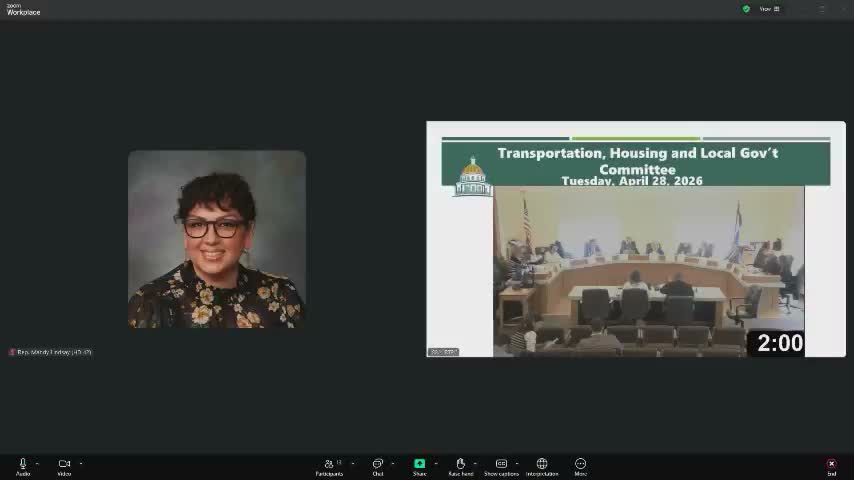
Sponsors Rep. Richardson and Rep. Lukens told the committee that Senate Bill 101 does not change Regulation 31's technical requirements but creates eligibility for existing state grant funds to help counties meet methane monitoring, reporting and, where required, gas collection and control obligations. The bill prioritizes public landfills for grants, notes that grants are supplemental, and includes a CDPHE‑requested amendment to update the timing for census data used in EnviroScreen mapping.
County commissioners from Delta, Chaffee, Logan and others testified the costs to install methane collection systems can be substantial — multiple millions for capital and hundreds of thousands annually in operations and monitoring — and without state support some counties could face large increases in tipping fees or diversion of other local programs. Environmental groups and recyclers supported the regulation and said grant eligibility is a necessary step to enable compliance while also urging diversion and composting investments to reduce future emissions.
CDPHE said the EnviroScreen suite uses more than 35 datasets (socioeconomic, exposure and demographic indicators) and the department will update mapping inputs together to avoid unintended consequences. The environmental justice grant program cycles roughly $2.75M anticipated in the upcoming grant cycle; the department noted funds are limited and intended as matching or supplemental grants, not full mitigation financing.
The committee voted unanimously to send SB101 to the Committee of the Whole with a favorable recommendation.
County commissioners from Delta, Chaffee, Logan and others testified the costs to install methane collection systems can be substantial — multiple millions for capital and hundreds of thousands annually in operations and monitoring — and without state support some counties could face large increases in tipping fees or diversion of other local programs. Environmental groups and recyclers supported the regulation and said grant eligibility is a necessary step to enable compliance while also urging diversion and composting investments to reduce future emissions.
CDPHE said the EnviroScreen suite uses more than 35 datasets (socioeconomic, exposure and demographic indicators) and the department will update mapping inputs together to avoid unintended consequences. The environmental justice grant program cycles roughly $2.75M anticipated in the upcoming grant cycle; the department noted funds are limited and intended as matching or supplemental grants, not full mitigation financing.
The committee voted unanimously to send SB101 to the Committee of the Whole with a favorable recommendation.
View the Full Meeting & All Its Details
This article offers just a summary. Unlock complete video, transcripts, and insights as a Founder Member.
✓
Watch full, unedited meeting videos
✓
Search every word spoken in unlimited transcripts
✓
AI summaries & real-time alerts (all government levels)
✓
Permanent access to expanding government content
30-day money-back guarantee
