La Habra Heights council study session focuses on fire funding, equipment needs and push for a "needs" budget
April 27, 2026 | La Habra Heights , Los Angeles County, California
This article was created by AI summarizing key points discussed. AI makes mistakes, so for full details and context, please refer to the video of the full meeting. Please report any errors so we can fix them. Report an error »
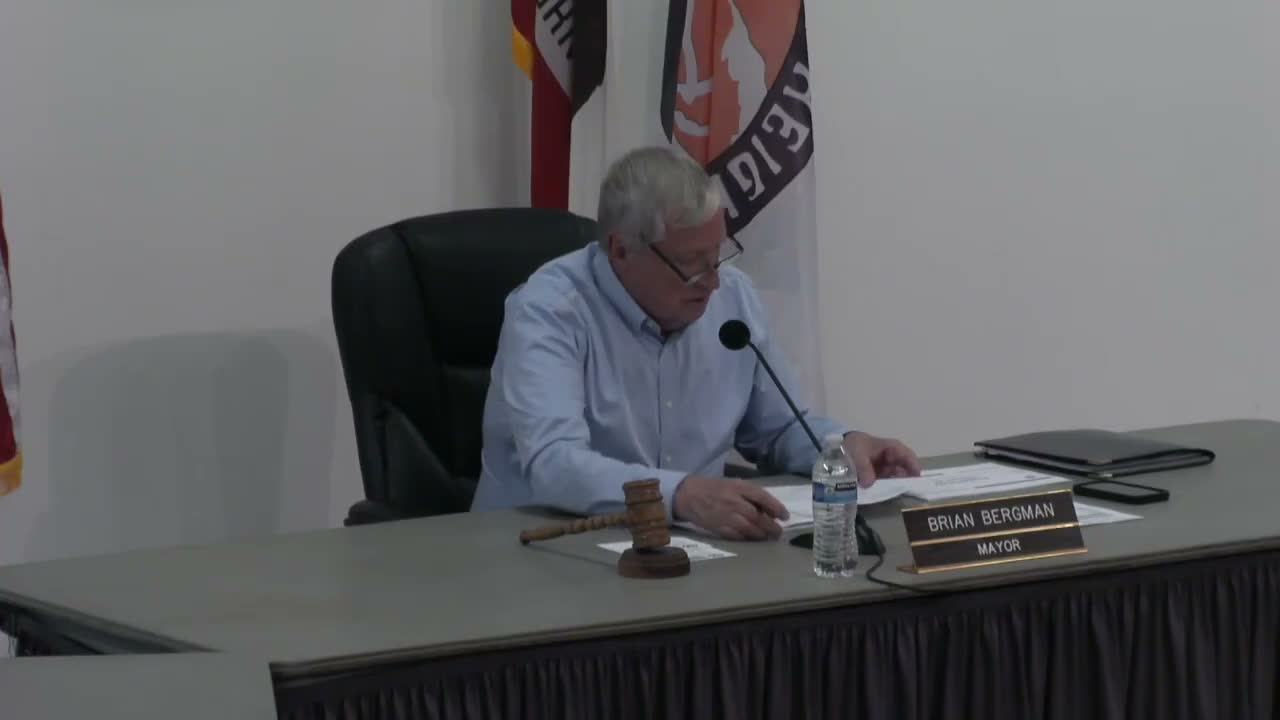
La Habra Heights held a special council study session April 20 to review the preliminary 2026–27 budget, with councilmembers and residents probing funding for the fire department, capital needs and whether the draft should be paired with a separate needs-based schedule to support future tax or assessment measures.
Stephen Blagdon, a Citron Road resident who spoke during public comment, urged the council to explore governance alternatives and to add clearer footnotes and line-item sources in the budget. "Measure W cannot be used for street sweeping," Blagdon said, and he asked for explicit documentation when one-time funds such as ARPA were used to cover recurring costs.
Angie, the city's finance presenter, said the draft is preliminary and that staff will add explanatory footnotes at the next workshop ahead of a June 8 adoption. She summarized the current numbers as draft estimates: proposed general‑fund expenditures of about $6.9 million, projected recurring revenue near $5.5 million, a projected fire tax of roughly $1.3 million and a capital‑improvement program estimate of about $2.8 million for 2026–27, funded in part by Assessment District 7 and several restricted sources such as Metro and CDBG.
Councilmembers pressed several substantive points. Councilmember Greg highlighted an approximately $1 million drop in miscellaneous revenue year over year and asked staff to clarify whether that represented a permanent loss of funding. Angie and staff explained the decline largely reflects one‑time reimbursements received in the current year (a Caltrans traffic‑signal reimbursement) that are not expected to recur. "We spent the money and then got money back for it," staff said in response.
Fire‑department funding dominated the discussion. Councilmember John and others weighed the costs and benefits of acquiring a third frontline engine used for strike‑team deployments versus investing in smaller, faster brush‑patrol vehicles better suited to the city's narrow roads and steep terrain. Councilmembers noted strike‑team deployments can generate offsetting revenue but also require certified personnel and can exhaust limited staff hours.
"Our guys were the first ones there, you know, putting water on that fire," Councilmember John said, arguing the local department provides prompt initial response and that equipment decisions should reflect how the department is actually used.
Staff identified near‑term capital needs that drove the budget ask: replacement of an aging air‑bottle compressor to service SCBA tanks, additional radios (listed at about $8,500 apiece), a brush‑patrol vehicle (roughly $300,000), a $100,000 command vehicle and vehicle and turnout replacements. Staff also said much of the capital list will be staged because the city cannot purchase all items in one year.
Councilmembers and residents repeatedly urged that the council present a "needs" budget — a published, prioritized list of absolute needs with depreciation schedules and cost estimates — alongside the revenue‑constrained draft. Proponents said a needs schedule would help explain to voters what tax or assessment increases would pay for and would allow the council to phase measures (for example, a fire assessment first, roads later) rather than putting multiple measures on the ballot simultaneously and risking defeat.
Councilmember Greg argued the existing draft is a "revenue‑based" budget rather than one organized around service needs and asked staff to deliver a publishable needs document that would allow clearer prioritization by department. Staff agreed to use the workshop process to refine the draft, provide more footnotes and meet with a council subcommittee and the fire chief to define absolute needs and priorities.
Councilmembers also asked staff to investigate other revenue avenues. John asked staff to review whether Los Angeles County’s Measure E wildfire tax applies to La Habra Heights and, if so, to pursue county assistance or a revenue share for high‑risk cities. Norm raised a separate operational question about whether county‑island residents who receive paramedic responses are billed and whether they are eligible for the city’s subscription program; staff confirmed the existing paramedic membership currently covers La Habra Heights residents only, though the city attempts to recover paramedic costs from nonresidents where applicable.
On procedural next steps, staff said they will prepare a second, fuller workshop with footnotes and updated numbers and that the council’s budget adoption is scheduled for the regular June 8 meeting. Councilmembers agreed to form a subcommittee to meet with the fire chief and staff to scope equipment priorities and a needs schedule. There were no formal motions or votes at the special session.
The council adjourned after directing staff to return with more detailed annotations, a prioritized needs list and options for phasing any tax or assessment proposals.
Stephen Blagdon, a Citron Road resident who spoke during public comment, urged the council to explore governance alternatives and to add clearer footnotes and line-item sources in the budget. "Measure W cannot be used for street sweeping," Blagdon said, and he asked for explicit documentation when one-time funds such as ARPA were used to cover recurring costs.
Angie, the city's finance presenter, said the draft is preliminary and that staff will add explanatory footnotes at the next workshop ahead of a June 8 adoption. She summarized the current numbers as draft estimates: proposed general‑fund expenditures of about $6.9 million, projected recurring revenue near $5.5 million, a projected fire tax of roughly $1.3 million and a capital‑improvement program estimate of about $2.8 million for 2026–27, funded in part by Assessment District 7 and several restricted sources such as Metro and CDBG.
Councilmembers pressed several substantive points. Councilmember Greg highlighted an approximately $1 million drop in miscellaneous revenue year over year and asked staff to clarify whether that represented a permanent loss of funding. Angie and staff explained the decline largely reflects one‑time reimbursements received in the current year (a Caltrans traffic‑signal reimbursement) that are not expected to recur. "We spent the money and then got money back for it," staff said in response.
Fire‑department funding dominated the discussion. Councilmember John and others weighed the costs and benefits of acquiring a third frontline engine used for strike‑team deployments versus investing in smaller, faster brush‑patrol vehicles better suited to the city's narrow roads and steep terrain. Councilmembers noted strike‑team deployments can generate offsetting revenue but also require certified personnel and can exhaust limited staff hours.
"Our guys were the first ones there, you know, putting water on that fire," Councilmember John said, arguing the local department provides prompt initial response and that equipment decisions should reflect how the department is actually used.
Staff identified near‑term capital needs that drove the budget ask: replacement of an aging air‑bottle compressor to service SCBA tanks, additional radios (listed at about $8,500 apiece), a brush‑patrol vehicle (roughly $300,000), a $100,000 command vehicle and vehicle and turnout replacements. Staff also said much of the capital list will be staged because the city cannot purchase all items in one year.
Councilmembers and residents repeatedly urged that the council present a "needs" budget — a published, prioritized list of absolute needs with depreciation schedules and cost estimates — alongside the revenue‑constrained draft. Proponents said a needs schedule would help explain to voters what tax or assessment increases would pay for and would allow the council to phase measures (for example, a fire assessment first, roads later) rather than putting multiple measures on the ballot simultaneously and risking defeat.
Councilmember Greg argued the existing draft is a "revenue‑based" budget rather than one organized around service needs and asked staff to deliver a publishable needs document that would allow clearer prioritization by department. Staff agreed to use the workshop process to refine the draft, provide more footnotes and meet with a council subcommittee and the fire chief to define absolute needs and priorities.
Councilmembers also asked staff to investigate other revenue avenues. John asked staff to review whether Los Angeles County’s Measure E wildfire tax applies to La Habra Heights and, if so, to pursue county assistance or a revenue share for high‑risk cities. Norm raised a separate operational question about whether county‑island residents who receive paramedic responses are billed and whether they are eligible for the city’s subscription program; staff confirmed the existing paramedic membership currently covers La Habra Heights residents only, though the city attempts to recover paramedic costs from nonresidents where applicable.
On procedural next steps, staff said they will prepare a second, fuller workshop with footnotes and updated numbers and that the council’s budget adoption is scheduled for the regular June 8 meeting. Councilmembers agreed to form a subcommittee to meet with the fire chief and staff to scope equipment priorities and a needs schedule. There were no formal motions or votes at the special session.
The council adjourned after directing staff to return with more detailed annotations, a prioritized needs list and options for phasing any tax or assessment proposals.
View the Full Meeting & All Its Details
This article offers just a summary. Unlock complete video, transcripts, and insights as a Founder Member.
✓
Watch full, unedited meeting videos
✓
Search every word spoken in unlimited transcripts
✓
AI summaries & real-time alerts (all government levels)
✓
Permanent access to expanding government content
30-day money-back guarantee
