Bloomington council approves revised downtown streetscape after debate over removing flex lane
April 28, 2026 | Bloomington, McLean County, Illinois
This article was created by AI summarizing key points discussed. AI makes mistakes, so for full details and context, please refer to the video of the full meeting. Please report any errors so we can fix them. Report an error »
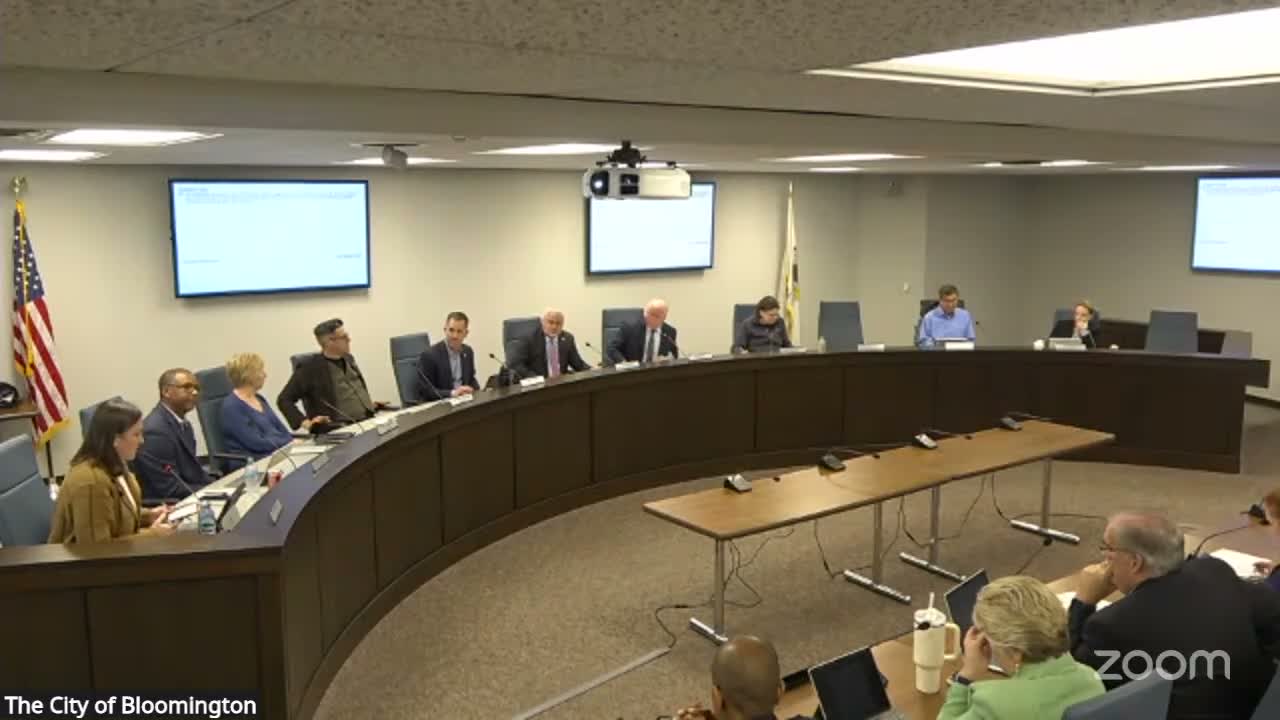
Bloomington’s City Council on April 27 approved a revised downtown streetscape plan that removes the previously proposed flex lane and replaces it with a mix of painted delivery zones and adjacent parking, a move supporters called a compromise and opponents said sacrificed multimodal safety.
Mayor Dan Brady and city staff presented the redesign as an effort to balance downtown business needs and multimodal access. Deputy City Manager Billy Tais said the painted delivery zones are deliberately reconfigurable: “This is paint ... we can realign delivery spaces based on downtown needs.” He described the change as a way to provide delivery spaces without permanently removing parking.
Public commenter Zach Ferrier urged the council to preserve the flex lane and to protect safe bicycle infrastructure, arguing removing the lane reduces flexibility and harms long-term street safety and economic vitality. “Removing essential flex lanes in order to preserve a handful of parking spots works against long term economic health, street efficiency, and safety for the entire community,” Ferrier said.
Councilmembers split along lines reflecting business concerns and accessibility advocates. Member Montney said the compromise was driven by downtown business owners and described it as necessary to support local entrepreneurs; Member Ward and Member Kearns said they would oppose the change, citing safety and accessibility for cyclists, pedestrians and people with mobility devices.
After discussion and questions about enforcement and how delivery zones would be sited, Member Montney moved to approve the item as presented; Member Lee seconded. The clerk announced the motion passed; the mayor later noted two recorded nays (Council member Kearns and Council member Ward).
The city said the redesign anticipates longer-term state work on Business 51 that will add bike lanes, and staff emphasized the ability to repaint and adjust delivery areas if downtown needs change. The council did not adopt an immediate enforcement program tied to the painted zones; staff said they would first attempt voluntary compliance with downtown businesses and consider enforcement if problems persist.
What happens next: the streetscape project will proceed under the approved design; staff said delivery zones can be relocated through paint and further discussion with downtown stakeholders if traffic or safety issues appear.
Mayor Dan Brady and city staff presented the redesign as an effort to balance downtown business needs and multimodal access. Deputy City Manager Billy Tais said the painted delivery zones are deliberately reconfigurable: “This is paint ... we can realign delivery spaces based on downtown needs.” He described the change as a way to provide delivery spaces without permanently removing parking.
Public commenter Zach Ferrier urged the council to preserve the flex lane and to protect safe bicycle infrastructure, arguing removing the lane reduces flexibility and harms long-term street safety and economic vitality. “Removing essential flex lanes in order to preserve a handful of parking spots works against long term economic health, street efficiency, and safety for the entire community,” Ferrier said.
Councilmembers split along lines reflecting business concerns and accessibility advocates. Member Montney said the compromise was driven by downtown business owners and described it as necessary to support local entrepreneurs; Member Ward and Member Kearns said they would oppose the change, citing safety and accessibility for cyclists, pedestrians and people with mobility devices.
After discussion and questions about enforcement and how delivery zones would be sited, Member Montney moved to approve the item as presented; Member Lee seconded. The clerk announced the motion passed; the mayor later noted two recorded nays (Council member Kearns and Council member Ward).
The city said the redesign anticipates longer-term state work on Business 51 that will add bike lanes, and staff emphasized the ability to repaint and adjust delivery areas if downtown needs change. The council did not adopt an immediate enforcement program tied to the painted zones; staff said they would first attempt voluntary compliance with downtown businesses and consider enforcement if problems persist.
What happens next: the streetscape project will proceed under the approved design; staff said delivery zones can be relocated through paint and further discussion with downtown stakeholders if traffic or safety issues appear.
View the Full Meeting & All Its Details
This article offers just a summary. Unlock complete video, transcripts, and insights as a Founder Member.
✓
Watch full, unedited meeting videos
✓
Search every word spoken in unlimited transcripts
✓
AI summaries & real-time alerts (all government levels)
✓
Permanent access to expanding government content
30-day money-back guarantee
