Hearing held on rule letting denturists place implant abutments as safety and rulemaking disputes escalate
April 28, 2026 | Other Court, Judicial , Washington
This article was created by AI summarizing key points discussed. AI makes mistakes, so for full details and context, please refer to the video of the full meeting. Please report any errors so we can fix them. Report an error »
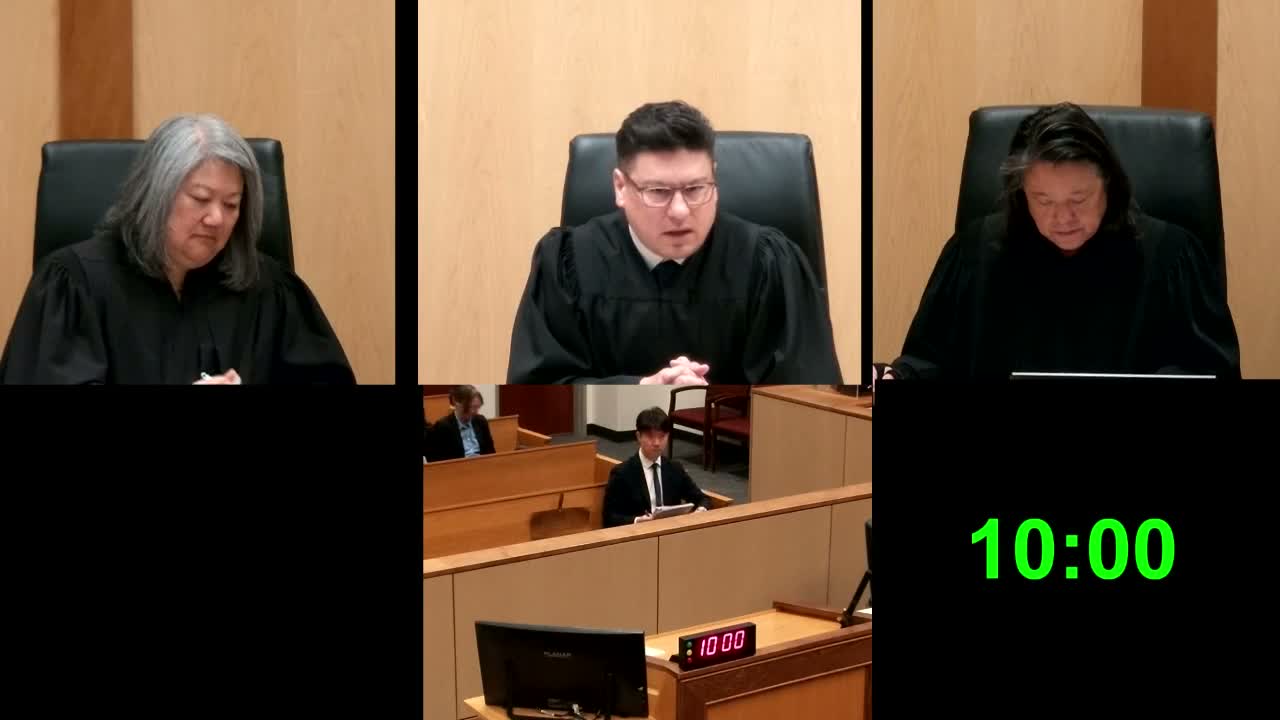
At oral argument the court heard competing claims over a rule that allows licensed denturists to place prefabricated abutments on implants to support removable dentures. Emily Studebaker, representing the Washington State Dental Association, urged the court to invalidate the rule as an impermissible expansion of the statutory scope of denturism and said the administrative record does not support key factual findings required for rulemaking.
Studebaker framed the dispute around statutory meaning and safety. She said the 1994 initiative establishing denturism — and subsequent statutory amendments — did not include dental implants, and argued the rule effectively rewrites statutory scope: "A denture is completely removable," she told the court while distinguishing removable dentures from implant systems that are "not removable by the wearer" and require specialized tools. She repeatedly pressed the court to treat changes to what constitutes scope of practice as a matter for the legislature, not an agency rule.
Heather Carter, assistant attorney general for the Board, told the court the rule is narrowly tailored to allow denturists to place prefabricated abutments for the purpose of fabricating or stabilizing removable dentures, not to perform crown work. "Dentures do not do crowns," Carter said, explaining that crowns are cemented while the denture systems at issue "clip in" to abutments. Carter said the Board has broad rulemaking authority to set standards of practice and defended the administrative record and public process, asserting the rule was reasonable, supported and substantially complied with the Administrative Procedure Act.
The court focused several questions on technical and evidentiary points, including whether "removable" in the statute necessarily means removable by the patient, who can safely remove or retrieve implant components once prostheses are attached, and where the Board placed its cost-benefit and training documentation in the rulemaking record. Carter said a cost-benefit and a "significant analysis with alternatives" are in the administrative record (she referenced record materials and offered to provide precise citations), and said the Board relied on the practical experience of denturists and accepted training programs in reaching its conclusion.
Studebaker disputed the Board's depiction of the record and process. In rebuttal she said the association "did not agree to the rule making," argued the cost-benefit analysis and any small-business impact analysis were not readily accessible to the public during rulemaking, and said the record insufficiently addressed safety concerns raised by clinicians who described past adverse outcomes when abutments were removed improperly.
No ruling was announced at the hearing's end; the court thanked counsel and moved to the next case. The arguments identify three central issues likely to inform any decision: (1) whether the Board exceeded its statutory authority by authorizing denturists to place abutments that interface with implant systems; (2) whether the administrative record contains adequate factual support, cost-benefit and small-business impact analyses required for a significant legislative rule; and (3) whether the rule meaningfully preserves patient safety given disputed evidence about adverse outcomes when abutments or implant components are removed.
Background details referenced by counsel during argument included citations to RCW provisions (as discussed in the record) and repeated references to the administrative record for supporting materials; counsel did not obtain a decision during the session.
Studebaker framed the dispute around statutory meaning and safety. She said the 1994 initiative establishing denturism — and subsequent statutory amendments — did not include dental implants, and argued the rule effectively rewrites statutory scope: "A denture is completely removable," she told the court while distinguishing removable dentures from implant systems that are "not removable by the wearer" and require specialized tools. She repeatedly pressed the court to treat changes to what constitutes scope of practice as a matter for the legislature, not an agency rule.
Heather Carter, assistant attorney general for the Board, told the court the rule is narrowly tailored to allow denturists to place prefabricated abutments for the purpose of fabricating or stabilizing removable dentures, not to perform crown work. "Dentures do not do crowns," Carter said, explaining that crowns are cemented while the denture systems at issue "clip in" to abutments. Carter said the Board has broad rulemaking authority to set standards of practice and defended the administrative record and public process, asserting the rule was reasonable, supported and substantially complied with the Administrative Procedure Act.
The court focused several questions on technical and evidentiary points, including whether "removable" in the statute necessarily means removable by the patient, who can safely remove or retrieve implant components once prostheses are attached, and where the Board placed its cost-benefit and training documentation in the rulemaking record. Carter said a cost-benefit and a "significant analysis with alternatives" are in the administrative record (she referenced record materials and offered to provide precise citations), and said the Board relied on the practical experience of denturists and accepted training programs in reaching its conclusion.
Studebaker disputed the Board's depiction of the record and process. In rebuttal she said the association "did not agree to the rule making," argued the cost-benefit analysis and any small-business impact analysis were not readily accessible to the public during rulemaking, and said the record insufficiently addressed safety concerns raised by clinicians who described past adverse outcomes when abutments were removed improperly.
No ruling was announced at the hearing's end; the court thanked counsel and moved to the next case. The arguments identify three central issues likely to inform any decision: (1) whether the Board exceeded its statutory authority by authorizing denturists to place abutments that interface with implant systems; (2) whether the administrative record contains adequate factual support, cost-benefit and small-business impact analyses required for a significant legislative rule; and (3) whether the rule meaningfully preserves patient safety given disputed evidence about adverse outcomes when abutments or implant components are removed.
Background details referenced by counsel during argument included citations to RCW provisions (as discussed in the record) and repeated references to the administrative record for supporting materials; counsel did not obtain a decision during the session.
View the Full Meeting & All Its Details
This article offers just a summary. Unlock complete video, transcripts, and insights as a Founder Member.
✓
Watch full, unedited meeting videos
✓
Search every word spoken in unlimited transcripts
✓
AI summaries & real-time alerts (all government levels)
✓
Permanent access to expanding government content
30-day money-back guarantee
