Senate Finance hears hours of testimony on hemp-derived THC beverages; sponsor postpones bill for more work
April 28, 2026 | 2026 Legislature CO, Colorado
This article was created by AI summarizing key points discussed. AI makes mistakes, so for full details and context, please refer to the video of the full meeting. Please report any errors so we can fix them. Report an error »
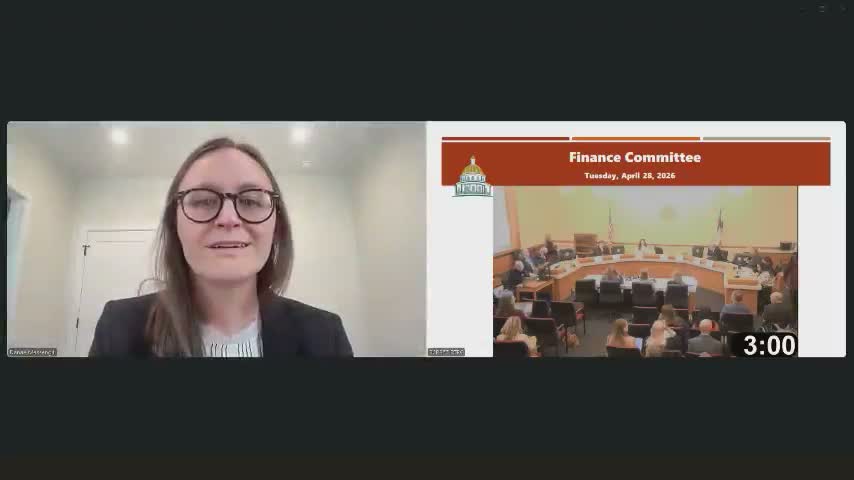
Senate Bill 26-164, a proposal to allow hemp-derived THC beverages (up to a specified milligram serving) to be sold where alcohol is sold under a new licensing and testing framework, was the focus of several hours of testimony before the Senate Finance Committee. After two panels of opponents and two panels of proponents, sponsor Senator Gonzales asked that the measure be postponed indefinitely to continue stakeholder work.
Opponents — including Dr. Dana Massengill of Children’s Hospital Colorado, Dawn Rainfeld of Blue Rising, Rachel O’Brien of 1 Chance to Grow Up and Bria Kinsella of the Colorado Providers Association — warned that expanding retail outlets for intoxicating THC drinks would increase pediatric exposures, normalize THC use for youth, and strain behavioral‑health and emergency services. Dr. Massengill said national poison‑center calls for young children have surged and that small amounts of THC can trigger severe symptoms in toddlers. Several opponents urged the committee to delay the proposal.
Proponents — including industry representatives and trade groups, manufacturers, and distributors — argued the bill would create a regulated retail pathway for low‑dose beverages, produce new tax revenue and jobs, and be managed through the existing liquor three‑tier distribution system. Brian Vicente, a primary drafter of the bill, said stakeholders had sought tax rates of 20–25% and that similar products are sold in other states. Manufacturers and trade groups said they support age gating, testing, and labeling requirements.
Committee members pressed witnesses on a technical question that recurred throughout the hearing: how the federal 0.3% dry‑weight limit for hemp converts to milligrams per serving in beverages. Multiple witnesses explained that the dry‑weight calculation and milligram‑per‑serving limits are not directly comparable and described how Certificates of Analysis (COAs) for finished products typically show trace delta‑9 levels far below 0.3% in many samples.
After extended questions and exchanges, Senator Gonzales moved to postpone the bill indefinitely; the motion carried and the measure was postponed at the sponsor’s request. Sponsors and industry representatives said they would continue stakeholder negotiations over the interim to refine testing, labeling, local opt‑in/opt‑out authority and enforcement details.
Opponents — including Dr. Dana Massengill of Children’s Hospital Colorado, Dawn Rainfeld of Blue Rising, Rachel O’Brien of 1 Chance to Grow Up and Bria Kinsella of the Colorado Providers Association — warned that expanding retail outlets for intoxicating THC drinks would increase pediatric exposures, normalize THC use for youth, and strain behavioral‑health and emergency services. Dr. Massengill said national poison‑center calls for young children have surged and that small amounts of THC can trigger severe symptoms in toddlers. Several opponents urged the committee to delay the proposal.
Proponents — including industry representatives and trade groups, manufacturers, and distributors — argued the bill would create a regulated retail pathway for low‑dose beverages, produce new tax revenue and jobs, and be managed through the existing liquor three‑tier distribution system. Brian Vicente, a primary drafter of the bill, said stakeholders had sought tax rates of 20–25% and that similar products are sold in other states. Manufacturers and trade groups said they support age gating, testing, and labeling requirements.
Committee members pressed witnesses on a technical question that recurred throughout the hearing: how the federal 0.3% dry‑weight limit for hemp converts to milligrams per serving in beverages. Multiple witnesses explained that the dry‑weight calculation and milligram‑per‑serving limits are not directly comparable and described how Certificates of Analysis (COAs) for finished products typically show trace delta‑9 levels far below 0.3% in many samples.
After extended questions and exchanges, Senator Gonzales moved to postpone the bill indefinitely; the motion carried and the measure was postponed at the sponsor’s request. Sponsors and industry representatives said they would continue stakeholder negotiations over the interim to refine testing, labeling, local opt‑in/opt‑out authority and enforcement details.
View the Full Meeting & All Its Details
This article offers just a summary. Unlock complete video, transcripts, and insights as a Founder Member.
✓
Watch full, unedited meeting videos
✓
Search every word spoken in unlimited transcripts
✓
AI summaries & real-time alerts (all government levels)
✓
Permanent access to expanding government content
30-day money-back guarantee
