Senate passes Safe at Home updates to strengthen address confidentiality program
April 28, 2026 | 2026 Legislature MN, Minnesota
This article was created by AI summarizing key points discussed. AI makes mistakes, so for full details and context, please refer to the video of the full meeting. Please report any errors so we can fix them. Report an error »
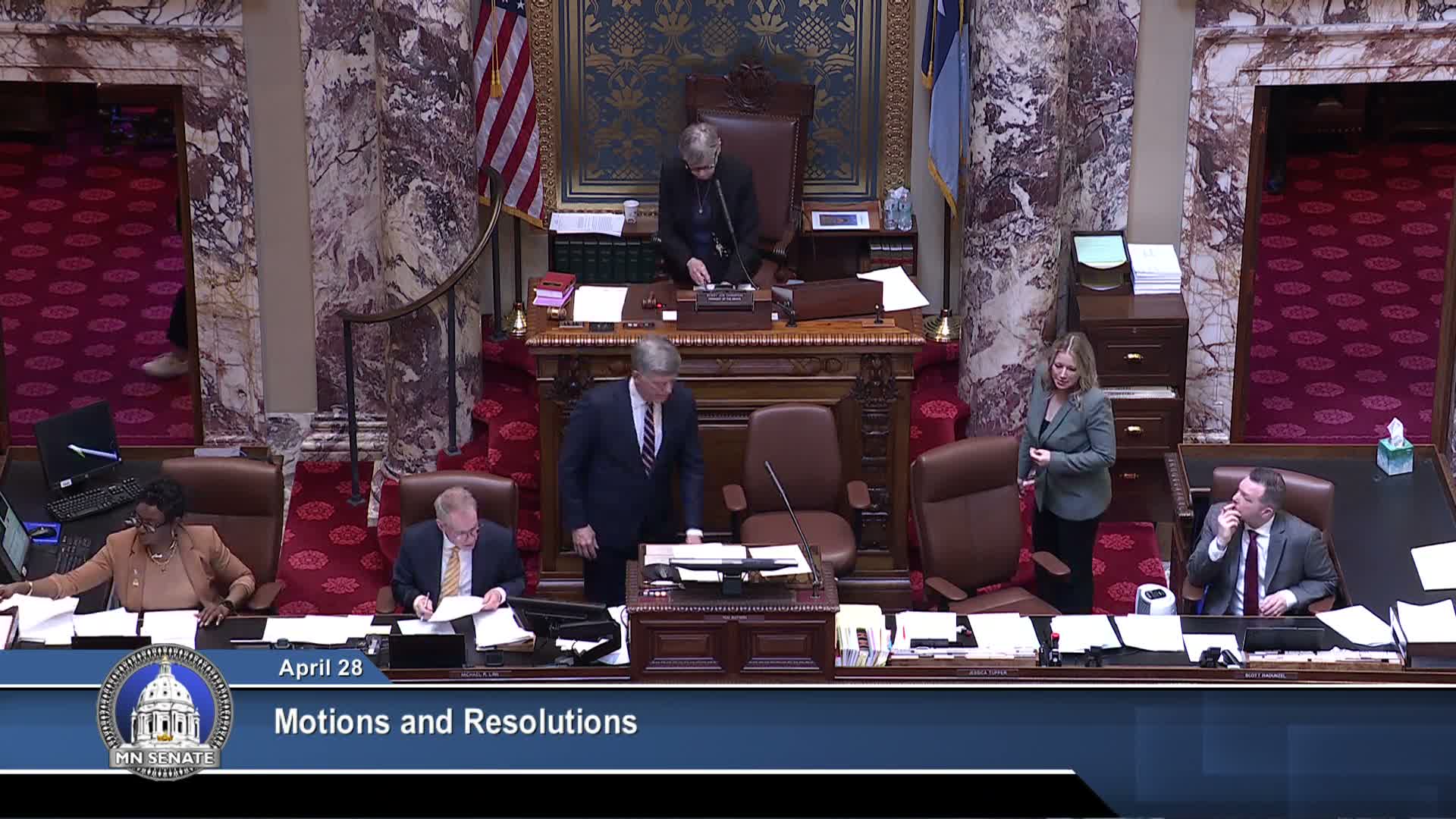
The Minnesota Senate passed House File 3676 on third reading, advancing targeted statutory changes meant to strengthen the state's Safe at Home address-confidentiality program for people who fear for their safety.
Senator Clark, who introduced the measure on the floor, said the bill "makes targeted practical updates to strengthen Minnesota's address confidentiality program" and outlined several specific changes intended to make enrollment and protections more consistent across state agencies. Those changes include requiring agencies to designate a single Safe at Home point of contact, clarifying who may act as a guardian when enrolling a minor (and allowing emancipated minors to apply independently), and formalizing the practice of requiring documentation of guardianship.
The bill also raises protections around disclosure of a participant's physical address by requiring written judicial findings and notifying the secretary of state when such findings are made, giving the office time for review or intervention before disclosure takes effect. Clark said the measure adds penalties for harmful disclosures, anti-discrimination protections for participants, and allows Safe at Home cards to be accepted as proof of residence for driver's license and Real ID purposes. The bill also requires judicial training to reinforce the seriousness of these protections.
Supporters argued the changes will improve state coordination and reduce barriers for program participants; no floor amendments were offered. The Senate recorded a unanimous voice indicating final passage (roll-call recorded in the transcript). The bill now moves on according to the legislative process for enrollment and transmittal to the governor or further procedural steps as required.
The Senate discussion focused on technical and protective measures rather than changes to program scope, with proponents emphasizing practical steps to help survivors of domestic violence, stalking and other safety risks maintain confidentiality of their residences.
The Senate took final action on the measure during the session on April 28, 2026; the chamber's roll and next procedural steps were noted by the secretary.
Senator Clark, who introduced the measure on the floor, said the bill "makes targeted practical updates to strengthen Minnesota's address confidentiality program" and outlined several specific changes intended to make enrollment and protections more consistent across state agencies. Those changes include requiring agencies to designate a single Safe at Home point of contact, clarifying who may act as a guardian when enrolling a minor (and allowing emancipated minors to apply independently), and formalizing the practice of requiring documentation of guardianship.
The bill also raises protections around disclosure of a participant's physical address by requiring written judicial findings and notifying the secretary of state when such findings are made, giving the office time for review or intervention before disclosure takes effect. Clark said the measure adds penalties for harmful disclosures, anti-discrimination protections for participants, and allows Safe at Home cards to be accepted as proof of residence for driver's license and Real ID purposes. The bill also requires judicial training to reinforce the seriousness of these protections.
Supporters argued the changes will improve state coordination and reduce barriers for program participants; no floor amendments were offered. The Senate recorded a unanimous voice indicating final passage (roll-call recorded in the transcript). The bill now moves on according to the legislative process for enrollment and transmittal to the governor or further procedural steps as required.
The Senate discussion focused on technical and protective measures rather than changes to program scope, with proponents emphasizing practical steps to help survivors of domestic violence, stalking and other safety risks maintain confidentiality of their residences.
The Senate took final action on the measure during the session on April 28, 2026; the chamber's roll and next procedural steps were noted by the secretary.
View the Full Meeting & All Its Details
This article offers just a summary. Unlock complete video, transcripts, and insights as a Founder Member.
✓
Watch full, unedited meeting videos
✓
Search every word spoken in unlimited transcripts
✓
AI summaries & real-time alerts (all government levels)
✓
Permanent access to expanding government content
30-day money-back guarantee
