DMV says officer no-shows limit administrative DUI hearings as ignition-interlock violations spike
April 20, 2026 | 2026 Legislature DE, Legislative, Delaware
This article was created by AI summarizing key points discussed. AI makes mistakes, so for full details and context, please refer to the video of the full meeting. Please report any errors so we can fix them. Report an error »
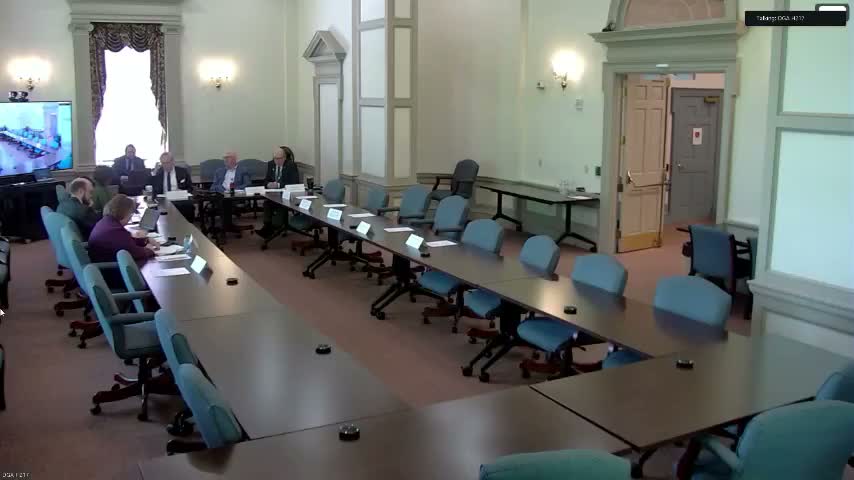
Simone Thomas, driver improvement program manager for the Delaware Division of Motor Vehicles, told the DUI Prevention Task Force that a large share of DMV administrative hearings fail to proceed because officers do not submit required paperwork or do not appear.
"In 2024, 61.6 percent of our cases were dismissed due to the lack of the officer's presence," Thomas said, and she reported a similar trend so far in 2025 at 59.7 percent. She told the committee that of 2,090 hearing requests in 2025 the DMV had held 39 hearings to date and that common reasons hearings are not held include plea bargains (first‑offense elections), continuances and officers withdrawing testimony.
Thomas walked members through the DMV workflow (the officer-issued 5‑29 form and the implied-consent form) and said the department is automating form submission to reduce lost paperwork and speed scheduling. She also summarized program numbers tracked by DMV: ignition-interlock device (IID) registrations rose from 317 in 2022 to 673 in 2024; IID startup and other violations spiked in 2023 before improving in 2024.
Committee members raised practical concerns about the administrative process. One member recommended an entry-of-appearance system for defense counsel to reduce continuances; Thomas said hearings are scheduled around officer and attorney availability and that both sides are allowed one continuance, with further continuances requiring documentation. She also said first‑offense election pleas in court often remove the need for an administrative hearing because the plea is treated as an admission for DMV purposes.
Public commenters urged the task force to investigate systemic paperwork gaps and the consequences for public safety. "It had been on my mind during her presentation about the number of cases where an officer fails to submit what I think she called a 5‑29 form, and therefore that DMV process just doesn't start at all," said Miriam Didi during public comment.
Several members and commenters also questioned whether IIDs are always the right tool when a DUI involves drugs rather than alcohol. The Delaware Safety Council's director, Stacy Inglis, told the task force that when DUI charges are pled down to aggressive-driving offenses, those referrals sometimes go to programs that do not address substance misuse.
Thomas outlined IID rules in state code the DMV enforces: a BAC reading over 0.05 on an IID is a violation; two violations extend the IID period by two months, and five violations extend it by four months. She said program completion rates have improved, and the DMV is trying to strengthen officer participation in administrative hearings because those proceedings impose a lower civil standard of proof and can aid in preventing recidivism.
The task force asked DMV to provide more granular data — including how many hearings resulted in administrative probable-cause findings and how many IID participants were on the devices following drug-only versus alcohol offenses — so members can assess whether program rules, costs to defendants, and court plea practices align with the task force's public-safety goals. The committee set its next meeting for May 18 to continue presentations on courts and treatment providers.
"In 2024, 61.6 percent of our cases were dismissed due to the lack of the officer's presence," Thomas said, and she reported a similar trend so far in 2025 at 59.7 percent. She told the committee that of 2,090 hearing requests in 2025 the DMV had held 39 hearings to date and that common reasons hearings are not held include plea bargains (first‑offense elections), continuances and officers withdrawing testimony.
Thomas walked members through the DMV workflow (the officer-issued 5‑29 form and the implied-consent form) and said the department is automating form submission to reduce lost paperwork and speed scheduling. She also summarized program numbers tracked by DMV: ignition-interlock device (IID) registrations rose from 317 in 2022 to 673 in 2024; IID startup and other violations spiked in 2023 before improving in 2024.
Committee members raised practical concerns about the administrative process. One member recommended an entry-of-appearance system for defense counsel to reduce continuances; Thomas said hearings are scheduled around officer and attorney availability and that both sides are allowed one continuance, with further continuances requiring documentation. She also said first‑offense election pleas in court often remove the need for an administrative hearing because the plea is treated as an admission for DMV purposes.
Public commenters urged the task force to investigate systemic paperwork gaps and the consequences for public safety. "It had been on my mind during her presentation about the number of cases where an officer fails to submit what I think she called a 5‑29 form, and therefore that DMV process just doesn't start at all," said Miriam Didi during public comment.
Several members and commenters also questioned whether IIDs are always the right tool when a DUI involves drugs rather than alcohol. The Delaware Safety Council's director, Stacy Inglis, told the task force that when DUI charges are pled down to aggressive-driving offenses, those referrals sometimes go to programs that do not address substance misuse.
Thomas outlined IID rules in state code the DMV enforces: a BAC reading over 0.05 on an IID is a violation; two violations extend the IID period by two months, and five violations extend it by four months. She said program completion rates have improved, and the DMV is trying to strengthen officer participation in administrative hearings because those proceedings impose a lower civil standard of proof and can aid in preventing recidivism.
The task force asked DMV to provide more granular data — including how many hearings resulted in administrative probable-cause findings and how many IID participants were on the devices following drug-only versus alcohol offenses — so members can assess whether program rules, costs to defendants, and court plea practices align with the task force's public-safety goals. The committee set its next meeting for May 18 to continue presentations on courts and treatment providers.
View the Full Meeting & All Its Details
This article offers just a summary. Unlock complete video, transcripts, and insights as a Founder Member.
✓
Watch full, unedited meeting videos
✓
Search every word spoken in unlimited transcripts
✓
AI summaries & real-time alerts (all government levels)
✓
Permanent access to expanding government content
30-day money-back guarantee
