Senate approves bill to require engagement on reasonable disability accommodations in MHRA
April 27, 2026 | 2026 Legislature MN, Minnesota
This article was created by AI summarizing key points discussed. AI makes mistakes, so for full details and context, please refer to the video of the full meeting. Please report any errors so we can fix them. Report an error »
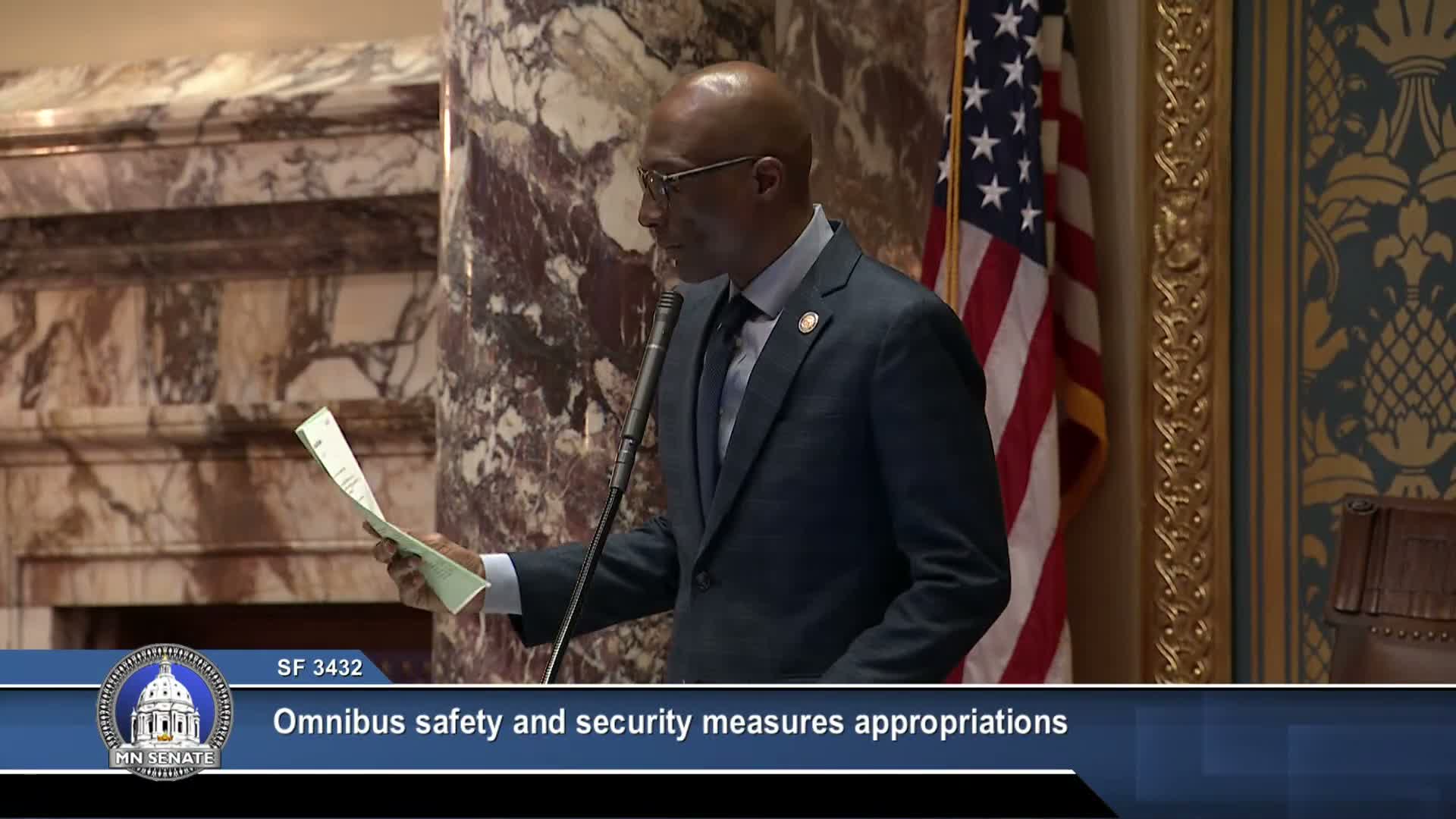
The Minnesota Senate passed Senate File 3210 on April 27, 2026, to add protections for reasonable accommodations into the Minnesota Human Rights Act (MHRA). The bill makes a failure to engage in a process to determine a requested accommodation a potential unfair discriminatory practice subject to enforcement.
Senator McQuade, the bill author, said SF3210 recognizes that people with disabilities "matter" and that the measure provides an avenue of remedy where an accommodation request is denied without engagement. "All this bill does is require the process to happen so that there has to be an engagement in the process to discuss accommodations," McQuade said.
Floor questioning focused on definitions and implementation. Senator Westrom asked how "disability" will be defined in practice and whether the bill should cross-reference the MHRA definition; McQuade responded that disability is already defined in Minnesota statute (the Minnesota Human Rights Act, cited on the floor as section 363.03 subdivision 12) and that the bill relies on the existing statutory definition. Senators asked for examples of how the process would work in employment and housing; sponsors said the process will vary by context and that courts or the Human Rights Department would resolve disputes about what is reasonable.
Concerns about litigation and "drive-by" ADA lawsuits were raised by multiple members, who urged care in drafting to avoid creating a statutory trap for businesses acting in good faith. Proponents emphasized that the bill does not automatically require an accommodation, only that an interactive process take place and that failure to engage in that process may be considered discriminatory.
The Senate recorded 46 ayes and 18 noes on final passage; the bill's title was agreed to.
Senator McQuade, the bill author, said SF3210 recognizes that people with disabilities "matter" and that the measure provides an avenue of remedy where an accommodation request is denied without engagement. "All this bill does is require the process to happen so that there has to be an engagement in the process to discuss accommodations," McQuade said.
Floor questioning focused on definitions and implementation. Senator Westrom asked how "disability" will be defined in practice and whether the bill should cross-reference the MHRA definition; McQuade responded that disability is already defined in Minnesota statute (the Minnesota Human Rights Act, cited on the floor as section 363.03 subdivision 12) and that the bill relies on the existing statutory definition. Senators asked for examples of how the process would work in employment and housing; sponsors said the process will vary by context and that courts or the Human Rights Department would resolve disputes about what is reasonable.
Concerns about litigation and "drive-by" ADA lawsuits were raised by multiple members, who urged care in drafting to avoid creating a statutory trap for businesses acting in good faith. Proponents emphasized that the bill does not automatically require an accommodation, only that an interactive process take place and that failure to engage in that process may be considered discriminatory.
The Senate recorded 46 ayes and 18 noes on final passage; the bill's title was agreed to.
View the Full Meeting & All Its Details
This article offers just a summary. Unlock complete video, transcripts, and insights as a Founder Member.
✓
Watch full, unedited meeting videos
✓
Search every word spoken in unlimited transcripts
✓
AI summaries & real-time alerts (all government levels)
✓
Permanent access to expanding government content
30-day money-back guarantee
