CRA board approves Cordova Street conceptual design focusing on walkability and historic materials
April 27, 2026 | St. Augustine, St. Johns County , Florida
This article was created by AI summarizing key points discussed. AI makes mistakes, so for full details and context, please refer to the video of the full meeting. Please report any errors so we can fix them. Report an error »
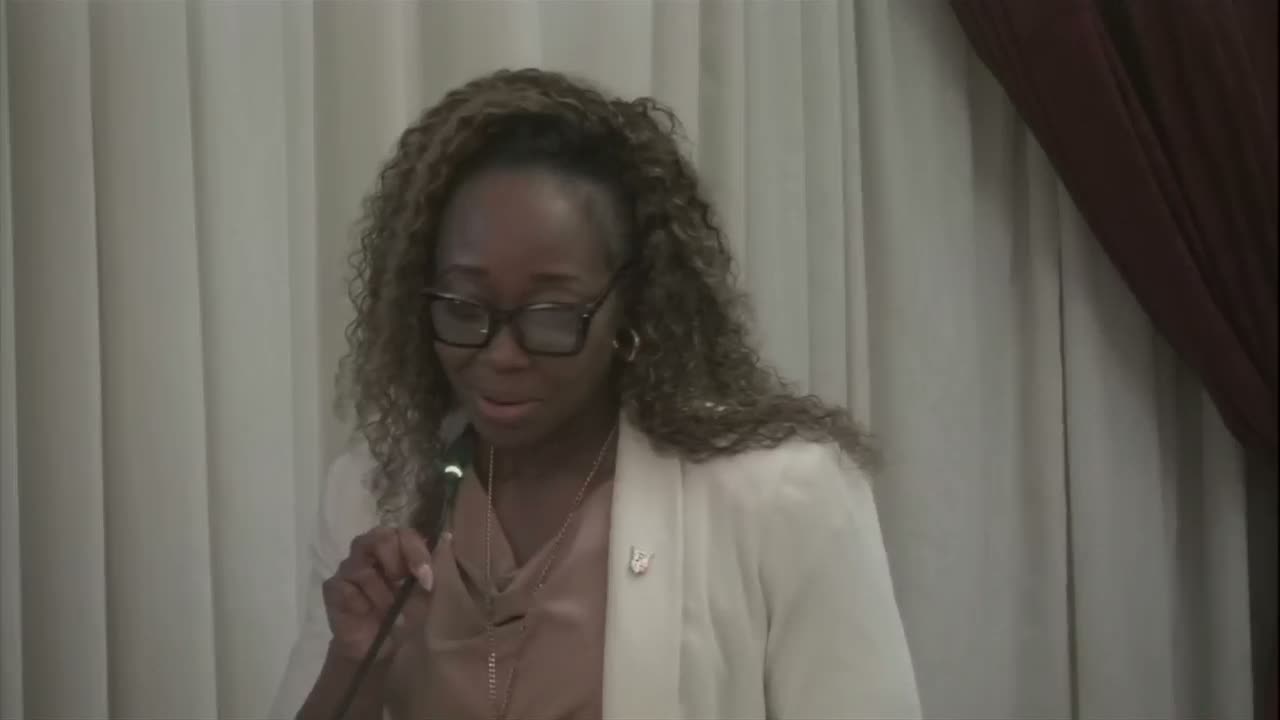
The City of St. Augustine Community Redevelopment Agency approved a conceptual design for Cordova Street that emphasizes pedestrian safety, stormwater management and historic materials.
Viviana Castro of Inspire Placemaking presented updates that included stormwater planters and underground stormwater cells intended to reduce soil compaction and allow larger root volumes for street trees. Castro said those cells are a way to reconcile healthy tree canopy with the automobile and loading constraints of the narrow corridor.
"The goal of them is to be able to remove the compaction of the soil underground and allow for the tree roots to grow," Castro said, describing the dual function of root space and stormwater filtration.
Design materials proposed include pavers and coquina aggregate to nod to the Flagler-era streetscape, with a granite ribbon used as a delineated band for bicyclists. Castro said the team is also embedding "clear" crosswalk definitions and proposing artistic treatments at two key intersections to improve pedestrian visibility.
Commissioners raised practical concerns. One commissioner said they had almost hit a pedestrian at a specific intersection and welcomed chicanes to slow traffic; another expressed skepticism that an 18-inch granite strip would be readily understood as a bike lane and suggested subtle bicycle emblems to aid recognition. Board members also asked whether the design could support shade trees rather than palms; Castro said sand live oak had been considered and that the stormwater cells allow root growth to accommodate larger trees.
A motion to approve the conceptual design "with the suggestions that have been made addressed" was moved and seconded and carried by roll call. The clerk recorded affirmative votes from Cynthia Garris, Jim Springfield and Mayor Nancy Sykes Klein; the Chair declared the motion approved. The project budget for the concept phase was noted as $189,000 to complete concepts and site planning.
Next steps: staff and the consultant will return with final design details, materials specifications and refined treatments to address bike-lane delineation, sight lines at the Hypolita intersection, and tree-species selection.
Viviana Castro of Inspire Placemaking presented updates that included stormwater planters and underground stormwater cells intended to reduce soil compaction and allow larger root volumes for street trees. Castro said those cells are a way to reconcile healthy tree canopy with the automobile and loading constraints of the narrow corridor.
"The goal of them is to be able to remove the compaction of the soil underground and allow for the tree roots to grow," Castro said, describing the dual function of root space and stormwater filtration.
Design materials proposed include pavers and coquina aggregate to nod to the Flagler-era streetscape, with a granite ribbon used as a delineated band for bicyclists. Castro said the team is also embedding "clear" crosswalk definitions and proposing artistic treatments at two key intersections to improve pedestrian visibility.
Commissioners raised practical concerns. One commissioner said they had almost hit a pedestrian at a specific intersection and welcomed chicanes to slow traffic; another expressed skepticism that an 18-inch granite strip would be readily understood as a bike lane and suggested subtle bicycle emblems to aid recognition. Board members also asked whether the design could support shade trees rather than palms; Castro said sand live oak had been considered and that the stormwater cells allow root growth to accommodate larger trees.
A motion to approve the conceptual design "with the suggestions that have been made addressed" was moved and seconded and carried by roll call. The clerk recorded affirmative votes from Cynthia Garris, Jim Springfield and Mayor Nancy Sykes Klein; the Chair declared the motion approved. The project budget for the concept phase was noted as $189,000 to complete concepts and site planning.
Next steps: staff and the consultant will return with final design details, materials specifications and refined treatments to address bike-lane delineation, sight lines at the Hypolita intersection, and tree-species selection.
Don't Miss a Word: See the Full Meeting!
Go beyond summaries. Unlock every video, transcript, and key insight with a Founder Membership.
✓
Get instant access to full meeting videos
✓
Search and clip any phrase from complete transcripts
✓
Receive AI-powered summaries & custom alerts
✓
Enjoy lifetime, unrestricted access to government data
30-day money-back guarantee
