Senator moves narrow fix to clarify disposal rules for pre‑production plastics
April 27, 2026 | 2026 Legislature CO, Colorado
This article was created by AI summarizing key points discussed. AI makes mistakes, so for full details and context, please refer to the video of the full meeting. Please report any errors so we can fix them. Report an error »
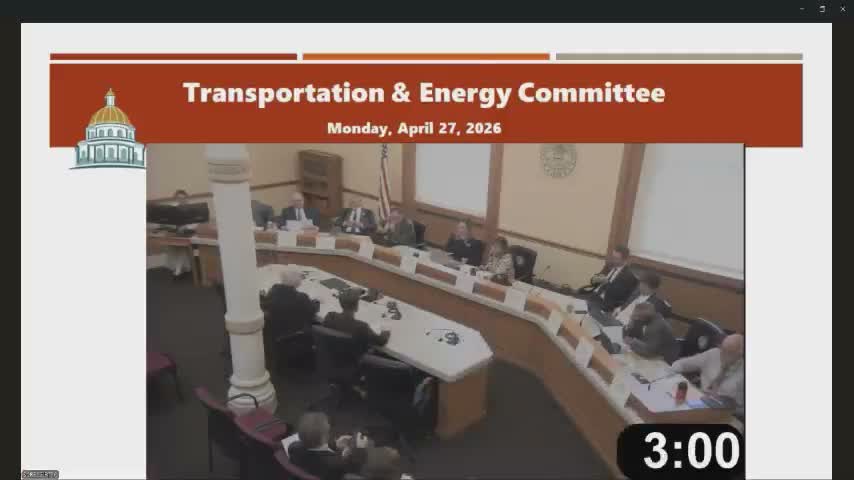
Senator Cutter introduced Senate Bill 171 as a narrow, clarifying amendment to earlier plastics disposal language, saying the bill removes ambiguity that could have been read to require pre‑production plastics to be taken to hazardous waste sites. "We just did a teeny tiny fix to clarify that," Cutter said, urging the committee to approve the technical correction.
The Colorado Department of Public Health and Environment (CDPHE) backed the change. "I'm here today in strong support of SB 26‑171," said David Snapp, manager of the Solid Waste Materials Management Program at CDPHE, adding that pre‑production plastics are not listed or characterized as hazardous wastes and that forcing disposal at hazardous waste landfills would be inconsistent with state solid waste regulations and impose large financial burdens on plastics processors.
Charlotte Dreisen, senior director of Operation Clean Sweep at the Plastics Industry Association, said her group supported the clarification but urged the committee to consider additional, proactive amendments—facility‑level risk assessments, employee training, equipment upgrades and third‑party audits—to reduce plastic resin loss and minimize friction with EPA stormwater permits under the Clean Water Act. "While we appreciate the clarification that SB 171 provides to SB 26‑016, we urge the committee to consider additional amendments that would improve the proactive nature of the bill," Dreisen said.
Committee members asked whether the conflict Dreisen described involved the earlier SB 16 rather than the present narrow fix; witnesses said SB 171 is clarifying but that broader improvements could be considered separately. No committee amendments were offered to SB 171. Senator Cutter moved the bill to the Committee of the Whole with a favorable recommendation; the motion passed unanimously. Cutter requested placement on the consent calendar.
The Colorado Department of Public Health and Environment (CDPHE) backed the change. "I'm here today in strong support of SB 26‑171," said David Snapp, manager of the Solid Waste Materials Management Program at CDPHE, adding that pre‑production plastics are not listed or characterized as hazardous wastes and that forcing disposal at hazardous waste landfills would be inconsistent with state solid waste regulations and impose large financial burdens on plastics processors.
Charlotte Dreisen, senior director of Operation Clean Sweep at the Plastics Industry Association, said her group supported the clarification but urged the committee to consider additional, proactive amendments—facility‑level risk assessments, employee training, equipment upgrades and third‑party audits—to reduce plastic resin loss and minimize friction with EPA stormwater permits under the Clean Water Act. "While we appreciate the clarification that SB 171 provides to SB 26‑016, we urge the committee to consider additional amendments that would improve the proactive nature of the bill," Dreisen said.
Committee members asked whether the conflict Dreisen described involved the earlier SB 16 rather than the present narrow fix; witnesses said SB 171 is clarifying but that broader improvements could be considered separately. No committee amendments were offered to SB 171. Senator Cutter moved the bill to the Committee of the Whole with a favorable recommendation; the motion passed unanimously. Cutter requested placement on the consent calendar.
View the Full Meeting & All Its Details
This article offers just a summary. Unlock complete video, transcripts, and insights as a Founder Member.
✓
Watch full, unedited meeting videos
✓
Search every word spoken in unlimited transcripts
✓
AI summaries & real-time alerts (all government levels)
✓
Permanent access to expanding government content
30-day money-back guarantee
