Committee backs bill to exempt Pilates and barre teacher training from state occupational education rules
April 27, 2026 | 2026 Legislature CO, Colorado
This article was created by AI summarizing key points discussed. AI makes mistakes, so for full details and context, please refer to the video of the full meeting. Please report any errors so we can fix them. Report an error »
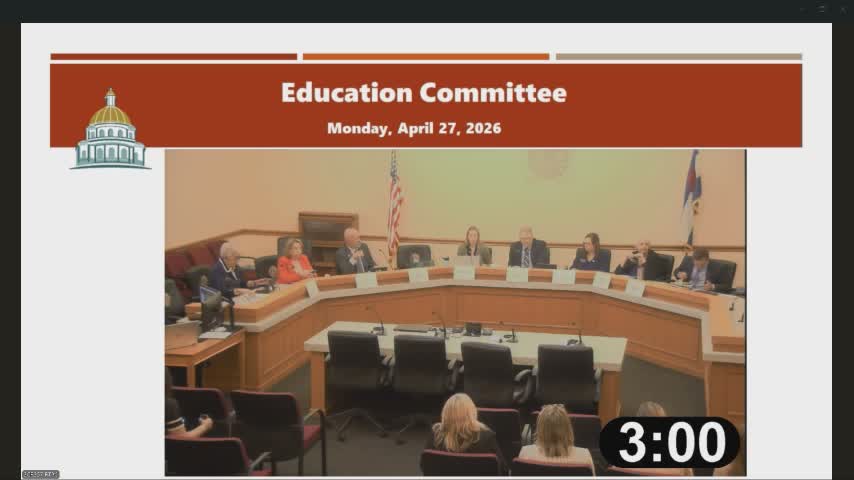
Senator Bright presented Senate Bill 173, arguing the fitness and exercise industry is largely self-regulated and that existing state rules under the occupational education statute impose high costs on small studios. Bright said some studios face application and bond costs that can exceed their margins and cited the Bridal Occupational Education Act as the statute at issue.
Three studio owners testified in support. Becky L. Hart, co-owner and manager at Spring House Pilates, said her Polestar Pilates host program was halted by a cease-and-desist order; she described required bond and fee amounts and the need for curriculum changes to comply with current regulation. "In order to comply with current regulations, Polestar and similar programs would have to secure a bond of $20,000, pay an initial application fee of $5,130 and ongoing annual renewal fees of $2,052," Hart said.
Dana Dreyfus, owner of Whole Body Studios in Denver, said DPOS issued her a cease-and-desist for Pilates and barre training but allowed yoga programs to continue; she described either spending thousands to comply or shrinking program hours to fit certificate requirements, which she said would reduce program quality.
Stacy Stahl, co-owner of Spring House Pilates, said she completed part of a certification program but some students had to travel out of state to finish after enforcement actions; she urged the committee to treat Pilates and barre the way yoga has been treated since the 2015 exemption.
Committee members discussed whether to add a safety clause; Senators Bridges and others emphasized the businesses and livelihoods affected. Senator Bridges moved SB 173 with a favorable recommendation to the Committee of the Whole; the clerk polled the committee and the motion passed unanimously. The chair placed the bill on the consent calendar.
Three studio owners testified in support. Becky L. Hart, co-owner and manager at Spring House Pilates, said her Polestar Pilates host program was halted by a cease-and-desist order; she described required bond and fee amounts and the need for curriculum changes to comply with current regulation. "In order to comply with current regulations, Polestar and similar programs would have to secure a bond of $20,000, pay an initial application fee of $5,130 and ongoing annual renewal fees of $2,052," Hart said.
Dana Dreyfus, owner of Whole Body Studios in Denver, said DPOS issued her a cease-and-desist for Pilates and barre training but allowed yoga programs to continue; she described either spending thousands to comply or shrinking program hours to fit certificate requirements, which she said would reduce program quality.
Stacy Stahl, co-owner of Spring House Pilates, said she completed part of a certification program but some students had to travel out of state to finish after enforcement actions; she urged the committee to treat Pilates and barre the way yoga has been treated since the 2015 exemption.
Committee members discussed whether to add a safety clause; Senators Bridges and others emphasized the businesses and livelihoods affected. Senator Bridges moved SB 173 with a favorable recommendation to the Committee of the Whole; the clerk polled the committee and the motion passed unanimously. The chair placed the bill on the consent calendar.
View the Full Meeting & All Its Details
This article offers just a summary. Unlock complete video, transcripts, and insights as a Founder Member.
✓
Watch full, unedited meeting videos
✓
Search every word spoken in unlimited transcripts
✓
AI summaries & real-time alerts (all government levels)
✓
Permanent access to expanding government content
30-day money-back guarantee
