House approves series of ARPA reappropriations for hospitals, health and human services
April 27, 2026 | 2026 Legislature OK, Oklahoma
This article was created by AI summarizing key points discussed. AI makes mistakes, so for full details and context, please refer to the video of the full meeting. Please report any errors so we can fix them. Report an error »
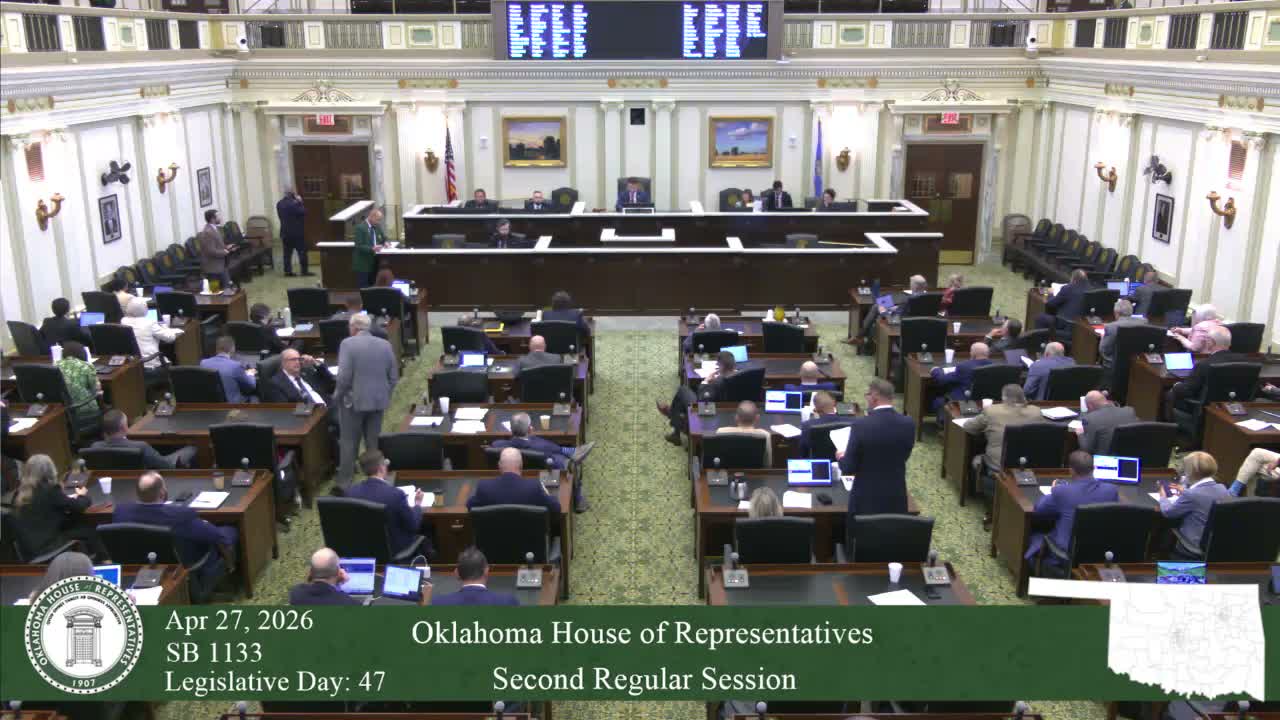
The Oklahoma House on April 26 approved a package of joint committee reports that reallocate American Rescue Plan Act (ARPA) interest funds and provide one-time funding for state health and human services programs, voting on multiple measures on final reading and declaring emergencies to make them effective immediately.
Representative Dr. Carl Newton presented several of the measures and described their purposes on the floor. “This appropriates the ARPA interest funds that’ll fill a gap that we have in Rogers County of $2,000,000,” Newton said when introducing the JCR for Senate Bill 1131, which he said funds the Office of Juvenile Affairs. The House passed SB 1131 on final reading, 81–10, and approved the emergency declaration by a two-thirds vote.
Clerk read additional JCRs to the chamber that the presiding officer attributed to the joint committee on pandemic relief. The House passed Senate Bill 1130 (an act relating to the University Hospitals Authority) on a 74–12 vote and approved its emergency declaration. The House also approved Senate Bill 1134 (described on the floor as a funding bill for the Oklahoma State University Medical Authority) 75–14 with an emergency declaration.
Newton explained that Senate Bill 1132 would reappropriate ARPA funds from hospital rebuild programs that were not going to meet federal deadlines so the state could avoid federal clawback and allow projects to be completed; the House approved SB 1132, 82–10, and declared an emergency. He also said that the Department of Mental Health and Substance Abuse Services would use interest funds to complete a project after a planned new building proved infeasible; Senate Bill 1133 passed 68–24, with an emergency declaration.
A separate JCR for Senate Bill 1142 was presented as appropriating ARPA funds to the Department of Human Services consistent with joint committee recommendations; it passed 68–21 and its emergency declaration was approved.
Votes were taken by roll call and the presiding officer repeatedly recorded the tallies and declared the bills passed and emergency provisions approved. Several measures drew no floor debate before final passage and emergency votes were taken without objection.
The House adopted the measures on final reading and moved on to other business; the clerk and presiding officer confirmed the vote tallies and emergency declarations on the floor as required.
Representative Dr. Carl Newton presented several of the measures and described their purposes on the floor. “This appropriates the ARPA interest funds that’ll fill a gap that we have in Rogers County of $2,000,000,” Newton said when introducing the JCR for Senate Bill 1131, which he said funds the Office of Juvenile Affairs. The House passed SB 1131 on final reading, 81–10, and approved the emergency declaration by a two-thirds vote.
Clerk read additional JCRs to the chamber that the presiding officer attributed to the joint committee on pandemic relief. The House passed Senate Bill 1130 (an act relating to the University Hospitals Authority) on a 74–12 vote and approved its emergency declaration. The House also approved Senate Bill 1134 (described on the floor as a funding bill for the Oklahoma State University Medical Authority) 75–14 with an emergency declaration.
Newton explained that Senate Bill 1132 would reappropriate ARPA funds from hospital rebuild programs that were not going to meet federal deadlines so the state could avoid federal clawback and allow projects to be completed; the House approved SB 1132, 82–10, and declared an emergency. He also said that the Department of Mental Health and Substance Abuse Services would use interest funds to complete a project after a planned new building proved infeasible; Senate Bill 1133 passed 68–24, with an emergency declaration.
A separate JCR for Senate Bill 1142 was presented as appropriating ARPA funds to the Department of Human Services consistent with joint committee recommendations; it passed 68–21 and its emergency declaration was approved.
Votes were taken by roll call and the presiding officer repeatedly recorded the tallies and declared the bills passed and emergency provisions approved. Several measures drew no floor debate before final passage and emergency votes were taken without objection.
The House adopted the measures on final reading and moved on to other business; the clerk and presiding officer confirmed the vote tallies and emergency declarations on the floor as required.
Don't Miss a Word: See the Full Meeting!
Go beyond summaries. Unlock every video, transcript, and key insight with a Founder Membership.
✓
Get instant access to full meeting videos
✓
Search and clip any phrase from complete transcripts
✓
Receive AI-powered summaries & custom alerts
✓
Enjoy lifetime, unrestricted access to government data
30-day money-back guarantee
