CSISD special education leaders report rising evaluations, staffing shifts and potential new state funding
April 24, 2026 | COLLEGE STATION ISD, School Districts, Texas
This article was created by AI summarizing key points discussed. AI makes mistakes, so for full details and context, please refer to the video of the full meeting. Please report any errors so we can fix them. Report an error »
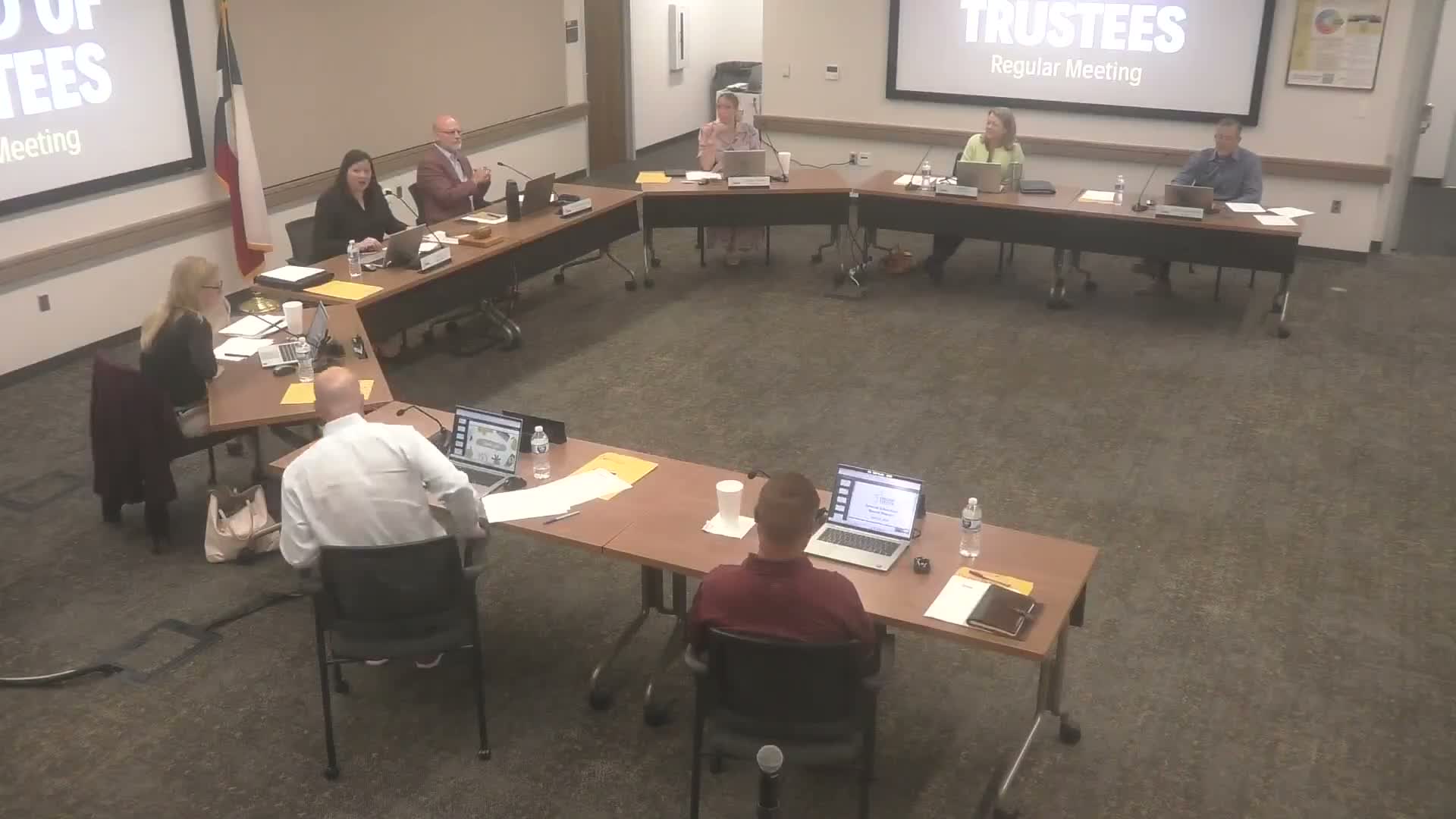
Miss Grande, the district27s special education presenter, told the College Station ISD Board of Trustees that initial special education evaluations have risen sharply and that the district has requested 675 initial full individual evaluations so far in 2025-26. "We're 99.81% compliant," she said of the district27s timely initial evaluation rate, while noting the state requires 100% compliance.
Grande walked trustees through multi‑year evaluation totals (for example, 374 FIEs in 2019-20 and higher counts after pandemic disruptions), and said the addition of dyslexia to the special education category in 2024-25 accounted for a substantial portion of the increase. She told the board the Texas Education Agency is considering reimbursing districts $1,000 per initial evaluation; "that is a really, really promising thing" for the district, she said.
The presentation included assessment and accountability data showing growth in K‑3 reading for students served through special education and relative improvements for students who later exited special education. Grande also summarized operational impacts: the district spent approximately $75,000 on contracted evaluation services in 2024-25 and roughly $75,000 on contracted behavioral supports (about $40,000 of which was recaptured via TEA high‑cost funds). This year the district has accrued roughly $150,000 in contracted behavioral support costs. To address recurring contracted costs, Grande said the district added evaluation staff for 2025-26 and is reallocating positions (including art facilitators and instructional coaches) to return staff to campus roles; she estimated the reallocation could yield about $300,000 in savings.
Grande discussed state accountability work under Results Driven Accountability (RDA), reporting near‑perfect compliance on timelines for evaluations and eligibility determinations but saying the district must continue targeted work to avoid state corrective action. She also noted a TEA parent survey open through May 22 (745 randomly selected families; district response ~10%) and tied those outreach results to district strategic priorities to improve outcomes for historically underperforming groups.
Trustees praised district staff and volunteers (several trustees described attending Special Olympics), asked clarifying questions about private school evaluation obligations and testing, and discussed statewide funding shortfalls for special education. Grande said the district will pilot TEA27s proposed service‑based funding model in 2026-27, continue monitoring assessment outcomes and report back to the board as the fiscal implications are clarified.
Grande walked trustees through multi‑year evaluation totals (for example, 374 FIEs in 2019-20 and higher counts after pandemic disruptions), and said the addition of dyslexia to the special education category in 2024-25 accounted for a substantial portion of the increase. She told the board the Texas Education Agency is considering reimbursing districts $1,000 per initial evaluation; "that is a really, really promising thing" for the district, she said.
The presentation included assessment and accountability data showing growth in K‑3 reading for students served through special education and relative improvements for students who later exited special education. Grande also summarized operational impacts: the district spent approximately $75,000 on contracted evaluation services in 2024-25 and roughly $75,000 on contracted behavioral supports (about $40,000 of which was recaptured via TEA high‑cost funds). This year the district has accrued roughly $150,000 in contracted behavioral support costs. To address recurring contracted costs, Grande said the district added evaluation staff for 2025-26 and is reallocating positions (including art facilitators and instructional coaches) to return staff to campus roles; she estimated the reallocation could yield about $300,000 in savings.
Grande discussed state accountability work under Results Driven Accountability (RDA), reporting near‑perfect compliance on timelines for evaluations and eligibility determinations but saying the district must continue targeted work to avoid state corrective action. She also noted a TEA parent survey open through May 22 (745 randomly selected families; district response ~10%) and tied those outreach results to district strategic priorities to improve outcomes for historically underperforming groups.
Trustees praised district staff and volunteers (several trustees described attending Special Olympics), asked clarifying questions about private school evaluation obligations and testing, and discussed statewide funding shortfalls for special education. Grande said the district will pilot TEA27s proposed service‑based funding model in 2026-27, continue monitoring assessment outcomes and report back to the board as the fiscal implications are clarified.
Don't Miss a Word: See the Full Meeting!
Go beyond summaries. Unlock every video, transcript, and key insight with a Founder Membership.
✓
Get instant access to full meeting videos
✓
Search and clip any phrase from complete transcripts
✓
Receive AI-powered summaries & custom alerts
✓
Enjoy lifetime, unrestricted access to government data
30-day money-back guarantee
