Sen. Roberts narrows SB 163, drops plan to fold racing commission into gaming; amended bill advances
April 21, 2026 | 2026 Legislature CO, Colorado
This article was created by AI summarizing key points discussed. AI makes mistakes, so for full details and context, please refer to the video of the full meeting. Please report any errors so we can fix them. Report an error »
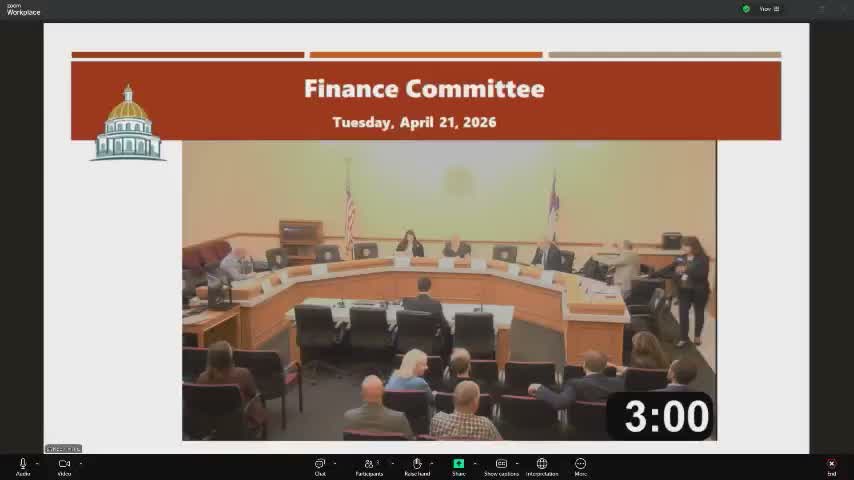
Sen. Roberts outlined amended Senate Bill 163 on the Senate Finance Committee floor, saying the sponsor had removed provisions to dissolve the Colorado Racing Commission and narrowed the measure to technical updates for gaming regulation. "The bill will allow for more efficient delegation of licensing duties to the division of gaming and strengthens enforcement tools to address unlicensed gaming and sports betting in Colorado," Roberts said.
The changes adopted in committee removed consolidation language and left a package of administrative and regulatory updates. The amended bill codifies director-level approvals for minor vendor or table-game changes to reduce delays in routine matters, updates federal fingerprinting and background-check language to comply with FBI standards, expands the state's voluntary self-exclusion program to explicitly include sports betting, and clarifies definitions aimed at combating gray-market gaming devices.
Industry witnesses told senators they welcomed the removal of consolidation language. Kim Oliver, president of the Colorado Horsemen's Association, said the racing commission "stands separate from the gaming because we're dealing with the horses," arguing the five-member racing commission provides industry-specific expertise on animal welfare and track safety. Mark Hillman, treasurer of the Colorado Thoroughbred Breeders Association, and Dr. Jill Cook of the Rocky Mountain Quarter Horse Association emphasized that the current commission includes veterinarians and trainers who focus on horse welfare.
Department of Revenue officials defended the remaining technical changes as efforts to streamline state oversight. Christopher Schroeder, director of the Colorado Division of Gaming and the Division of Racing Events, said the amendments "streamline administrative approvals to foster a more agile business environment" and noted the bill would remove routine items from the commission's agenda so the commission can focus on higher-level policy. Jimmy Reid, director of legislative affairs for the Department of Revenue, acknowledged there had been "insufficient stakeholding" on the consolidation proposal and said the department supported the sponsor's amendments to remove that language so a fuller stakeholder conversation can occur over the interim.
Senators questioned the rationale for consolidation, citing past sunsets and prior legislative decisions. Committee members asked whether other states combine gaming and racing oversight and whether operational efficiencies would outweigh the loss of a focused racing commission; DoR witnesses pointed to examples in other states and said internal leadership already oversees both divisions.
After adopting a series of technical amendments (L001–L008) that removed the racing-commission changes and adjusted fingerprinting provisions, Sen. Roberts moved the amended bill to the Committee of the Whole with a favorable recommendation. The committee vote was recorded as unanimous: eight ayes, zero noes, with one senator excused.
The committee's action means the bill will next be considered by the full Senate in Committee of the Whole; the sponsor said he intends to convene interim meetings with stakeholders to discuss the racing-commission structure further before any future consolidation is pursued.
The changes adopted in committee removed consolidation language and left a package of administrative and regulatory updates. The amended bill codifies director-level approvals for minor vendor or table-game changes to reduce delays in routine matters, updates federal fingerprinting and background-check language to comply with FBI standards, expands the state's voluntary self-exclusion program to explicitly include sports betting, and clarifies definitions aimed at combating gray-market gaming devices.
Industry witnesses told senators they welcomed the removal of consolidation language. Kim Oliver, president of the Colorado Horsemen's Association, said the racing commission "stands separate from the gaming because we're dealing with the horses," arguing the five-member racing commission provides industry-specific expertise on animal welfare and track safety. Mark Hillman, treasurer of the Colorado Thoroughbred Breeders Association, and Dr. Jill Cook of the Rocky Mountain Quarter Horse Association emphasized that the current commission includes veterinarians and trainers who focus on horse welfare.
Department of Revenue officials defended the remaining technical changes as efforts to streamline state oversight. Christopher Schroeder, director of the Colorado Division of Gaming and the Division of Racing Events, said the amendments "streamline administrative approvals to foster a more agile business environment" and noted the bill would remove routine items from the commission's agenda so the commission can focus on higher-level policy. Jimmy Reid, director of legislative affairs for the Department of Revenue, acknowledged there had been "insufficient stakeholding" on the consolidation proposal and said the department supported the sponsor's amendments to remove that language so a fuller stakeholder conversation can occur over the interim.
Senators questioned the rationale for consolidation, citing past sunsets and prior legislative decisions. Committee members asked whether other states combine gaming and racing oversight and whether operational efficiencies would outweigh the loss of a focused racing commission; DoR witnesses pointed to examples in other states and said internal leadership already oversees both divisions.
After adopting a series of technical amendments (L001–L008) that removed the racing-commission changes and adjusted fingerprinting provisions, Sen. Roberts moved the amended bill to the Committee of the Whole with a favorable recommendation. The committee vote was recorded as unanimous: eight ayes, zero noes, with one senator excused.
The committee's action means the bill will next be considered by the full Senate in Committee of the Whole; the sponsor said he intends to convene interim meetings with stakeholders to discuss the racing-commission structure further before any future consolidation is pursued.
View the Full Meeting & All Its Details
This article offers just a summary. Unlock complete video, transcripts, and insights as a Founder Member.
✓
Watch full, unedited meeting videos
✓
Search every word spoken in unlimited transcripts
✓
AI summaries & real-time alerts (all government levels)
✓
Permanent access to expanding government content
30-day money-back guarantee
