Committee requires end to auto-forwarding of official legislative email and sets June 1 transition
April 21, 2026 | 2026 Legislature CO, Colorado
This article was created by AI summarizing key points discussed. AI makes mistakes, so for full details and context, please refer to the video of the full meeting. Please report any errors so we can fix them. Report an error »
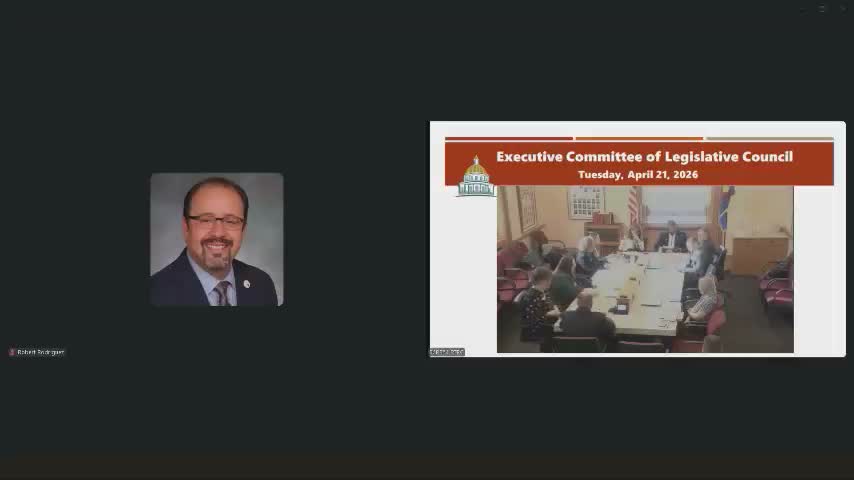
The Executive Committee of the Legislative Council unanimously approved a motion directing Legislative Information Services to prohibit automatic forwarding of official legislative email to personal accounts and to transition affected returning members to state-provided Google Workspace accounts by June 1, 2026.
A legislative information systems director outlined a phased communication and support plan: an initial email to returning members, follow-up and in-person support beginning May 1, phone outreach beginning May 18, and a plan to disable auto-forwarding on June 1. Committee members were told staff will provide instructions and direct help to complete establishment of Google Workspace accounts and delegation settings.
Natalie Castle, director of Legislative Council staff, told the committee the change is needed to protect the institution’s email deliverability and to reduce cybersecurity risk. "If we continue to allow members to auto forward every email from their official ... account, that creates significant risk that eventually our domain will lose its reputation enough that we will not be able to function—the email will stop working for us," she said.
Members asked operational questions about what would happen to messages after June 1 for members who do not complete the transition; staff answered that forwarded messages would stop being sent to personal accounts unless a member had moved to the state-provided Google Workspace account. Staff also explained delegation options: each legislator can have a primary Google Workspace account for themselves and a second account for aides, and aides can be given individual credentials and delegated access without sharing personal authentication codes.
The motion was moved by the president and seconded by the majority leader; the committee adopted it unanimously in a roll call vote. Staff said they will proceed with the outreach phases and technical changes necessary to meet the June 1 deadline.
Why it matters: The change affects how members and their aides receive official legislative communications and is intended to protect the legislature’s email reputation and ensure reliable delivery of time-sensitive notices and constituent correspondence.
What happens next: Staff will begin Phase 1 outreach and prepare the technical cutover; members who prefer staff assistance will be offered one-on-one help to complete migration and delegation.
A legislative information systems director outlined a phased communication and support plan: an initial email to returning members, follow-up and in-person support beginning May 1, phone outreach beginning May 18, and a plan to disable auto-forwarding on June 1. Committee members were told staff will provide instructions and direct help to complete establishment of Google Workspace accounts and delegation settings.
Natalie Castle, director of Legislative Council staff, told the committee the change is needed to protect the institution’s email deliverability and to reduce cybersecurity risk. "If we continue to allow members to auto forward every email from their official ... account, that creates significant risk that eventually our domain will lose its reputation enough that we will not be able to function—the email will stop working for us," she said.
Members asked operational questions about what would happen to messages after June 1 for members who do not complete the transition; staff answered that forwarded messages would stop being sent to personal accounts unless a member had moved to the state-provided Google Workspace account. Staff also explained delegation options: each legislator can have a primary Google Workspace account for themselves and a second account for aides, and aides can be given individual credentials and delegated access without sharing personal authentication codes.
The motion was moved by the president and seconded by the majority leader; the committee adopted it unanimously in a roll call vote. Staff said they will proceed with the outreach phases and technical changes necessary to meet the June 1 deadline.
Why it matters: The change affects how members and their aides receive official legislative communications and is intended to protect the legislature’s email reputation and ensure reliable delivery of time-sensitive notices and constituent correspondence.
What happens next: Staff will begin Phase 1 outreach and prepare the technical cutover; members who prefer staff assistance will be offered one-on-one help to complete migration and delegation.
Don't Miss a Word: See the Full Meeting!
Go beyond summaries. Unlock every video, transcript, and key insight with a Founder Membership.
✓
Get instant access to full meeting videos
✓
Search and clip any phrase from complete transcripts
✓
Receive AI-powered summaries & custom alerts
✓
Enjoy lifetime, unrestricted access to government data
30-day money-back guarantee
