House Judiciary Committee weighs creating forensic competency-restoration pathway, witnesses urge oversight and cost analysis
April 23, 2026 | Judiciary, HOUSE OF REPRESENTATIVES, Committees, Legislative , Vermont
This article was created by AI summarizing key points discussed. AI makes mistakes, so for full details and context, please refer to the video of the full meeting. Please report any errors so we can fix them. Report an error »
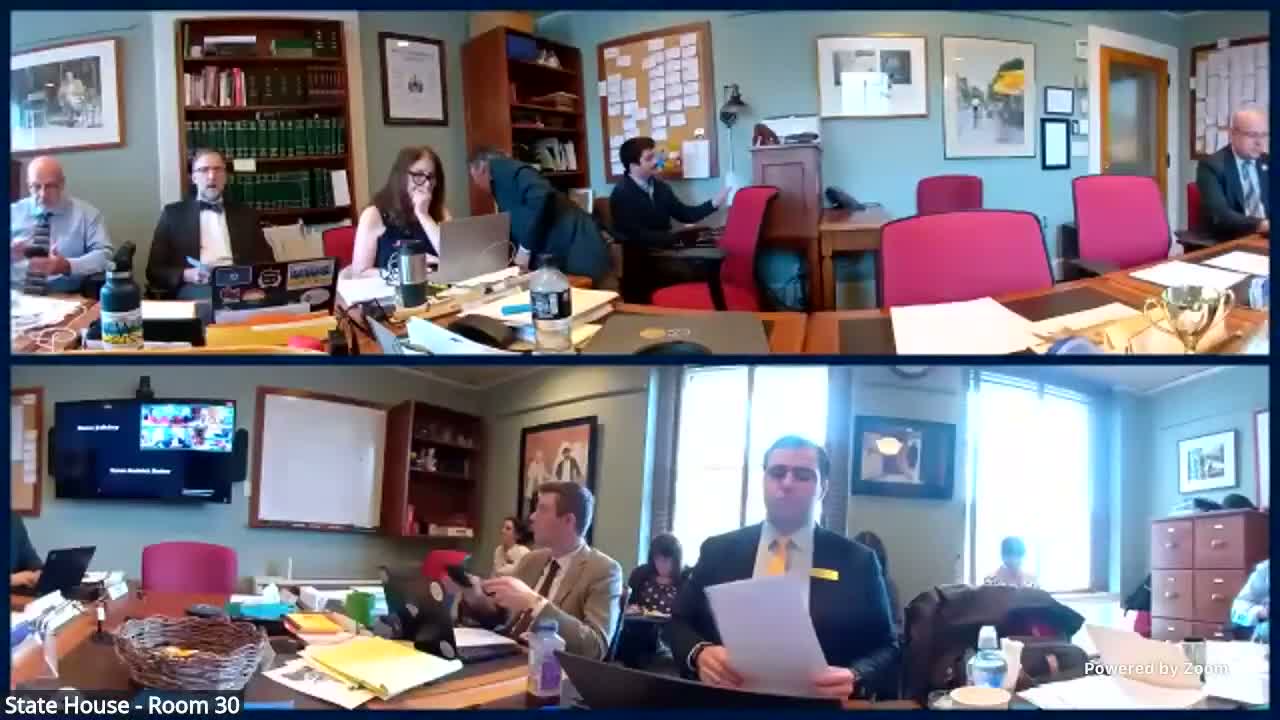
The House Judiciary Committee on April 22 heard testimony on draft 2.1 of S.193, a bill that would establish a narrowly targeted competency-restoration process and a forensic treatment pathway for people charged with serious violent offenses who cannot be restored in Vermont's existing civil or correctional systems. Committee members and witnesses pressed for clearer safeguards, independent oversight and fuller cost and outcome data.
Karen Barber, general counsel for the Department of Mental Health, told the committee Vermont currently has "no form of forensic system," and that the state's existing civil and criminal systems are not designed to be interchangeable. Barber said the draft clarifies that "it is always the court that makes the ultimate decision on competency," and described the proposal as focused on "a very narrow subset of individuals" rather than creating a full forensic campus.
Susan Aronoff of the Vermont Developmental Disabilities Council said the bill concentrates rulemaking and oversight inside the Agency of Human Services and warned there is "no out out there"—no independent body looking in. Aronoff urged statutory safeguards, including independent oversight, clearer protections for people with developmental disabilities, and access to advocates and legal representation.
Aronoff also objected to a provision that would allow the state to hold a person for 60 days after a finding that they cannot be restored, saying "holding someone for 60 days after that finding, it's just way too long" and characterizing extended involuntary holds as a significant liberty concern. Barber acknowledged the tension between public-safety interests and civil liberties and noted the bill includes reporting requirements intended to produce better outcome data once a forensic pathway is operational.
Committee members pressed witnesses on practical questions: who would assume responsibility for people with traumatic brain injury or dementia; whether residential or community-based alternatives could meet needs; and whether contractors such as WellPath should be engaged or the state should invest in bolstering Vermont providers. A member noted some states impose time limits on competency-restoration commitments while others allow indefinite commitments for certain serious crimes; witnesses cited the Psychiatric Security Review Board model in Connecticut as an example of an independent review board that includes clinical and legal experts and victim participation.
Witnesses repeatedly urged the committee to include cost details and alternatives in the bill's forensic section: timeline estimates, preliminary startup costs, an annual per-person cost, and comparisons with less-restrictive options such as state-funded vouchers or secure, small residential "cottage" models. Barber said Vermont lacks comparable data now but that the bill's reporting requirement is intended to generate it.
The hearing did not include formal votes. The committee recessed to take a break until 10:30 a.m., and additional witnesses, including representatives identified as Eric and others, were expected to testify when the meeting resumed.
The committee will consider written comments submitted by witnesses and may return to issues including the draft's interaction with Act 2 48 procedures, oversight mechanisms, specified holding durations, and funding and contracting choices.
Karen Barber, general counsel for the Department of Mental Health, told the committee Vermont currently has "no form of forensic system," and that the state's existing civil and criminal systems are not designed to be interchangeable. Barber said the draft clarifies that "it is always the court that makes the ultimate decision on competency," and described the proposal as focused on "a very narrow subset of individuals" rather than creating a full forensic campus.
Susan Aronoff of the Vermont Developmental Disabilities Council said the bill concentrates rulemaking and oversight inside the Agency of Human Services and warned there is "no out out there"—no independent body looking in. Aronoff urged statutory safeguards, including independent oversight, clearer protections for people with developmental disabilities, and access to advocates and legal representation.
Aronoff also objected to a provision that would allow the state to hold a person for 60 days after a finding that they cannot be restored, saying "holding someone for 60 days after that finding, it's just way too long" and characterizing extended involuntary holds as a significant liberty concern. Barber acknowledged the tension between public-safety interests and civil liberties and noted the bill includes reporting requirements intended to produce better outcome data once a forensic pathway is operational.
Committee members pressed witnesses on practical questions: who would assume responsibility for people with traumatic brain injury or dementia; whether residential or community-based alternatives could meet needs; and whether contractors such as WellPath should be engaged or the state should invest in bolstering Vermont providers. A member noted some states impose time limits on competency-restoration commitments while others allow indefinite commitments for certain serious crimes; witnesses cited the Psychiatric Security Review Board model in Connecticut as an example of an independent review board that includes clinical and legal experts and victim participation.
Witnesses repeatedly urged the committee to include cost details and alternatives in the bill's forensic section: timeline estimates, preliminary startup costs, an annual per-person cost, and comparisons with less-restrictive options such as state-funded vouchers or secure, small residential "cottage" models. Barber said Vermont lacks comparable data now but that the bill's reporting requirement is intended to generate it.
The hearing did not include formal votes. The committee recessed to take a break until 10:30 a.m., and additional witnesses, including representatives identified as Eric and others, were expected to testify when the meeting resumed.
The committee will consider written comments submitted by witnesses and may return to issues including the draft's interaction with Act 2 48 procedures, oversight mechanisms, specified holding durations, and funding and contracting choices.
View the Full Meeting & All Its Details
This article offers just a summary. Unlock complete video, transcripts, and insights as a Founder Member.
✓
Watch full, unedited meeting videos
✓
Search every word spoken in unlimited transcripts
✓
AI summaries & real-time alerts (all government levels)
✓
Permanent access to expanding government content
30-day money-back guarantee
