Historic board debates becoming a decision-making body as it readies CLG application
April 24, 2026 | Punta Gorda City, Charlotte County, Florida
This article was created by AI summarizing key points discussed. AI makes mistakes, so for full details and context, please refer to the video of the full meeting. Please report any errors so we can fix them. Report an error »
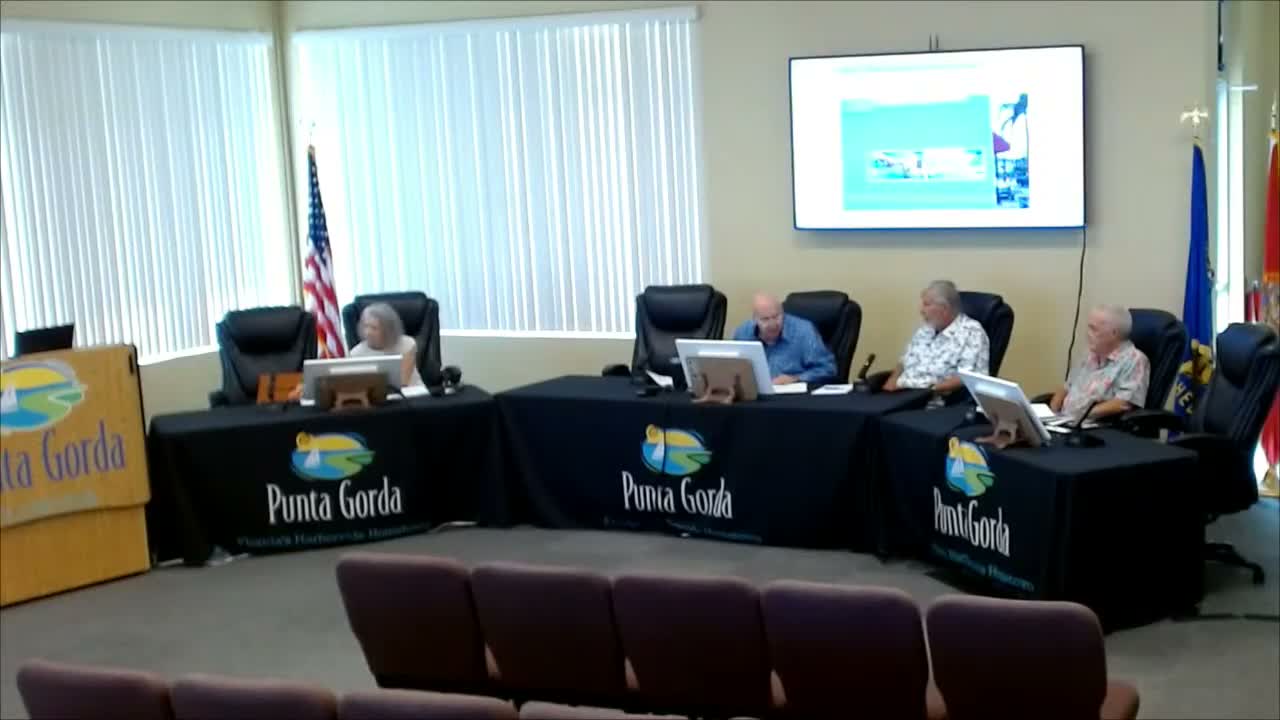
The Historic Preservation Advisory Board on April 23 debated whether to pursue decision-making authority for Certificates of Appropriateness as part of a Certified Local Government application and asked city staff for clearer timelines and example ordinances. Chair David Perry opened the discussion by noting council's direction and asking staff to clarify the board's intended role.
Planner Adriana Gherky told the board that if the body becomes decision-making, every CA presented to the board would be a public hearing and require legal advertising. "Each CA, if you were to become a decision-making board, every CA that is presented to you would be a public hearing and would require legal advertising," Adriana said. Board members raised practical concerns about workload, meeting frequency and whether routine maintenance items (windows, doors, siding) should require that level of review.
Members repeatedly referenced the city of Venice as a model and asked staff to circulate Venice's ordinance and specific Land Development Regulation (LDR) sections (identified in the meeting as 8.1, 15.4 and 16.3). "What I would like to see is what the ordinance looks like for the city of Venice," David Perry said. Adriana agreed to send Venice's ordinance and to draft an initial ordinance for the board to review.
The board also pressed staff for clarification about the process and roles across divisions. Urban Design Manager Hank Flores said historic preservation work is handled through the zoning division, not daily urban design, and members asked that department directors (including Boyd Lawrence) or Rachel Berry attend a future meeting to explain staff roles and the timeline.
Urgency was a recurring theme. One member said Venice took about a year and a half to complete its process; another estimated a year for the local effort and urged the board to "keep the ball rolling." Members proposed assigning individual LDR sections to board members to speed review and asked staff to provide a draft ordinance and a slide presentation on CA timelines for the next meeting.
The board did not take a formal vote on changing its status during the meeting. Instead, staff committed to circulate materials (Venice ordinance and the cited LDR sections) and return with a timeline, clarifying whether CAs can be extended, whether bonds are required for demolition permits and who will lead the CLG application work.
What's next: staff will send the requested ordinance material and a slide summary of CA timelines; the board plans to continue work on the ordinance and on assigning members to review specific LDR sections at upcoming meetings.
Planner Adriana Gherky told the board that if the body becomes decision-making, every CA presented to the board would be a public hearing and require legal advertising. "Each CA, if you were to become a decision-making board, every CA that is presented to you would be a public hearing and would require legal advertising," Adriana said. Board members raised practical concerns about workload, meeting frequency and whether routine maintenance items (windows, doors, siding) should require that level of review.
Members repeatedly referenced the city of Venice as a model and asked staff to circulate Venice's ordinance and specific Land Development Regulation (LDR) sections (identified in the meeting as 8.1, 15.4 and 16.3). "What I would like to see is what the ordinance looks like for the city of Venice," David Perry said. Adriana agreed to send Venice's ordinance and to draft an initial ordinance for the board to review.
The board also pressed staff for clarification about the process and roles across divisions. Urban Design Manager Hank Flores said historic preservation work is handled through the zoning division, not daily urban design, and members asked that department directors (including Boyd Lawrence) or Rachel Berry attend a future meeting to explain staff roles and the timeline.
Urgency was a recurring theme. One member said Venice took about a year and a half to complete its process; another estimated a year for the local effort and urged the board to "keep the ball rolling." Members proposed assigning individual LDR sections to board members to speed review and asked staff to provide a draft ordinance and a slide presentation on CA timelines for the next meeting.
The board did not take a formal vote on changing its status during the meeting. Instead, staff committed to circulate materials (Venice ordinance and the cited LDR sections) and return with a timeline, clarifying whether CAs can be extended, whether bonds are required for demolition permits and who will lead the CLG application work.
What's next: staff will send the requested ordinance material and a slide summary of CA timelines; the board plans to continue work on the ordinance and on assigning members to review specific LDR sections at upcoming meetings.
View the Full Meeting & All Its Details
This article offers just a summary. Unlock complete video, transcripts, and insights as a Founder Member.
✓
Watch full, unedited meeting videos
✓
Search every word spoken in unlimited transcripts
✓
AI summaries & real-time alerts (all government levels)
✓
Permanent access to expanding government content
30-day money-back guarantee
