Family physician: Blueprint funding stabilizes clinic but reporting, payment design strain capacity
April 24, 2026 | Health Care, HOUSE OF REPRESENTATIVES, Committees, Legislative , Vermont
This article was created by AI summarizing key points discussed. AI makes mistakes, so for full details and context, please refer to the video of the full meeting. Please report any errors so we can fix them. Report an error »
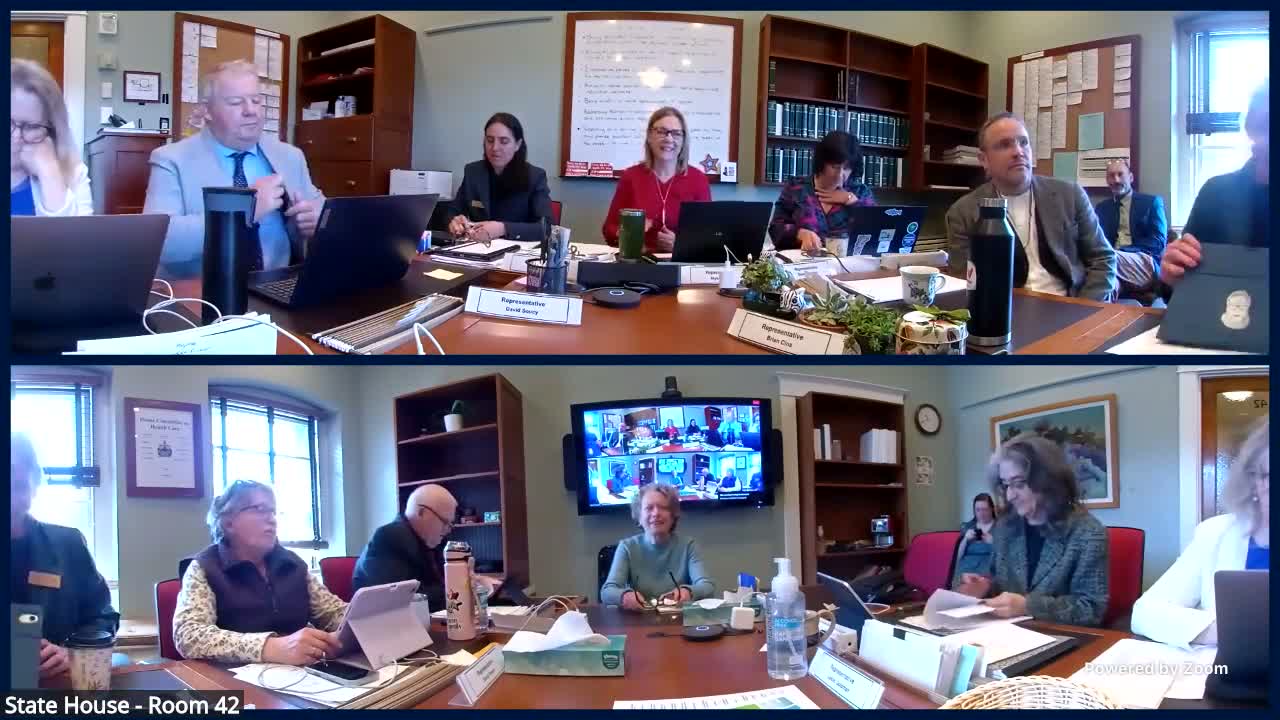
Dr. Hannah Rabin, a family physician at Richmond Family Medicine, told the House Health Care Committee on April 24 that Blueprint for Health funding provides flexible staff support that helped her clinic maintain services but that reporting requirements and payment design create operational strain.
Rabin said Richmond Family Medicine uses Blueprint funds to pay a community health worker, a referral/care coordinator and part of a nurse’s time for transition-of-care follow-ups. “The total amount is about 7% of our total income,” she said, adding that Blueprint also passes through Medicare lump sums and provides some Medicaid per-member-per-month payments. She told lawmakers her clinic serves nearly 7,000 patients across eight providers and that, in the first quarter, 79 patients accessed the community health worker while the discharge nurse contacted 124 patients after hospitalization.
The physician described how predictable capitated payments can stabilize a small clinic’s payroll and operations, especially during fee-for-service “deductible season.” “OneCare really sort of stabilized us,” Rabin said of the regional capitation program during the pandemic. At the same time, she warned that participating in capitated or quality-payment systems often requires extensive administrative work—quality-improvement projects, reporting and recertification—that she said reduces time available to see patients.
Rabin gave concrete examples of how payment design affects care delivery. She said certain services were carved out of capitation and that some mental-health visits and in‑office procedures interacted poorly with capitation incentives, making it “not cost effective” to provide some intensive services in-house under the capitation model. "We were paying our psychiatric nurse practitioners for the regular sort of fee-for-service charges... but then we were getting back only capitation money for any one of those patients," she said.
Lawmakers pressed for clarity about how a proposed per-member-per-month payment would be distributed, who would administer pass-through funds and which insurers would contribute. Rabin said some details in the bill are intentionally left for implementation and that the committee’s study language should clarify these operational questions. She also cautioned that shifting payment methods without increasing the total amount allocated to primary care risks simply slicing the same funding pie differently rather than expanding resources for care: "If we don't increase the pie going to primary care, we can't do much more than we're doing," she said.
Rabin described clinic practices on billing and patient affordability: staff reduce charges, offer payment plans and sometimes forgive large bills to keep patients in care; she said the practice rarely uses debt collection but on occasion has removed patients from the panel for nonpayment. She also recounted a tension between useful, uncompensated work (phone calls, portal messages) and the fee schedule: clinicians often perform substantial care outside reimbursable office visits.
On OneCare, Rabin credited the organization with providing financial stability early in the pandemic but said its large administrative presence sometimes felt removed from small frontline clinics: “They were up on the hill overlooking the lake with so many lawyers and so many accountants,” she said.
The committee did not take votes on the bill. Chair Black said the committee will continue work at the next meeting, with a public hearing scheduled for next Thursday to inform possible markup.
The hearing transcript contains the figures and program names cited above; the committee continues to seek implementation details for any proposed per-member-per-month design.
Rabin said Richmond Family Medicine uses Blueprint funds to pay a community health worker, a referral/care coordinator and part of a nurse’s time for transition-of-care follow-ups. “The total amount is about 7% of our total income,” she said, adding that Blueprint also passes through Medicare lump sums and provides some Medicaid per-member-per-month payments. She told lawmakers her clinic serves nearly 7,000 patients across eight providers and that, in the first quarter, 79 patients accessed the community health worker while the discharge nurse contacted 124 patients after hospitalization.
The physician described how predictable capitated payments can stabilize a small clinic’s payroll and operations, especially during fee-for-service “deductible season.” “OneCare really sort of stabilized us,” Rabin said of the regional capitation program during the pandemic. At the same time, she warned that participating in capitated or quality-payment systems often requires extensive administrative work—quality-improvement projects, reporting and recertification—that she said reduces time available to see patients.
Rabin gave concrete examples of how payment design affects care delivery. She said certain services were carved out of capitation and that some mental-health visits and in‑office procedures interacted poorly with capitation incentives, making it “not cost effective” to provide some intensive services in-house under the capitation model. "We were paying our psychiatric nurse practitioners for the regular sort of fee-for-service charges... but then we were getting back only capitation money for any one of those patients," she said.
Lawmakers pressed for clarity about how a proposed per-member-per-month payment would be distributed, who would administer pass-through funds and which insurers would contribute. Rabin said some details in the bill are intentionally left for implementation and that the committee’s study language should clarify these operational questions. She also cautioned that shifting payment methods without increasing the total amount allocated to primary care risks simply slicing the same funding pie differently rather than expanding resources for care: "If we don't increase the pie going to primary care, we can't do much more than we're doing," she said.
Rabin described clinic practices on billing and patient affordability: staff reduce charges, offer payment plans and sometimes forgive large bills to keep patients in care; she said the practice rarely uses debt collection but on occasion has removed patients from the panel for nonpayment. She also recounted a tension between useful, uncompensated work (phone calls, portal messages) and the fee schedule: clinicians often perform substantial care outside reimbursable office visits.
On OneCare, Rabin credited the organization with providing financial stability early in the pandemic but said its large administrative presence sometimes felt removed from small frontline clinics: “They were up on the hill overlooking the lake with so many lawyers and so many accountants,” she said.
The committee did not take votes on the bill. Chair Black said the committee will continue work at the next meeting, with a public hearing scheduled for next Thursday to inform possible markup.
The hearing transcript contains the figures and program names cited above; the committee continues to seek implementation details for any proposed per-member-per-month design.
View the Full Meeting & All Its Details
This article offers just a summary. Unlock complete video, transcripts, and insights as a Founder Member.
✓
Watch full, unedited meeting videos
✓
Search every word spoken in unlimited transcripts
✓
AI summaries & real-time alerts (all government levels)
✓
Permanent access to expanding government content
30-day money-back guarantee
