LA Unified staff outline prevention policies as district reports rise in hate incidents
April 24, 2026 | Los Angeles Unified, School Districts, California
This article was created by AI summarizing key points discussed. AI makes mistakes, so for full details and context, please refer to the video of the full meeting. Please report any errors so we can fix them. Report an error »
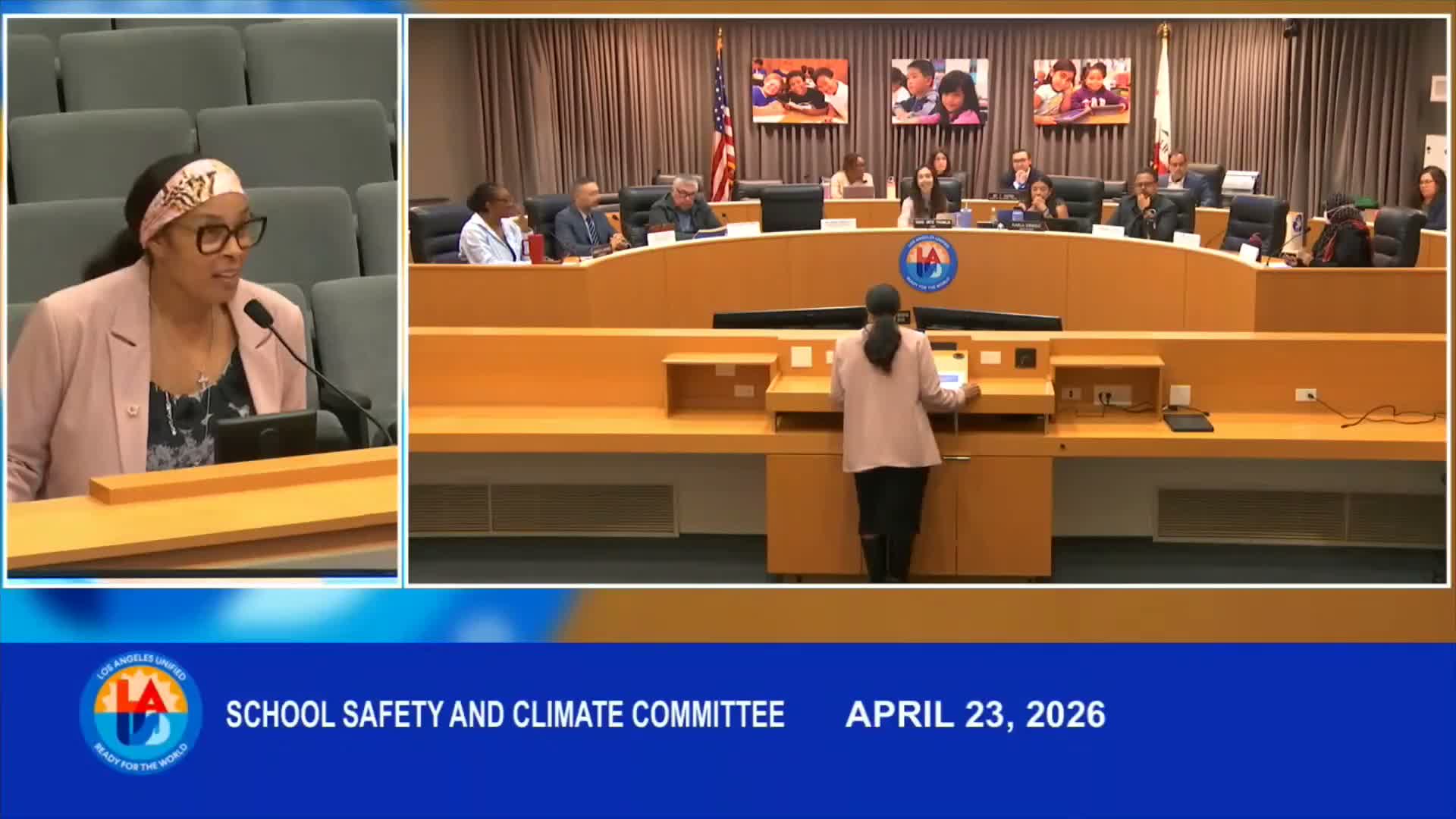
Acting chief of school operations Dr. Deborah Bryant told the School Safety and Climate Committee that LA Unified’s response to bullying, hate incidents and serious physical altercations centers on prevention, consistent policies and restorative practice.
"We want to make sure that our response to any of these concerns are led with fairness, also with respect, and also with making sure that it's not punitive, but we're showing we're doing wrap-around services," Dr. Bryant said, describing the district’s approach and three key policy bulletins that guide investigations and discipline.
Bryant detailed the district’s timelines for formal inquiries—"you have 30 days to investigate, 60 days to conclude the investigation, and provide the parent with an outcome"—and named the data systems the district uses to track behavior trends, including MISIS referrals, incident reports and school-climate indicators. She said those data inform targeted supports and help identify disproportionality.
On the role of Los Angeles School Police Department, Bryant said LASPD supports campus security, de-escalation and investigations when incidents may meet criminal thresholds but is not permanently assigned to campuses. "There are no officers located on any of our campuses," she said, adding schools can request an officer for a limited time when needed.
Board members pressed staff on data frequency and public access. Dr. Bryant said monthly reporting is the district’s target and that data can be produced on short notice for principals, regions or board requests, but she acknowledged that some published open-data portals lag. Several committee members and public commenters urged clearer, consistent public reporting of incident counts across years.
The committee did not take formal action at the meeting but asked staff to consider next-year follow-ups, including sharing templates and resources about school practices and convening additional presentations on safe-passage partnerships and evaluation plans.
"We want to make sure that our response to any of these concerns are led with fairness, also with respect, and also with making sure that it's not punitive, but we're showing we're doing wrap-around services," Dr. Bryant said, describing the district’s approach and three key policy bulletins that guide investigations and discipline.
Bryant detailed the district’s timelines for formal inquiries—"you have 30 days to investigate, 60 days to conclude the investigation, and provide the parent with an outcome"—and named the data systems the district uses to track behavior trends, including MISIS referrals, incident reports and school-climate indicators. She said those data inform targeted supports and help identify disproportionality.
On the role of Los Angeles School Police Department, Bryant said LASPD supports campus security, de-escalation and investigations when incidents may meet criminal thresholds but is not permanently assigned to campuses. "There are no officers located on any of our campuses," she said, adding schools can request an officer for a limited time when needed.
Board members pressed staff on data frequency and public access. Dr. Bryant said monthly reporting is the district’s target and that data can be produced on short notice for principals, regions or board requests, but she acknowledged that some published open-data portals lag. Several committee members and public commenters urged clearer, consistent public reporting of incident counts across years.
The committee did not take formal action at the meeting but asked staff to consider next-year follow-ups, including sharing templates and resources about school practices and convening additional presentations on safe-passage partnerships and evaluation plans.
View the Full Meeting & All Its Details
This article offers just a summary. Unlock complete video, transcripts, and insights as a Founder Member.
✓
Watch full, unedited meeting videos
✓
Search every word spoken in unlimited transcripts
✓
AI summaries & real-time alerts (all government levels)
✓
Permanent access to expanding government content
30-day money-back guarantee
