Riverview Housing Coalition warns closures at small adult care homes could cut dozens of recovery beds
April 24, 2026 | Buncombe County, North Carolina
This article was created by AI summarizing key points discussed. AI makes mistakes, so for full details and context, please refer to the video of the full meeting. Please report any errors so we can fix them. Report an error »
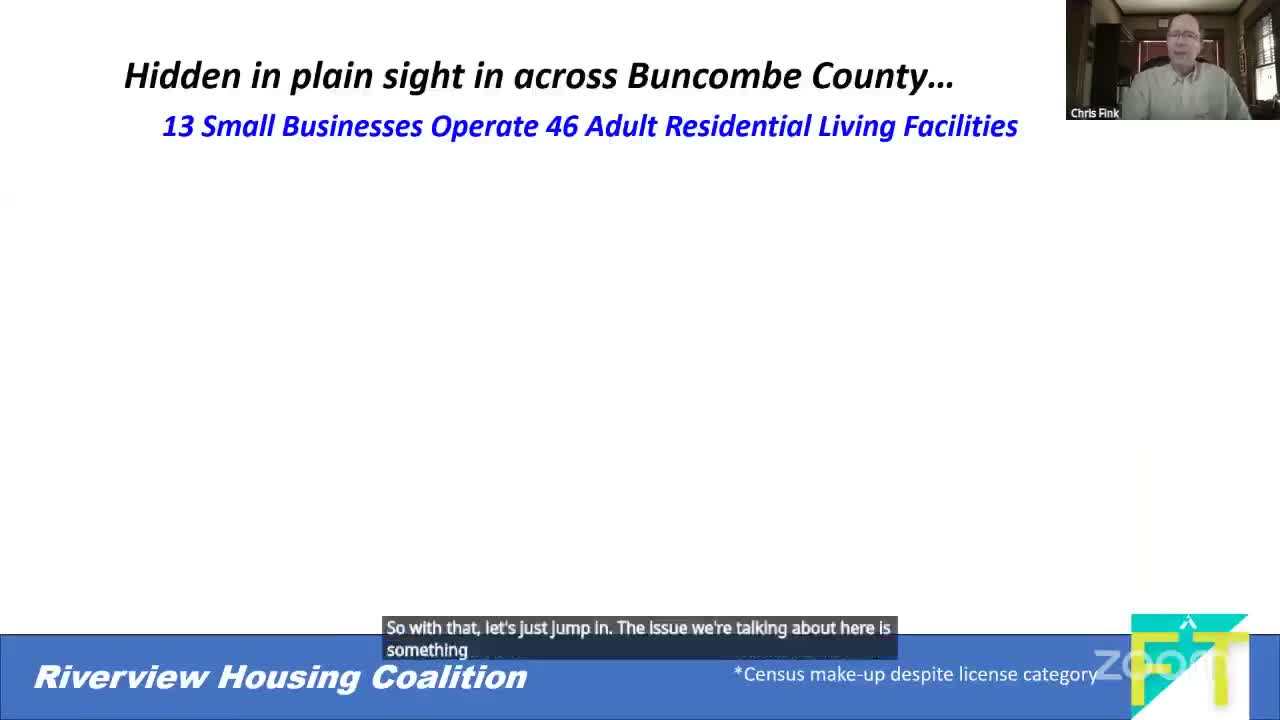
Chris Frink, a community volunteer with the Riverview Housing Coalition, told the Buncombe County Department of Health and Human Services board that a cluster of small adult care homes is at financial risk and that losing those facilities would remove housing and recovery supports for vulnerable residents.
"The closing of Riverview is really the tip of the iceberg," Frink said, describing a county picture where 13 small businesses operate 46 residential living facilities that together house just under 400 residents. He said many of those residents are people in sustained recovery for mental health and substance use conditions who rely on these homes as a step toward independent living.
Frink said operators face rising costs across staffing, utilities, transportation and food, and that earlier threats to Medicaid reimbursements contributed to revenue instability. He described RHA’s announcement that it would close Riverview Group Home, which would remove six licensed transitional spaces, and said coalition partners including VIA and NAMI helped locate a new operator who will take over the property on June 1.
Under state rules, Frink noted, operators must give 30 days’ notice of closure or eviction, which limits regulator and rehousing responses. He described the limited rehousing options countywide and said VAYA and local partners needed months beyond RHA’s notice to complete transitions for residents.
To address the broader risk, Frink said the coalition has organized a 501(c)(3) sponsored by the local NAMI affiliate, used a $5,000 seed award to create a framework, and is building a small‑business support model to connect operators with grants and technical assistance. The coalition has set an initial fundraising target of $250,000 to pilot viability grants and related supports.
Frink said the group has engaged elected officials and city councilors and that local political support existed prior to the state budget uncertainty. Board members encouraged coordination with county staff working on behavioral health and community health assessment efforts.
The coalition’s next steps include gathering financial data from operators to quantify need, pursuing philanthropic and local funding partners, and testing a grant/incentive pilot to sustain small operators while larger system changes are pursued.
"The closing of Riverview is really the tip of the iceberg," Frink said, describing a county picture where 13 small businesses operate 46 residential living facilities that together house just under 400 residents. He said many of those residents are people in sustained recovery for mental health and substance use conditions who rely on these homes as a step toward independent living.
Frink said operators face rising costs across staffing, utilities, transportation and food, and that earlier threats to Medicaid reimbursements contributed to revenue instability. He described RHA’s announcement that it would close Riverview Group Home, which would remove six licensed transitional spaces, and said coalition partners including VIA and NAMI helped locate a new operator who will take over the property on June 1.
Under state rules, Frink noted, operators must give 30 days’ notice of closure or eviction, which limits regulator and rehousing responses. He described the limited rehousing options countywide and said VAYA and local partners needed months beyond RHA’s notice to complete transitions for residents.
To address the broader risk, Frink said the coalition has organized a 501(c)(3) sponsored by the local NAMI affiliate, used a $5,000 seed award to create a framework, and is building a small‑business support model to connect operators with grants and technical assistance. The coalition has set an initial fundraising target of $250,000 to pilot viability grants and related supports.
Frink said the group has engaged elected officials and city councilors and that local political support existed prior to the state budget uncertainty. Board members encouraged coordination with county staff working on behavioral health and community health assessment efforts.
The coalition’s next steps include gathering financial data from operators to quantify need, pursuing philanthropic and local funding partners, and testing a grant/incentive pilot to sustain small operators while larger system changes are pursued.
View the Full Meeting & All Its Details
This article offers just a summary. Unlock complete video, transcripts, and insights as a Founder Member.
✓
Watch full, unedited meeting videos
✓
Search every word spoken in unlimited transcripts
✓
AI summaries & real-time alerts (all government levels)
✓
Permanent access to expanding government content
30-day money-back guarantee
