Burlington-area airport urges Senate Finance to strip 2% jet-fuel surcharge from transport bill
April 24, 2026 | Finance, SENATE, Committees, Legislative , Vermont
This article was created by AI summarizing key points discussed. AI makes mistakes, so for full details and context, please refer to the video of the full meeting. Please report any errors so we can fix them. Report an error »
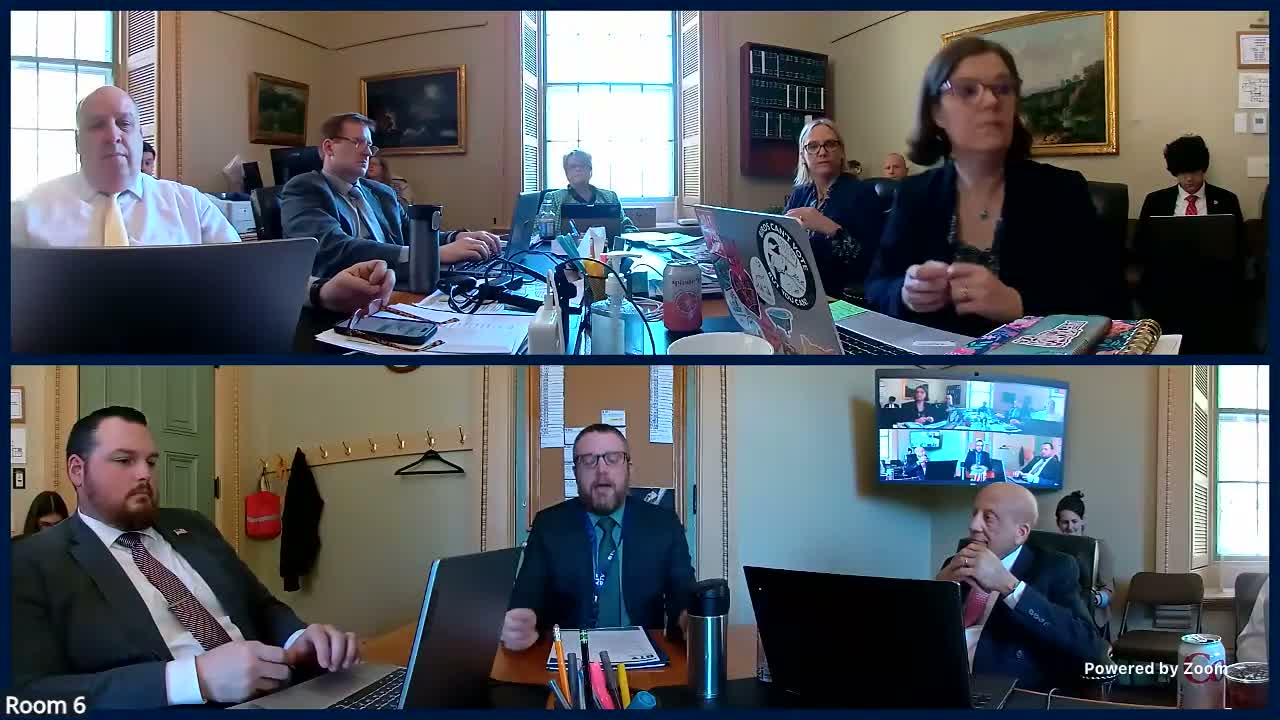
Jeff Bartley, director of innovation and marketing for the Patrick Leighton Crossing International Airport, asked the Senate Finance Committee to remove the 2% jet-fuel surcharge added to the transportation bill H 9 44, saying the change was added without local input and could harm the airport's growth and competitiveness.
"What what we are asking for today is simply that the senate finance committee remove the 2% jet fuel surcharge from h 9 44," Bartley said in his prepared remarks, and he walked the committee through the airport's economic-impact numbers to show the airport's regional importance: "Since 2018, we have seen a 14.4% increase in total jobs supported by the airport, bringing that total of 5,645 ... Total payroll has grown by 91% to 325,400,000 ... the combined airport regional value ... now stands at $1,900,000,000." He argued the surcharge would raise the combined tax on jet fuel at the airport (state sales tax plus local option tax plus the surcharge) to roughly 9% and could make the airport less competitive.
Bartley warned that aviation fuel demand is price sensitive and that airlines and operators compare fuel costs across markets; when sourcing costs diverge, they may tanker fuel or avoid refueling at a higher-cost airport, reducing local gallons sold and potentially lowering, not increasing, revenue. He told the committee the surcharge was estimated to generate about $600,000 a year statewide but cautioned that a shrinking volume base could yield less revenue.
Committee members asked technical questions about how much of the estimated revenue would be attributable to the airport, confidentiality limits on tax data, and how airlines might respond. Bartley and other witnesses said a large share of jet-fuel tax revenue is generated at the airport and that confidentiality rules limit precise local breakdowns. Members and staff discussed removing the jet-fuel language; one committee member summarized that the committee would consider removing sections 11 and 12 (a purchase/use tax) along with sections 44 and 45 (the jet-fuel surcharge).
What happens next: committee staff will coordinate with the sponsor and transportation committee staff to prepare language; the committee indicated it wants the jet-fuel surcharge removed for committee resolution before a floor amendment is finalized.
"What what we are asking for today is simply that the senate finance committee remove the 2% jet fuel surcharge from h 9 44," Bartley said in his prepared remarks, and he walked the committee through the airport's economic-impact numbers to show the airport's regional importance: "Since 2018, we have seen a 14.4% increase in total jobs supported by the airport, bringing that total of 5,645 ... Total payroll has grown by 91% to 325,400,000 ... the combined airport regional value ... now stands at $1,900,000,000." He argued the surcharge would raise the combined tax on jet fuel at the airport (state sales tax plus local option tax plus the surcharge) to roughly 9% and could make the airport less competitive.
Bartley warned that aviation fuel demand is price sensitive and that airlines and operators compare fuel costs across markets; when sourcing costs diverge, they may tanker fuel or avoid refueling at a higher-cost airport, reducing local gallons sold and potentially lowering, not increasing, revenue. He told the committee the surcharge was estimated to generate about $600,000 a year statewide but cautioned that a shrinking volume base could yield less revenue.
Committee members asked technical questions about how much of the estimated revenue would be attributable to the airport, confidentiality limits on tax data, and how airlines might respond. Bartley and other witnesses said a large share of jet-fuel tax revenue is generated at the airport and that confidentiality rules limit precise local breakdowns. Members and staff discussed removing the jet-fuel language; one committee member summarized that the committee would consider removing sections 11 and 12 (a purchase/use tax) along with sections 44 and 45 (the jet-fuel surcharge).
What happens next: committee staff will coordinate with the sponsor and transportation committee staff to prepare language; the committee indicated it wants the jet-fuel surcharge removed for committee resolution before a floor amendment is finalized.
View the Full Meeting & All Its Details
This article offers just a summary. Unlock complete video, transcripts, and insights as a Founder Member.
✓
Watch full, unedited meeting videos
✓
Search every word spoken in unlimited transcripts
✓
AI summaries & real-time alerts (all government levels)
✓
Permanent access to expanding government content
30-day money-back guarantee
