Division proposes case‑by‑case aquatic rules to limit New Zealand mudsnail spread while easing some purging requirements for growers
April 23, 2026 | Utah Department of Natural Resources, Utah Government Divisions, Utah Legislative Branch, Utah
This article was created by AI summarizing key points discussed. AI makes mistakes, so for full details and context, please refer to the video of the full meeting. Please report any errors so we can fix them. Report an error »
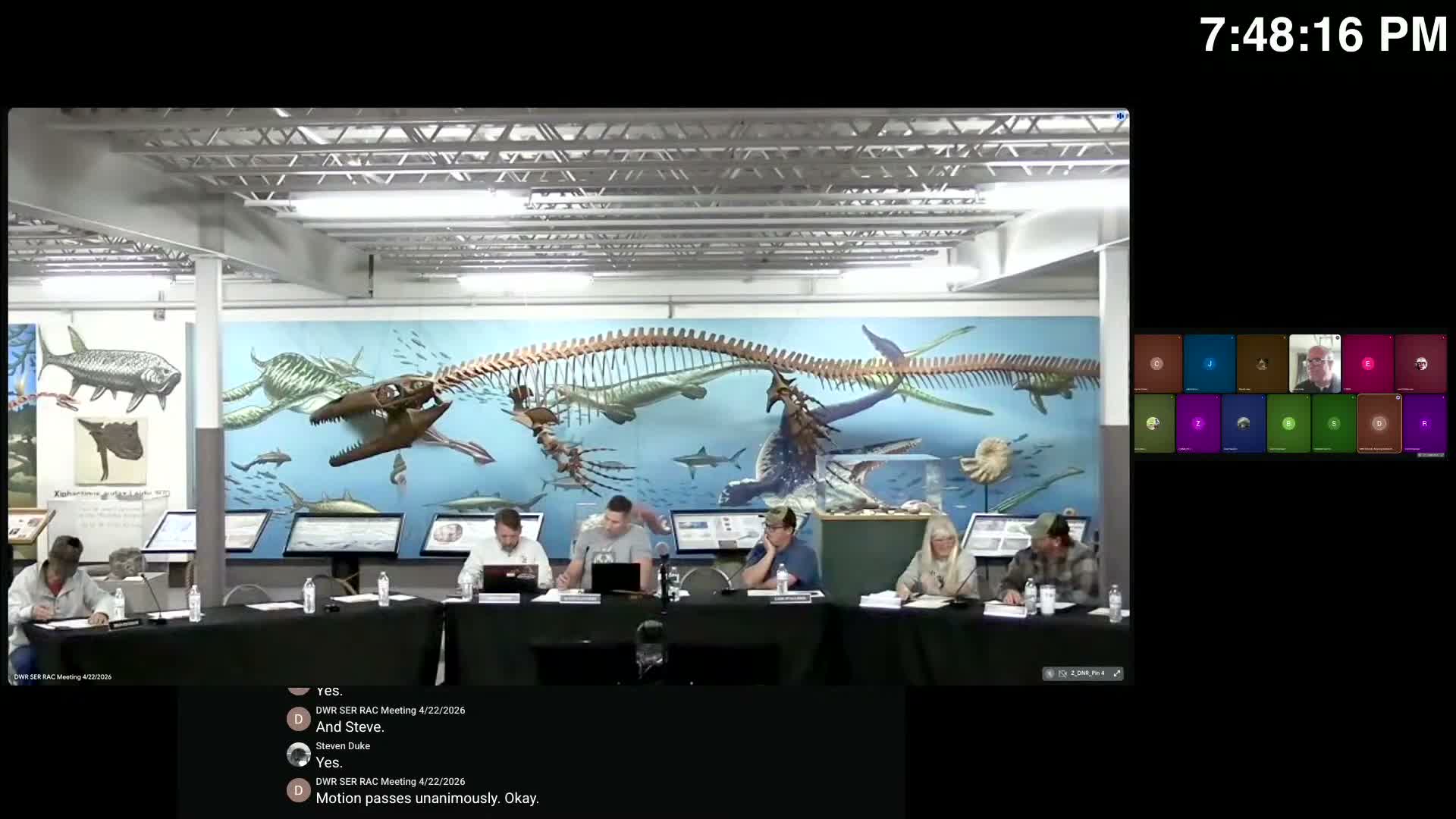
Bridal Hedrick, the Division’s Coldwater Sport Fish coordinator, told the Southeastern RAC the proposed amendments to aquatic rules (R657‑3C subsection 9 and R657‑59A) aim to protect native spring snails while giving private aquaculture growers a more flexible, case‑by‑case pathway to stock fish when New Zealand mudsnails are present.
"We think our proposal moves to a common sense case by case approach, that provides additional opportunities for the private aquaculture industry while protecting native spring snails," Bridal Hedrick said, explaining that most grower stocking would be allowed without purging but purging would be required where stocking posed an unacceptable risk to native spring snails. The proposal would require a certificate of registration for growers with New Zealand mudsnails, a tool the division already uses for mitigation when stocking nonnative trout to protect native cutthroat.
Staff said they consulted Utah Department of Agriculture and Food and Utah private fish producers while drafting the rule changes and that the approach could keep the state from triggering federal listing pressure for native spring snails. The division noted that Arizona has restricted imports from growers with New Zealand mudsnails and has signaled willingness to adopt similar processes, which could help Utah producers regain markets.
The RAC discussed how the rule would apply to ponds that lack outlets or inlets and the definition of floodplain (100‑year floodplain). Randy Opplinger (on the call) and other staff said the changes would not open risky pathways for nonnative species to escape into public waters; rather, they would allow stocking in contained settings where there is no reasonable escape risk.
The RAC approved the aquatic rule amendments as presented in a unanimous vote after the presentation and public comment period.
Why it matters: New Zealand mudsnails reproduce asexually and can establish populations from a single individual; the rule changes aim to limit spread to vulnerable native spring snail habitat while reducing repetitive purging costs for private growers.
What comes next: The RAC recommendation will go to the wildlife board for consideration; staff said certificates of registration would be used to assess and mitigate risk before permitting such stocking options.
Vote details: Motion to approve the aquatic rule amendments passed unanimously during the meeting.
"We think our proposal moves to a common sense case by case approach, that provides additional opportunities for the private aquaculture industry while protecting native spring snails," Bridal Hedrick said, explaining that most grower stocking would be allowed without purging but purging would be required where stocking posed an unacceptable risk to native spring snails. The proposal would require a certificate of registration for growers with New Zealand mudsnails, a tool the division already uses for mitigation when stocking nonnative trout to protect native cutthroat.
Staff said they consulted Utah Department of Agriculture and Food and Utah private fish producers while drafting the rule changes and that the approach could keep the state from triggering federal listing pressure for native spring snails. The division noted that Arizona has restricted imports from growers with New Zealand mudsnails and has signaled willingness to adopt similar processes, which could help Utah producers regain markets.
The RAC discussed how the rule would apply to ponds that lack outlets or inlets and the definition of floodplain (100‑year floodplain). Randy Opplinger (on the call) and other staff said the changes would not open risky pathways for nonnative species to escape into public waters; rather, they would allow stocking in contained settings where there is no reasonable escape risk.
The RAC approved the aquatic rule amendments as presented in a unanimous vote after the presentation and public comment period.
Why it matters: New Zealand mudsnails reproduce asexually and can establish populations from a single individual; the rule changes aim to limit spread to vulnerable native spring snail habitat while reducing repetitive purging costs for private growers.
What comes next: The RAC recommendation will go to the wildlife board for consideration; staff said certificates of registration would be used to assess and mitigate risk before permitting such stocking options.
Vote details: Motion to approve the aquatic rule amendments passed unanimously during the meeting.
View the Full Meeting & All Its Details
This article offers just a summary. Unlock complete video, transcripts, and insights as a Founder Member.
✓
Watch full, unedited meeting videos
✓
Search every word spoken in unlimited transcripts
✓
AI summaries & real-time alerts (all government levels)
✓
Permanent access to expanding government content
30-day money-back guarantee
