Committee advances bill to speed insurance coverage for PANDAS/PANS after families’ testimony
April 22, 2026 | 2026 Legislature Alaska, Alaska
This article was created by AI summarizing key points discussed. AI makes mistakes, so for full details and context, please refer to the video of the full meeting. Please report any errors so we can fix them. Report an error »
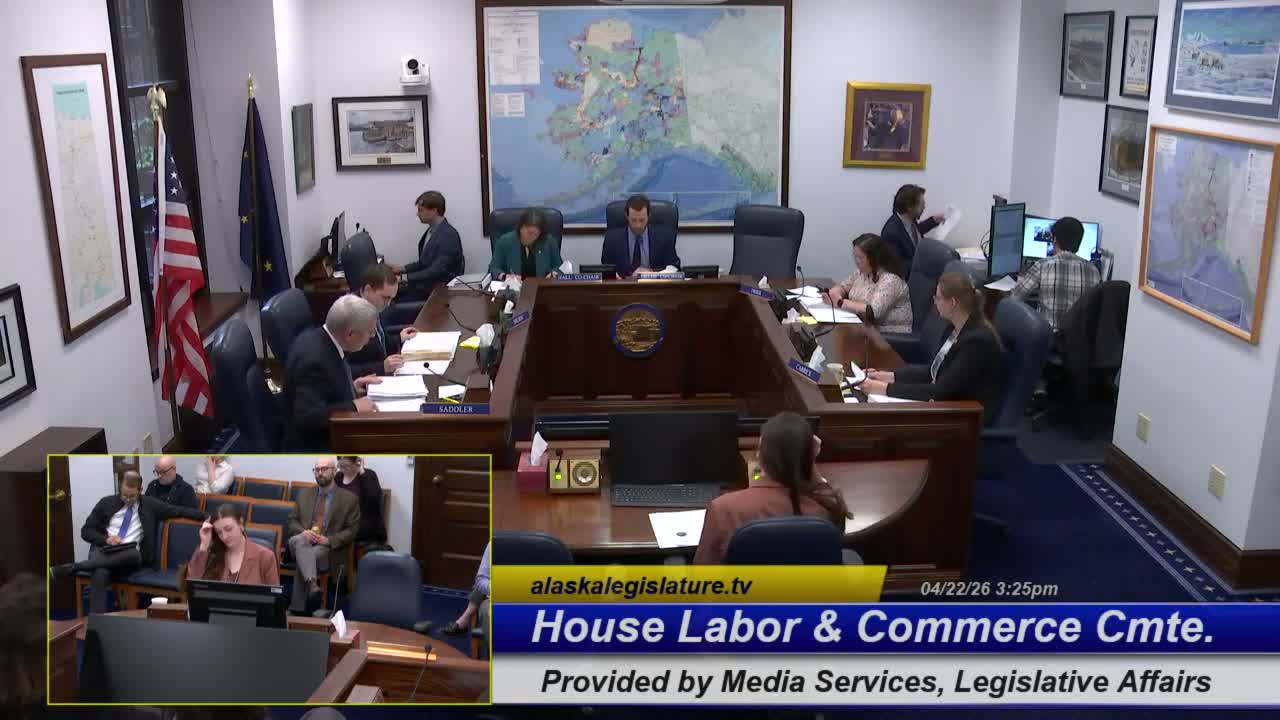
House Labor and Commerce advanced House Bill 292 on a bipartisan voice vote after more than an hour of public testimony from families who said insurance delays cost critical treatment time.
The bill, which the committee discussed in its second hearing, was described by sponsor staff as aligning coverage standards with "nationally recognized clinical practice guidelines" and replacing a consortium reference with a statutory definition of such guidelines. Evan Anderson, staff to Representative Fields, told the committee the changes are technical fixes intended to ensure insurers and regulators have a clear standard of care to apply.
Parents who testified described long diagnostic journeys, costly out‑of‑state care and, in some cases, emergency hospital stays. "The delay that it cost us to get coverage cost us about three months in care for Madeline," said Bonnie Bailey, a lifelong Alaskan and paramedic, who said IVIG produced a remission for her daughter but that insurance and diagnostic delays likely worsened long‑term outcomes. Nicole Endsley said her family planned to pay $15,000–$30,000 out of pocket to secure prompt IVIG if necessary; Adam Ebnett said his family piled up more than $20,000 in bills after traveling to an out‑of‑state neurology clinic.
Committee members asked whether the amendments would change the underlying mandate. Anderson and bill sponsor staff said the changes do not expand or narrow the substantive coverage requirement but clarify which clinical authorities insurers should follow. With Representative Paul moving to report the bill (work order 34‑LS1209) as amended, the committee recorded no objections and advanced HB 292 with accompanying fiscal notes.
Supporters said the bill will reduce barriers to timely treatment for children with rapid‑onset pediatric neuropsychiatric conditions; critics did not register substantive opposition at the committee vote. The measure now moves forward with the committee’s recommendation and fiscal analyses attached.
The committee recorded the bill as advanced out of committee; the next procedural step is further floor scheduling by legislative leadership.
The bill, which the committee discussed in its second hearing, was described by sponsor staff as aligning coverage standards with "nationally recognized clinical practice guidelines" and replacing a consortium reference with a statutory definition of such guidelines. Evan Anderson, staff to Representative Fields, told the committee the changes are technical fixes intended to ensure insurers and regulators have a clear standard of care to apply.
Parents who testified described long diagnostic journeys, costly out‑of‑state care and, in some cases, emergency hospital stays. "The delay that it cost us to get coverage cost us about three months in care for Madeline," said Bonnie Bailey, a lifelong Alaskan and paramedic, who said IVIG produced a remission for her daughter but that insurance and diagnostic delays likely worsened long‑term outcomes. Nicole Endsley said her family planned to pay $15,000–$30,000 out of pocket to secure prompt IVIG if necessary; Adam Ebnett said his family piled up more than $20,000 in bills after traveling to an out‑of‑state neurology clinic.
Committee members asked whether the amendments would change the underlying mandate. Anderson and bill sponsor staff said the changes do not expand or narrow the substantive coverage requirement but clarify which clinical authorities insurers should follow. With Representative Paul moving to report the bill (work order 34‑LS1209) as amended, the committee recorded no objections and advanced HB 292 with accompanying fiscal notes.
Supporters said the bill will reduce barriers to timely treatment for children with rapid‑onset pediatric neuropsychiatric conditions; critics did not register substantive opposition at the committee vote. The measure now moves forward with the committee’s recommendation and fiscal analyses attached.
The committee recorded the bill as advanced out of committee; the next procedural step is further floor scheduling by legislative leadership.
View the Full Meeting & All Its Details
This article offers just a summary. Unlock complete video, transcripts, and insights as a Founder Member.
✓
Watch full, unedited meeting videos
✓
Search every word spoken in unlimited transcripts
✓
AI summaries & real-time alerts (all government levels)
✓
Permanent access to expanding government content
30-day money-back guarantee
