Senate committee hears HB 39 to standardize information and services for deaf and hard-of-hearing students
April 22, 2026 | 2026 Legislature Alaska, Alaska
This article was created by AI summarizing key points discussed. AI makes mistakes, so for full details and context, please refer to the video of the full meeting. Please report any errors so we can fix them. Report an error »
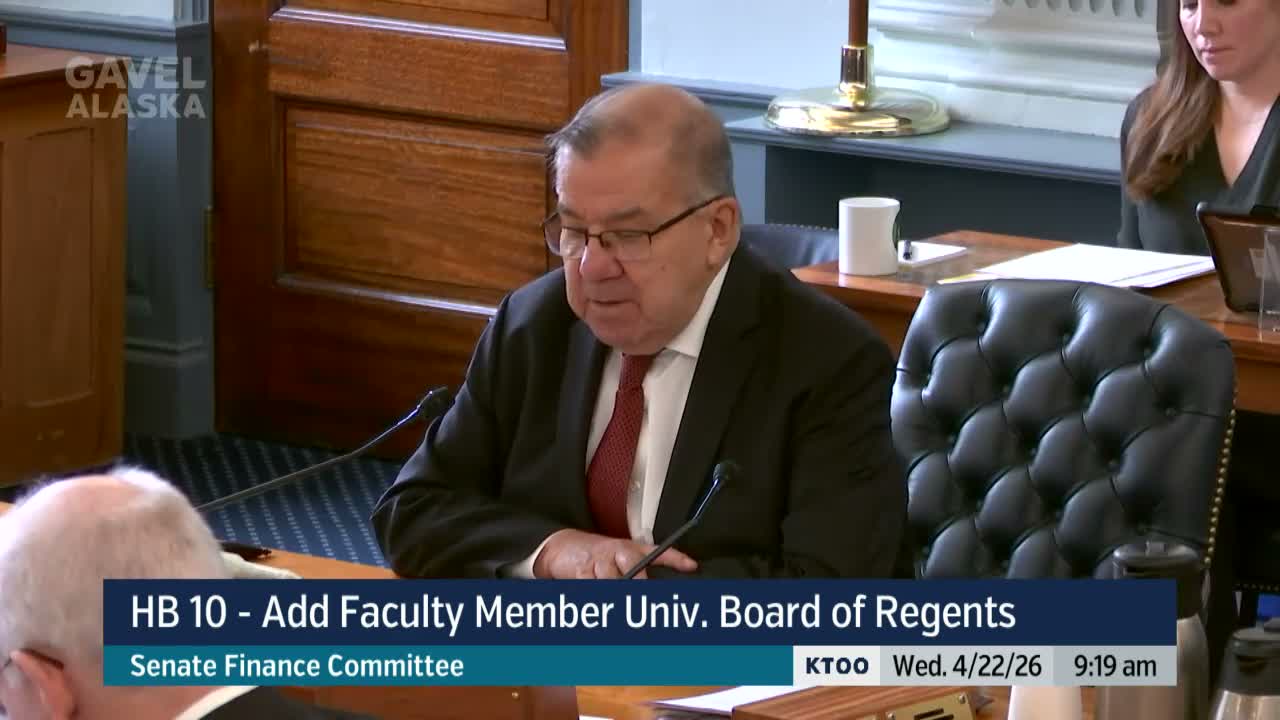
Representative Allard introduced House Bill 39 on April 22, describing a package of measures to ensure parents of deaf and hard-of-hearing children receive consistent, unbiased information about communication options and that school districts provide services in the parents' chosen modality.
"This bill establishes that parents receive unbiased information regarding hearing technology, different methods of communication for the child who is deaf or hard of hearing, available services and programs, support services offered by public and private agencies," Representative Allard said during her presentation, adding the bill would require the Department of Education and Early Development to establish centralized programs for students whose primary language is American Sign Language, and provide residential services where appropriate.
Supporters from across the state told the committee the measure addresses inconsistent information, unequal access to specialized services, and risks of early language delay. Clara Baldwin, who oversees the Alaska State School for the Deaf and Hard of Hearing, explained the state school holds the agreement with DEED, partners with districts through memoranda of agreement, and provides consult services, ASL assessments and support for rural districts.
Parents and educators gave detailed testimony about the consequences of delayed language access. Jillian Schroeder, a clinical social worker and parent, said families often receive "incredibly varied" or even contradictory guidance. Amy Bobich, a preschool teacher at the state school, presented data she said show 61 percent of children entering at age 3 were not at age level in language skills.
Dwayne Mays, president of the Alaska Deaf, Hard of Hearing and DeafBlind Council, argued in favor of bilingual instruction and culturally responsive teaching, stating that "bilingual environments, which nurture both American Sign Language and English, provide significant cognitive and social advantages." Mays also told the committee HB 39 has broad bipartisan sponsorship (19 cosponsors in the House; 12 in the Senate).
Senator Kiel asked a procedural question about how funding and average daily membership (ADM) would be handled when students from one district attend a program in another district. Clara Baldwin answered that the Alaska State School for the Deaf and Hard of Hearing holds the agreement with DEED and that districts partner through memoranda of agreement; the sending district continues to provide special education services while the state program provides consultative and direct services as agreed.
Senator Keogh reported a fiscal note from the Department of Education and Early Development with a $0 fiscal impact but a note that existing regulations would need to be updated. After testimony the committee set HB 39 aside; no final vote was taken.
"This bill establishes that parents receive unbiased information regarding hearing technology, different methods of communication for the child who is deaf or hard of hearing, available services and programs, support services offered by public and private agencies," Representative Allard said during her presentation, adding the bill would require the Department of Education and Early Development to establish centralized programs for students whose primary language is American Sign Language, and provide residential services where appropriate.
Supporters from across the state told the committee the measure addresses inconsistent information, unequal access to specialized services, and risks of early language delay. Clara Baldwin, who oversees the Alaska State School for the Deaf and Hard of Hearing, explained the state school holds the agreement with DEED, partners with districts through memoranda of agreement, and provides consult services, ASL assessments and support for rural districts.
Parents and educators gave detailed testimony about the consequences of delayed language access. Jillian Schroeder, a clinical social worker and parent, said families often receive "incredibly varied" or even contradictory guidance. Amy Bobich, a preschool teacher at the state school, presented data she said show 61 percent of children entering at age 3 were not at age level in language skills.
Dwayne Mays, president of the Alaska Deaf, Hard of Hearing and DeafBlind Council, argued in favor of bilingual instruction and culturally responsive teaching, stating that "bilingual environments, which nurture both American Sign Language and English, provide significant cognitive and social advantages." Mays also told the committee HB 39 has broad bipartisan sponsorship (19 cosponsors in the House; 12 in the Senate).
Senator Kiel asked a procedural question about how funding and average daily membership (ADM) would be handled when students from one district attend a program in another district. Clara Baldwin answered that the Alaska State School for the Deaf and Hard of Hearing holds the agreement with DEED and that districts partner through memoranda of agreement; the sending district continues to provide special education services while the state program provides consultative and direct services as agreed.
Senator Keogh reported a fiscal note from the Department of Education and Early Development with a $0 fiscal impact but a note that existing regulations would need to be updated. After testimony the committee set HB 39 aside; no final vote was taken.
View the Full Meeting & All Its Details
This article offers just a summary. Unlock complete video, transcripts, and insights as a Founder Member.
✓
Watch full, unedited meeting videos
✓
Search every word spoken in unlimited transcripts
✓
AI summaries & real-time alerts (all government levels)
✓
Permanent access to expanding government content
30-day money-back guarantee
