Proposed H.955 school-construction provisions would expand bonding and create legacy-debt aid program
April 24, 2026 | Education, SENATE, Committees, Legislative , Vermont
This article was created by AI summarizing key points discussed. AI makes mistakes, so for full details and context, please refer to the video of the full meeting. Please report any errors so we can fix them. Report an error »
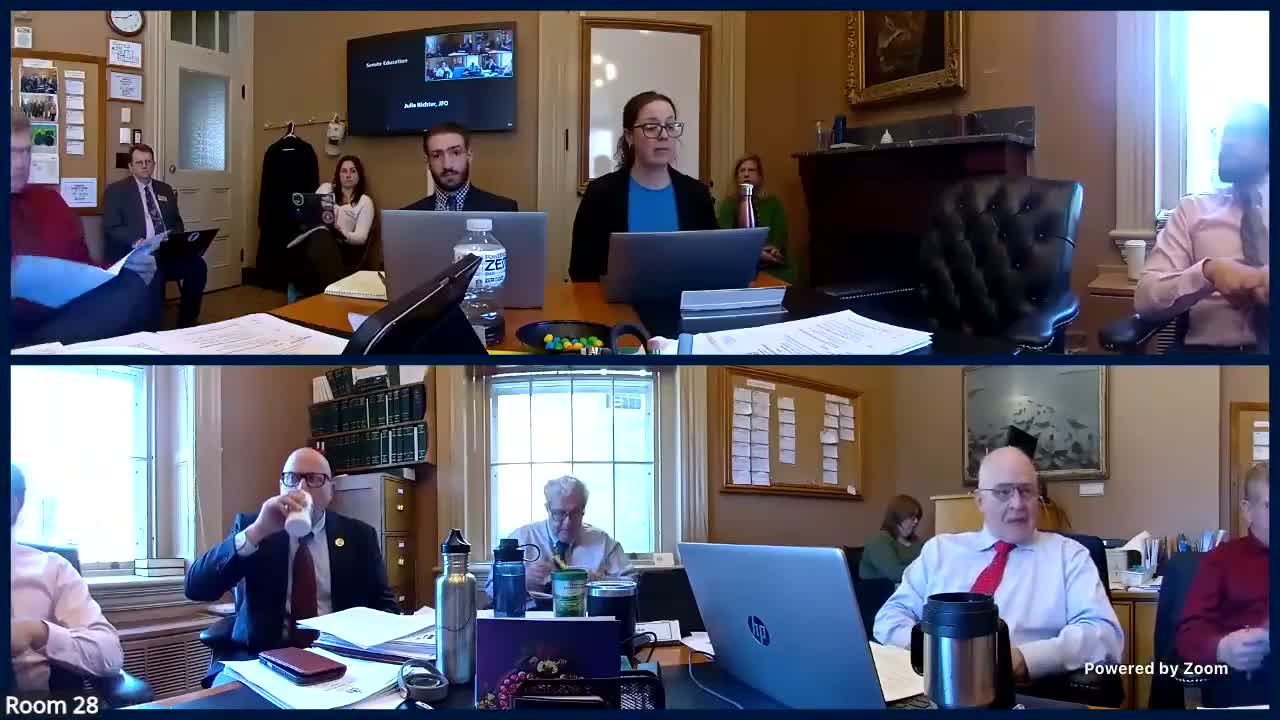
The Senate Education Committee examined multiple school-construction provisions in H.955 that would change how the state supports district building projects. JFO analyst Julia Rickard walked members through Sections 65–78 and said the house-passed language expands state aid to include general-obligation bonding while creating implementation choices that determine fiscal outcomes.
Rickard outlined several specific sections: Section 66 would create four permanent classified Agency of Education positions in the school-construction division and require AOE to include funding for those positions in its FY28 budget request. “Section 66 … creates 4 permanent classified positions in AOE for the school construction division and would require AOE to include funding for those positions in its FY28 budget request,” she said.
She described Section 72’s amendments to award provisions that could provide 50%–95% of an approved project’s total cost as aid in the form of a debt-service subsidy, state bonding, or a combination. Rickard said decision points about bonding levels, aid amounts, and the treasurer’s recommendations to CDAC will affect local costs and state debt-service exposure.
Rickard also explained Section 74’s legacy debt aid program, under which districts that incurred debt before Dec. 31, 2025, would be eligible for grants covering 100% of that debt service—an outcome that would increase demands on the education fund if enacted and funded. She told the committee that the bill does not specify funding sources for those reimbursements and that the choice of funding would be a policy decision for lawmakers.
Committee members asked whether the state would use debt to pay debt and sought clarification about how supplemental district spending, state bonding, and categorical aid would interact with awards. Rickard emphasized that the bill contemplates a capital stack—bonding plus aid plus local supplemental spending—and that many implementation details will be settled through rulemaking, treasurer recommendations, and appropriation actions.
The committee did not adopt final language during this session and asked staff for follow-up on implementation mechanics and potential funding paths.
Rickard outlined several specific sections: Section 66 would create four permanent classified Agency of Education positions in the school-construction division and require AOE to include funding for those positions in its FY28 budget request. “Section 66 … creates 4 permanent classified positions in AOE for the school construction division and would require AOE to include funding for those positions in its FY28 budget request,” she said.
She described Section 72’s amendments to award provisions that could provide 50%–95% of an approved project’s total cost as aid in the form of a debt-service subsidy, state bonding, or a combination. Rickard said decision points about bonding levels, aid amounts, and the treasurer’s recommendations to CDAC will affect local costs and state debt-service exposure.
Rickard also explained Section 74’s legacy debt aid program, under which districts that incurred debt before Dec. 31, 2025, would be eligible for grants covering 100% of that debt service—an outcome that would increase demands on the education fund if enacted and funded. She told the committee that the bill does not specify funding sources for those reimbursements and that the choice of funding would be a policy decision for lawmakers.
Committee members asked whether the state would use debt to pay debt and sought clarification about how supplemental district spending, state bonding, and categorical aid would interact with awards. Rickard emphasized that the bill contemplates a capital stack—bonding plus aid plus local supplemental spending—and that many implementation details will be settled through rulemaking, treasurer recommendations, and appropriation actions.
The committee did not adopt final language during this session and asked staff for follow-up on implementation mechanics and potential funding paths.
View the Full Meeting & All Its Details
This article offers just a summary. Unlock complete video, transcripts, and insights as a Founder Member.
✓
Watch full, unedited meeting videos
✓
Search every word spoken in unlimited transcripts
✓
AI summaries & real-time alerts (all government levels)
✓
Permanent access to expanding government content
30-day money-back guarantee
