Committee debates delaying class‑size minimum rollout in H.955 amid implementation concerns
April 24, 2026 | Education, SENATE, Committees, Legislative , Vermont
This article was created by AI summarizing key points discussed. AI makes mistakes, so for full details and context, please refer to the video of the full meeting. Please report any errors so we can fix them. Report an error »
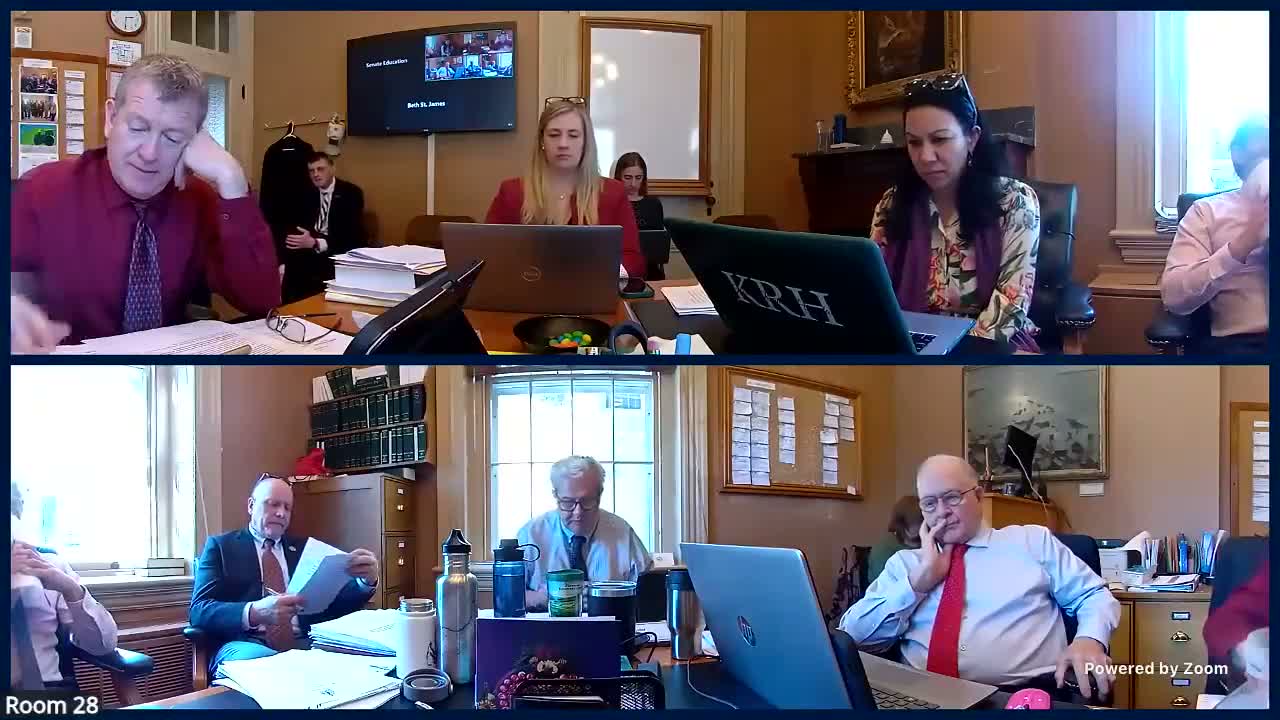
Senate members spent substantial time debating whether to delay the rollout and effective date for class-size minimums in the house-passed language. Committee discussion centered on when the statutory clock for implementation should start and whether to wait until foundation-formula conditions and related rulemaking are complete.
Members cited testimony from districts asking for a delay, with one lawmaker saying stakeholders were worried about changing metrics and continued uncertainty. Julia Rickard explained that the house construct moved some dates and that the version before the committee would push the start of the clock until the foundation-condition tests are satisfied, which could place effective implementation in 2030 under current schedules.
One senator framed the issue as an operational challenge for districts that face shifting expectations: ‘‘this ongoing talk of education reform keeps moving the goalposts on them,’’ a committee member said during debate. Others argued for delaying to reduce district stress; some committee members expressed the opposite view, saying the law should not be repeatedly postponed.
The committee did not adopt a final position in the transcript; members asked staff to take the matter back for further consideration and indicated the section might be better handled in H.955 rather than a separate vehicle.
Members cited testimony from districts asking for a delay, with one lawmaker saying stakeholders were worried about changing metrics and continued uncertainty. Julia Rickard explained that the house construct moved some dates and that the version before the committee would push the start of the clock until the foundation-condition tests are satisfied, which could place effective implementation in 2030 under current schedules.
One senator framed the issue as an operational challenge for districts that face shifting expectations: ‘‘this ongoing talk of education reform keeps moving the goalposts on them,’’ a committee member said during debate. Others argued for delaying to reduce district stress; some committee members expressed the opposite view, saying the law should not be repeatedly postponed.
The committee did not adopt a final position in the transcript; members asked staff to take the matter back for further consideration and indicated the section might be better handled in H.955 rather than a separate vehicle.
View the Full Meeting & All Its Details
This article offers just a summary. Unlock complete video, transcripts, and insights as a Founder Member.
✓
Watch full, unedited meeting videos
✓
Search every word spoken in unlimited transcripts
✓
AI summaries & real-time alerts (all government levels)
✓
Permanent access to expanding government content
30-day money-back guarantee
