Industry warns methane compliance costs risk shuttering low‑producing wells, urges flexibility
April 22, 2026 | Environmental Resources & Energy, House of Representatives, Legislative, Pennsylvania
This article was created by AI summarizing key points discussed. AI makes mistakes, so for full details and context, please refer to the video of the full meeting. Please report any errors so we can fix them. Report an error »
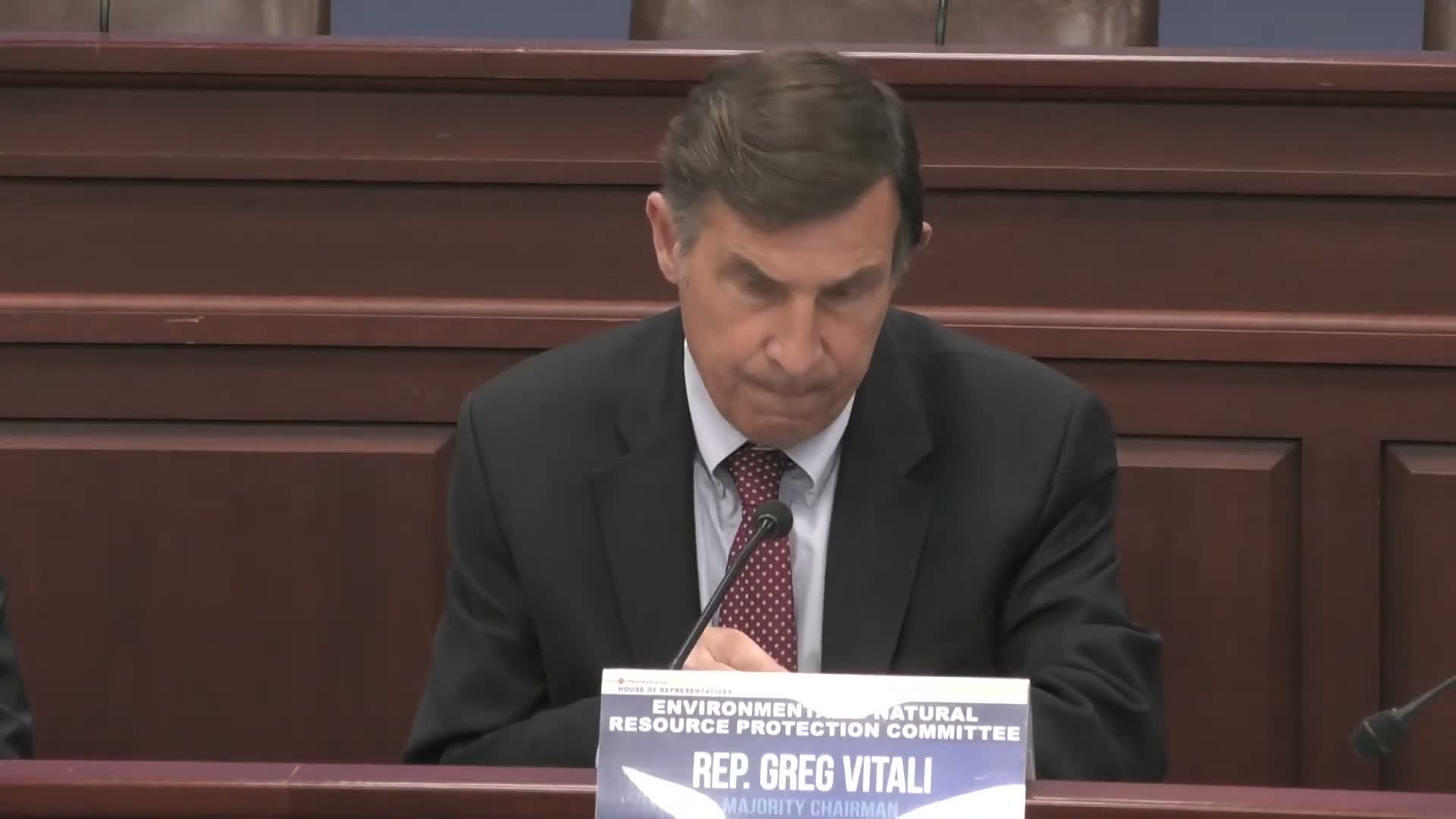
Industry representatives testified that methane controls should be practical and tailored to Pennsylvania's varied oil and gas sectors.
Todd, testifying for the Pennsylvania Independent Oil and Gas Association (PIOGA), said the industry agrees methane emissions should be reduced but argued federal rules written for different basins could harm Pennsylvania's conventional sector. He warned that optical gas imaging cameras and other advanced monitoring technologies cost substantially and that DEP's proposed monitoring could impose per‑well costs that exceed revenues for some low‑producing "stripper" wells.
Dan Weaver, identified by the chair as PYOGA president, agreed and said many of the small local operators who supply local gas and perform well‑plugging work would be disproportionately affected if compliance costs make wells uneconomic. Todd and Weaver suggested DEP use flexibilities in subpart OOOOa/quad OC to target higher‑emitting sites and adopt lower‑cost monitoring (audio/visual/olfactory inspections and continued mechanical integrity reporting) for marginal wells.
Committee members pressed the witnesses on cost estimates and technical details. A member cited a $3,000 per‑well estimate for monitoring and asked whether that figure would drive small wells out of business; industry witnesses said $3,000 is a low estimate and that specialized instruments can cost orders of magnitude more. Panelists also pointed to Act 52, which requires separate consideration of conventional and unconventional operations, and told lawmakers they would support regulatory paths that account for those differences.
"Methane regulation should reduce emissions, not raise heating bills," a PIOGA witness said, urging an approach that protects consumers and preserves affordable local energy while targeting high emitters.
The hearing included no vote; industry urged continued stakeholder engagement and urged DEP and lawmakers to consider economic feasibility when finalizing any implementation plan.
Todd, testifying for the Pennsylvania Independent Oil and Gas Association (PIOGA), said the industry agrees methane emissions should be reduced but argued federal rules written for different basins could harm Pennsylvania's conventional sector. He warned that optical gas imaging cameras and other advanced monitoring technologies cost substantially and that DEP's proposed monitoring could impose per‑well costs that exceed revenues for some low‑producing "stripper" wells.
Dan Weaver, identified by the chair as PYOGA president, agreed and said many of the small local operators who supply local gas and perform well‑plugging work would be disproportionately affected if compliance costs make wells uneconomic. Todd and Weaver suggested DEP use flexibilities in subpart OOOOa/quad OC to target higher‑emitting sites and adopt lower‑cost monitoring (audio/visual/olfactory inspections and continued mechanical integrity reporting) for marginal wells.
Committee members pressed the witnesses on cost estimates and technical details. A member cited a $3,000 per‑well estimate for monitoring and asked whether that figure would drive small wells out of business; industry witnesses said $3,000 is a low estimate and that specialized instruments can cost orders of magnitude more. Panelists also pointed to Act 52, which requires separate consideration of conventional and unconventional operations, and told lawmakers they would support regulatory paths that account for those differences.
"Methane regulation should reduce emissions, not raise heating bills," a PIOGA witness said, urging an approach that protects consumers and preserves affordable local energy while targeting high emitters.
The hearing included no vote; industry urged continued stakeholder engagement and urged DEP and lawmakers to consider economic feasibility when finalizing any implementation plan.
Don't Miss a Word: See the Full Meeting!
Go beyond summaries. Unlock every video, transcript, and key insight with a Founder Membership.
✓
Get instant access to full meeting videos
✓
Search and clip any phrase from complete transcripts
✓
Receive AI-powered summaries & custom alerts
✓
Enjoy lifetime, unrestricted access to government data
30-day money-back guarantee
