Consultant Brian urges targeted flow monitoring after terracotta-pipe rehab reduced peak flows
April 23, 2026 | Taneytown, Carroll County, Maryland
This article was created by AI summarizing key points discussed. AI makes mistakes, so for full details and context, please refer to the video of the full meeting. Please report any errors so we can fix them. Report an error »
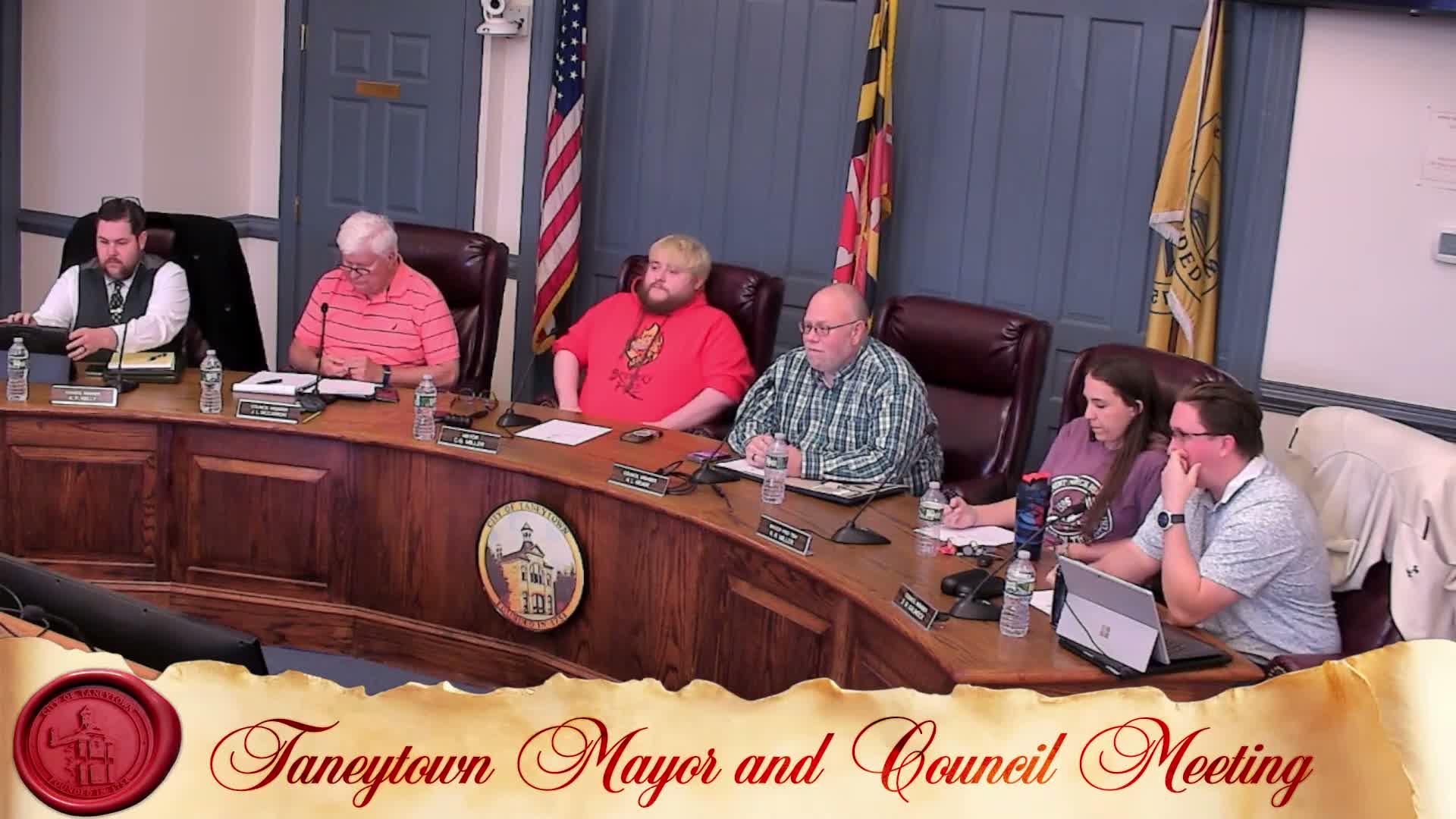
Brian, the consultant presenting to the Marin City Council on April 22, told members that long-range water and sewer planning should guide the capital improvement program and prioritize projects to reduce inflow and infiltration (I&I). He described the system’s history — a plant built in the 1950s with biological nutrient upgrades in 2000 and later enhanced nutrient removal work — and argued that much of the system’s compliance risk stems from wet-weather flows entering the collection system.
Why it matters: Load-based permit limits for total nitrogen and phosphorus mean that reducing storm-driven flows has direct regulatory and cost benefits for the town. Brian and operations staff said the city’s ARPA-funded projects (Broad Street, Roberts Mill, Meadowbrook and similar efforts) appear to have substantially reduced peak wet-weather flows and helped the plant meet permit conditions in recent years.
Staff described terracotta (clay) mains in older downtown neighborhoods as a primary source of infiltration. Brian said mapping shows completed work in Meadowbrook and near the elementary school but flagged Old Town (Middle Street, George Street, Cloverberry) as a remaining, technically challenging priority.
Operations staff (Kevin) gave concrete examples of reduced peaks: where a 1.5-inch rain once drove plant influent from ~500,000 gallons per day to over 2,000,000–2,500,000 gpd, post-rehab events now tend to remain well under 1,000,000 gpd in comparable conditions. “We have cut a lot of water out of that system, but there is still a lot to go,” Kevin said.
Councilors pressed for evidence of program effectiveness. Brian and staff recommended a targeted flow-monitoring deployment (meters plus a rain gauge) to collect apples-to-apples before/after comparisons and to verify which projects produce the greatest reductions. Staff recalled a 2020 deployment of seven meters and one rain gauge that cost $32,560 and said an updated deployment today would likely cost between $45,000 and $70,000 depending on scope and inflation.
The council asked staff to prepare a memo with a recommended scope, goals and a vendor cost proposal in time for the May budget discussions. Brian said the monitoring would not prove a single project’s exact gallons saved but would provide a clearer picture of trends and better inform project prioritization.
The meeting proceeded to capital planning and budget items after the technical discussion; council agreed to consider whether to fund the proposed meters in the FY27 budget.
Why it matters: Load-based permit limits for total nitrogen and phosphorus mean that reducing storm-driven flows has direct regulatory and cost benefits for the town. Brian and operations staff said the city’s ARPA-funded projects (Broad Street, Roberts Mill, Meadowbrook and similar efforts) appear to have substantially reduced peak wet-weather flows and helped the plant meet permit conditions in recent years.
Staff described terracotta (clay) mains in older downtown neighborhoods as a primary source of infiltration. Brian said mapping shows completed work in Meadowbrook and near the elementary school but flagged Old Town (Middle Street, George Street, Cloverberry) as a remaining, technically challenging priority.
Operations staff (Kevin) gave concrete examples of reduced peaks: where a 1.5-inch rain once drove plant influent from ~500,000 gallons per day to over 2,000,000–2,500,000 gpd, post-rehab events now tend to remain well under 1,000,000 gpd in comparable conditions. “We have cut a lot of water out of that system, but there is still a lot to go,” Kevin said.
Councilors pressed for evidence of program effectiveness. Brian and staff recommended a targeted flow-monitoring deployment (meters plus a rain gauge) to collect apples-to-apples before/after comparisons and to verify which projects produce the greatest reductions. Staff recalled a 2020 deployment of seven meters and one rain gauge that cost $32,560 and said an updated deployment today would likely cost between $45,000 and $70,000 depending on scope and inflation.
The council asked staff to prepare a memo with a recommended scope, goals and a vendor cost proposal in time for the May budget discussions. Brian said the monitoring would not prove a single project’s exact gallons saved but would provide a clearer picture of trends and better inform project prioritization.
The meeting proceeded to capital planning and budget items after the technical discussion; council agreed to consider whether to fund the proposed meters in the FY27 budget.
View the Full Meeting & All Its Details
This article offers just a summary. Unlock complete video, transcripts, and insights as a Founder Member.
✓
Watch full, unedited meeting videos
✓
Search every word spoken in unlimited transcripts
✓
AI summaries & real-time alerts (all government levels)
✓
Permanent access to expanding government content
30-day money-back guarantee
