Fire chief outlines needs as council warns budget model is unsustainable
April 20, 2026 | Edmond, Oklahoma County, Oklahoma
This article was created by AI summarizing key points discussed. AI makes mistakes, so for full details and context, please refer to the video of the full meeting. Please report any errors so we can fix them. Report an error »
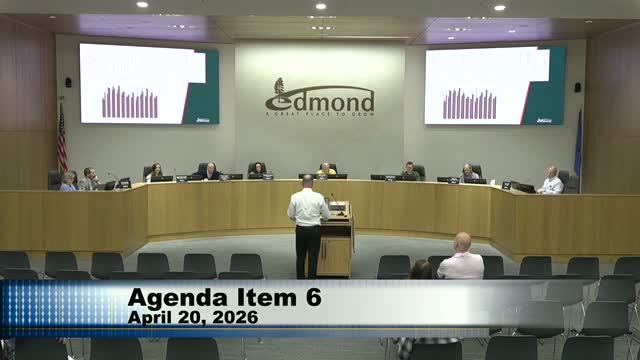
Fire Chief Terry Eshery gave a high‑level overview of the department and its FY27 budget outlook. The department is an ISO Class 1 agency with 157 firefighters across six stations, responds to about 12,000 calls a year (roughly 65% EMS) and typically runs about 40 structure fires annually. Chief Eshery said the upcoming budget is roughly $36 million — a decrease from prior years — and described a near‑flat personnel forecast before any collective bargaining agreement changes.
Chief Eshery identified capital and lifecycle needs including end‑of‑life self‑contained breathing apparatus (SCBA) bottles, replacement packs and radio and cardiac monitor replacements. He said some replacements will be spread across multiyear payments.
Council members pressed the broader fiscal point: recurring personnel costs and compounding pay‑step effects are growing faster than general‑fund revenue. "We can't cut our way to a long term sustainable fire department," a council member said; another called for revisiting the city's revenue optimization study and considering options such as impact fees or a targeted sales‑tax change.
Staff told council they expect to transfer back $5 million per year over the next two years from the fleet fund to the fire fund to help reserves while delaying some capital purchases. Council asked for longer‑range budgeting and revenue planning before committing to new stations or major capital expansions.
No final decisions were made at the workshop; the council asked staff to develop a clear long‑range fiscal plan that matches revenues to expenditures and to present options for balancing the fire fund without cutting core emergency response capacity.
Chief Eshery identified capital and lifecycle needs including end‑of‑life self‑contained breathing apparatus (SCBA) bottles, replacement packs and radio and cardiac monitor replacements. He said some replacements will be spread across multiyear payments.
Council members pressed the broader fiscal point: recurring personnel costs and compounding pay‑step effects are growing faster than general‑fund revenue. "We can't cut our way to a long term sustainable fire department," a council member said; another called for revisiting the city's revenue optimization study and considering options such as impact fees or a targeted sales‑tax change.
Staff told council they expect to transfer back $5 million per year over the next two years from the fleet fund to the fire fund to help reserves while delaying some capital purchases. Council asked for longer‑range budgeting and revenue planning before committing to new stations or major capital expansions.
No final decisions were made at the workshop; the council asked staff to develop a clear long‑range fiscal plan that matches revenues to expenditures and to present options for balancing the fire fund without cutting core emergency response capacity.
View the Full Meeting & All Its Details
This article offers just a summary. Unlock complete video, transcripts, and insights as a Founder Member.
✓
Watch full, unedited meeting videos
✓
Search every word spoken in unlimited transcripts
✓
AI summaries & real-time alerts (all government levels)
✓
Permanent access to expanding government content
30-day money-back guarantee
